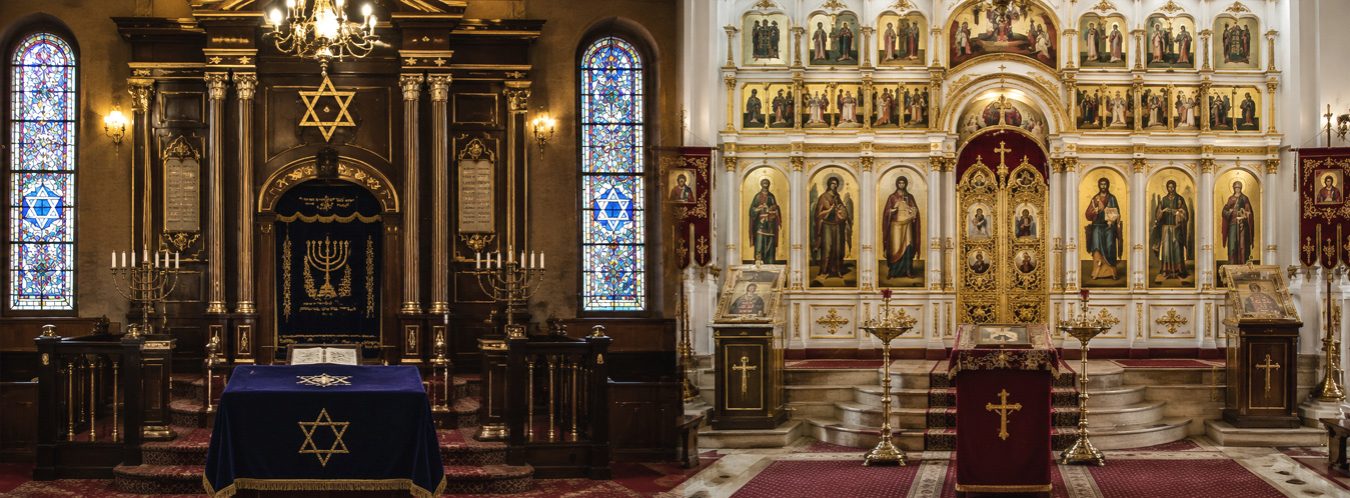


Few features of Eastern Orthodoxy are as immediately recognizable as its icons. Enter an Orthodox church and you are likely to see images of Christ, Mary, the apostles, angels, and saints covering walls, standing on screens, and sometimes filling much of the worship space.
To someone from a Protestant background, the practice can initially seem uncomfortable. Orthodox Christians may bow before icons, kiss them, light candles near them, and carry them in processions. Orthodoxy, however, makes a firm distinction between the worship owed to God alone and the veneration or honor given to icons and the people they represent.
Understanding that distinction is essential to understanding Orthodox Christianity on its own terms.
What Is an Icon?
An icon is a sacred image, usually depicting Christ, Mary, a saint, an angel, or an event from Scripture or church history. Although icons can be painted in different styles, traditional Orthodox iconography follows conventions that have developed over many centuries.
Orthodox Christians sometimes speak of icons as being “written” rather than painted because they are intended to communicate theological truth visually. An icon is not merely decoration or an artist’s attempt to produce a realistic portrait.
That helps explain their distinctive appearance. Perspective, proportion, color, gestures, and symbols may be used differently from ordinary Western portraiture because the purpose is theological rather than photographic.
Icons and the Incarnation
The Orthodox defense of icons is closely connected with the Incarnation.
The reasoning is fairly straightforward. God is invisible, but in Jesus Christ the eternal Son genuinely became human and could be seen, touched, and heard. Therefore, depicting Christ in His humanity does not necessarily deny God’s transcendence. Orthodoxy argues that it bears witness to the reality that God truly became flesh.
This became especially important during the Iconoclastic Controversy of the eighth and ninth centuries. Some Byzantine emperors and church leaders opposed religious images and ordered icons destroyed or removed.
Defenders of icons argued that rejecting images of Christ could undermine the reality of the Incarnation itself.
The Second Council of Nicaea
The controversy eventually led to the Second Council of Nicaea in 787, recognized by Eastern Orthodoxy as the seventh ecumenical council.
The council defended the use and veneration of icons while distinguishing such veneration from the worship belonging to God alone. Honor shown to an image was understood as passing to the person represented by it.
The controversy did not immediately disappear, but the restoration of icons in 843 became so significant in Orthodox history that it is commemorated each year on the first Sunday of Lent as the Triumph of Orthodoxy.
For Eastern Orthodoxy, then, icons are not simply a medieval artistic preference. Their use became connected with the church’s understanding of Christ Himself.
The Iconostasis
One of the most striking features of many Orthodox churches is the iconostasis, a screen covered with icons separating the sanctuary from the nave where the congregation worships.
Certain icons normally occupy traditional locations. Christ and the Theotokos are prominently represented, along with other saints and biblical events. Doors in the center lead into the sanctuary and are used at particular moments during the Divine Liturgy.
The iconostasis does more than divide architectural space. It visually connects the congregation with Christ, the saints, and the heavenly worship in which Orthodox Christians understand themselves to be participating.
The building itself becomes part of the theology.
Mary the Theotokos
Mary occupies a particularly prominent place in Orthodox devotion. She is commonly called the Theotokos, a Greek title meaning “God-bearer” or “Mother of God.”
The title is primarily a statement about Jesus rather than an attempt to make Mary divine. The Council of Ephesus affirmed the title in 431 because the person born from Mary was not merely a human being later associated with God. He was the divine Son who had genuinely become human.
Orthodox worship contains numerous hymns and prayers honoring Mary, and icons of the Theotokos are found throughout Orthodox churches.
Orthodoxy regards Mary as the foremost among the saints and an extraordinary example of obedience to God. But she remains a human being and is not worshiped as a goddess or considered part of the Trinity.
The Saints
Eastern Orthodoxy understands the saints as Christians whose lives demonstrate exceptional holiness and faithfulness to Christ.
The category includes apostles, martyrs, bishops, monks, theologians, missionaries, and ordinary believers whose lives became notable examples of Christian devotion. Some saints are recognized throughout the Orthodox world, while others have particular importance within specific countries or churches.
Orthodox Christians do not understand the saints simply as historical heroes who should be remembered. Because those who die in Christ remain alive in Him, the saints continue to belong to the living communion of the church.
That conviction leads directly to one of the practices that Protestants often find most difficult to understand.
Asking the Saints to Pray
Orthodox Christians ask Mary and other saints for their prayers. From the Orthodox perspective, this is an extension of the same principle by which Christians ask other believers to pray for them.
Death, they argue, does not sever believers from the body of Christ. If Christians on earth can pray for one another, the saints who are alive with Christ can also intercede for believers on earth.
Orthodox Christians therefore distinguish asking a saint to pray from worshiping the saint. Prayer in this context can mean a request or petition rather than divine worship.
Many Protestants reject this practice, arguing that Scripture directs believers to approach God through Christ and does not establish a practice of addressing departed Christians. The disagreement therefore involves more than terminology. It reflects different understandings of the communion of saints and how Christians on earth relate to believers who have died.
Veneration and Worship
Orthodoxy distinguishes carefully between veneration and worship.
Honor may be shown to saints and icons, but worship belongs to God alone. When an Orthodox Christian kisses an icon of Christ or a saint, the physical image itself is not regarded as a god. The honor is directed toward the person represented.
Critics have questioned whether the distinction is always as clear in practice as it is in theology. Orthodox Christians respond that outward actions such as bowing or kissing do not automatically constitute worship and that similar gestures of honor have existed in many cultures.
Whatever judgment someone ultimately makes about the practice, it is important to describe the Orthodox claim accurately before evaluating it. Orthodoxy does not teach that Christians should worship Mary, the saints, or painted wooden panels.
Windows into Heaven
Icons, saints, and the Orthodox understanding of worship ultimately fit within a larger view of the church.
Orthodox Christians do not think of the congregation gathered on Sunday as worshiping separately from Christians who have gone before them. The church on earth and the church in heaven remain united in Christ.
Icons make that conviction visible. Christ, Mary, the apostles, martyrs, and saints surround the worshiping congregation as reminders that Christianity did not begin with the people presently standing in the building and will not end with them.
This is why icons are sometimes described as “windows into heaven.” The expression does not mean that the wooden panel possesses magical powers. It means that the visible image directs attention beyond itself to the spiritual reality it represents.
To understand Orthodox icons, then, it helps to stop thinking of them merely as religious paintings. Within Eastern Orthodoxy, they belong to a much larger understanding of the Incarnation, the church, worship, and the communion of saints.