

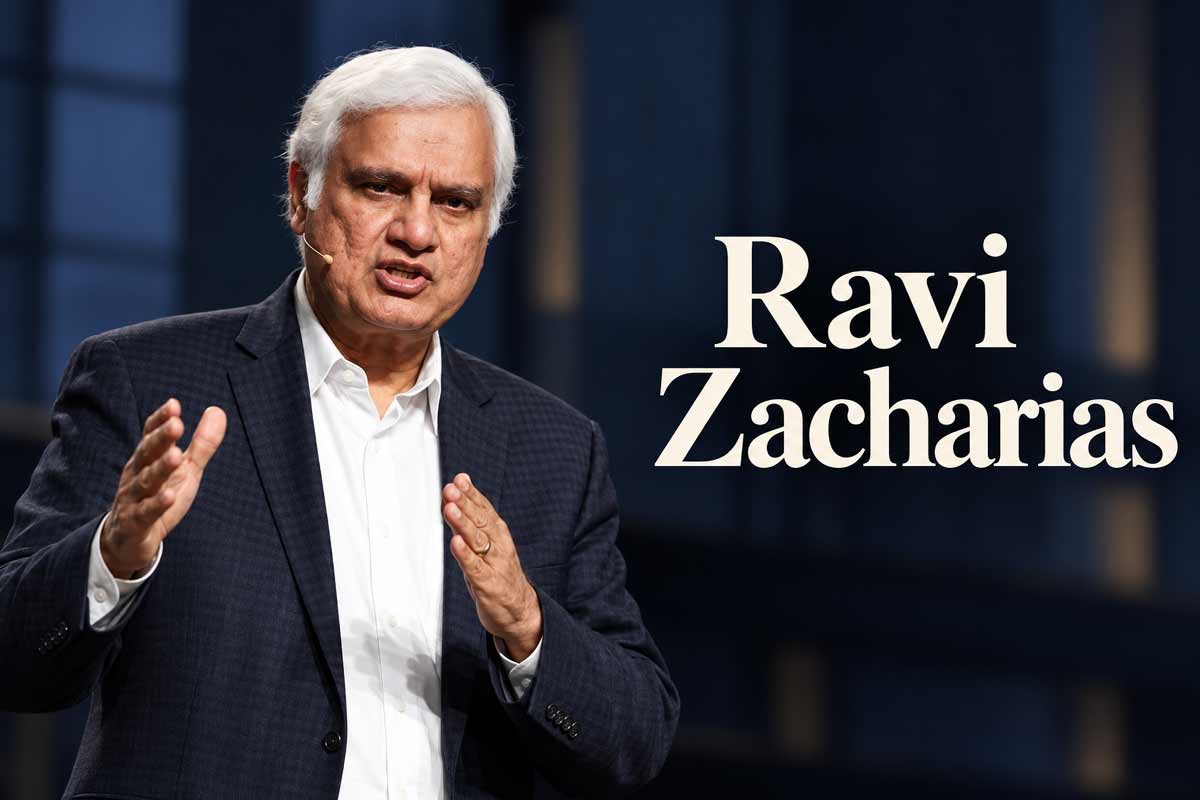
For decades, Ravi Zacharias was one of the most recognizable voices in Christian apologetics. His measured delivery, literary references, and ability to connect philosophical questions with ordinary human concerns attracted listeners around the world. Many Christians credited his books and talks with helping them think more clearly about their faith. After his death in 2020, an investigation documented a pattern of sexual abuse and misconduct that contradicted the message he had publicly defended. An honest account of his life has to explain his influence while giving the people he harmed more than a passing reference at the end.
Zacharias’s story raises difficult questions about truth, trust, and Christian leadership. A sound argument doesn’t become false because its speaker acts wickedly, but the speaker’s wrongdoing cannot be dismissed on that basis. His public reputation helped give him access to people and protection from scrutiny. The damage therefore extends beyond the discovery that a respected teacher failed to practice what he preached. His history shows how a ministry devoted to answering difficult questions can become unwilling to ask those questions about its own leader.
From India to an International Ministry
Zacharias was born in Madras, now Chennai, India, in 1946. He described his upbringing as nominally Christian within a society where several religious traditions were part of everyday life. According to his own account, he committed his life to Christ at seventeen while hospitalized following a suicide attempt. That testimony became part of his public explanation of why questions about meaning and hope mattered to him. It also helped listeners understand why his presentations often moved from philosophical arguments into the personal consequences of belief.
He immigrated to Canada in 1966 and graduated from Ontario Bible College in 1972. He later earned a Master of Divinity at Trinity Evangelical Divinity School in Illinois. His early work involved evangelism, and he founded Ravi Zacharias International Ministries, usually called RZIM, in 1984. The organization eventually developed a substantial international speaking and training ministry. Its appeal rested on the conviction that Christians needed to engage the intellectual objections people brought to the gospel rather than assuming those objections would disappear if they were ignored.
His broadcasts, including Let My People Think and Just Thinking, brought that work to audiences beyond a conference or university lecture hall. Books and recorded question-and-answer sessions allowed listeners to encounter his presentations repeatedly. RZIM also became a platform for other speakers and writers, so its reach extended beyond Zacharias’s own appearances. That wider influence helps explain the depth of the reaction when the abuse became established. People weren’t only reconsidering a speaker they admired; many were reconsidering an organization they had trusted to represent Christianity responsibly.
The Questions That Shaped His Apologetics
Zacharias commonly organized his discussion of worldviews around four subjects: origin, meaning, morality, and destiny. These concern where human life comes from, what gives it purpose, how good and evil are understood, and what happens beyond death. He argued that a worldview should offer answers that fit together rather than contradict one another. Christianity, in his presentation, connected those questions through the Creator, humanity’s relationship with God, moral responsibility, and the person and work of Jesus Christ. The framework helped make large philosophical subjects accessible to people without specialized training.
Its usefulness lies partly in asking readers to notice the relationship between their convictions. Somebody may believe that human beings have lasting worth without having considered what grounds that worth. Another person may treat moral obligations as binding while holding a view of reality that seems to make them entirely subjective. Those tensions deserve examination, although identifying a tension is only the beginning of an argument. A Christian still needs to explain why the proposed biblical answer is true and why an alternative explanation is inadequate.
Zacharias often spoke about the consequences of rejecting God in discussions of morality and meaning. His book Can Man Live Without God addressed the place of belief in God within human life, including its relationship to moral conviction. The concern wasn’t merely whether an atheist could get through the day without attending church. It involved the deeper question of whether a person’s account of reality could adequately explain the values and purposes that person lived by. This emphasis helped him move apologetics beyond abstract debates about whether a divine being might exist.
That discussion requires a distinction between behaving morally and explaining morality. An atheist can act generously, tell the truth, and show courage, while a professing Christian can act cruelly and deceptively. The moral argument concerns the foundation of moral obligations, not a claim that unbelievers are incapable of recognizing them. Philosophers who defend morality without God also offer arguments that need to be understood before they are rejected. A Christian explanation becomes stronger when it engages those arguments fairly instead of treating the personal decency of nonbelievers as something to explain away.
The Christian Claim about Jesus
In Jesus Among Other Gods, Zacharias defended the distinctiveness of Christ against the idea that religions are interchangeable paths to the same destination. Religions can share ethical concerns while disagreeing substantially about God, salvation, and the identity of Jesus. Christianity’s confession that the eternal Son became human is different from regarding Jesus only as a prophet or an inspiring teacher. His death and resurrection also occupy a place in Christian faith that cannot simply be replaced by admiration for his moral teaching. Zacharias sought to make those differences understandable to readers accustomed to hearing that all religious disagreements were superficial.
The principle is sound, but comparative apologetics still requires careful representation of other traditions. Hinduism and Buddhism contain significant internal diversity, and a short presentation cannot account for every school or practice. Islam likewise deserves an explanation based on what Muslims actually affirm rather than a convenient summary designed to make a Christian answer appear stronger. Disagreement doesn’t require assuming that another religion has no serious thinkers or that its adherents have never considered obvious objections. The Christian claim should be defended through evidence and reasoning that remain persuasive after the other position has been presented accurately.
Zacharias’s approach also emphasized the relationship between religious belief and personal longing. People ask questions about forgiveness, suffering, and identity because those subjects affect their lives. Christianity offers more than an impersonal explanation of the universe; it proclaims reconciliation with God through Christ. That message can speak to intellectual concerns and to the need for redemption without confusing the two. A person’s desire for forgiveness doesn’t prove Christianity true, but it helps explain why the truth of Christianity would matter personally.
His Speaking Style and Its Appeal
Zacharias frequently used stories, poetry, and literary references alongside theological arguments. This gave his presentations a different character from a technical philosophy lecture or a debate focused on historical evidence alone. An illustration could help listeners recognize how a question about belief appeared in a marriage, a moment of disappointment, or a struggle with purpose. His delivery also gave audiences the impression that difficult subjects could be discussed without constant hostility. That combination made his work especially attractive to Christians who wanted intellectually serious conversation in language they could follow.
Eloquence, however, can make an argument feel more complete than it is. A memorable story may illustrate a conclusion without establishing it, and a quotation may express an insight without answering the objection under discussion. Readers should be able to identify the reasoning beneath a presentation and examine the evidence supporting it. They should also check whether quoted writers and competing views have been represented correctly. These standards apply to every Christian communicator, including those whose speaking style makes agreement feel almost effortless.
His writing also addressed subjects that overlapped with pastoral concerns. The Grand Weaver considered the relationship between the events of a person’s life and divine providence. Why Suffering, written with Vince Vitale, addressed questions about pain and the existence of a loving God. Such subjects cannot be handled responsibly by argument alone, because a person experiencing grief may need patient care as well as an explanation. The later revelations about Zacharias make that distinction especially painful: speaking effectively about suffering is very different from refusing to inflict it on other people.
Problems with His Public Credentials
Before the full extent of the abuse became public, Zacharias also faced criticism concerning the presentation of his academic background. Reports questioned the use of doctoral titles and descriptions that could give readers an inflated impression of his qualifications. His doctorates were honorary rather than earned research doctorates, and biographies were revised to clarify that distinction. An honorary degree can recognize a person’s contribution, but it doesn’t represent the same academic work as an earned doctorate. This was a separate issue from the sexual abuse, although both raised questions about the reliability of the public image surrounding him.
Formal qualifications don’t determine whether an argument is correct, and a person doesn’t need a doctorate to contribute something worthwhile to apologetics. Nevertheless, the description of those qualifications should be truthful. Institutions and titles can encourage listeners to extend trust before they have examined the content. If a ministry relies on that trust, it has a responsibility to ensure that the impression it creates is accurate. A defense of Christian truth is weakened when basic facts about the defender are presented misleadingly.
The Investigation into Sexual Abuse
Zacharias died on May 19, 2020, at seventy-four. Later that year, allegations concerning his treatment of massage therapists led RZIM to commission the law firm Miller & Martin to investigate. The report, released in February 2021, drew on witness interviews and electronic records and concluded that he had engaged in sexual misconduct. Its findings described unwanted sexual contact, exploitation, and the use of spiritual influence against women. The report also included a woman’s account of rape, an allegation that should be identified as her reported account rather than described as a criminal conviction.
The evidence showed substantially more than an isolated lapse or an inappropriate conversation. Investigators described repeated misconduct and concealment, including sexual communications and images on devices they examined. They also reported a woman’s account that Zacharias used the possible damage to his ministry as a reason she should remain silent. The investigation was not exhaustive, and his death meant it wasn’t a criminal proceeding in which he was tried. Those limitations do not erase the documented evidence or turn the findings back into mere speculation.
RZIM’s board acknowledged the seriousness of the findings and apologized to the women harmed. It also reversed its earlier treatment of Lori Anne Thompson, who had made allegations about Zacharias in 2017. The board said it believed her account and acknowledged that its defense of him had perpetuated a false narrative that increased her suffering. That admission is important because the harm involved more than Zacharias’s conduct toward an individual. The response of a trusted Christian organization could make an already vulnerable person face disbelief and public discrediting as well.
Calling this simply a scandal can obscure what happened. The word often directs attention toward a famous person’s damaged reputation, while abuse directs attention toward the people subjected to wrongdoing. Public embarrassment was one consequence, but the central issue was the exploitation of women and the misuse of trust. Nor should general statements about everybody being a sinner flatten the difference between ordinary human weakness and repeated predatory conduct. Christian teaching about sin should make believers more willing to name serious wrongdoing accurately, not less willing.
How a Ministry Failed to Ask Questions
A separate assessment by Guidepost Solutions, dated August 2021, examined RZIM’s organizational response and culture. It found that leaders had relied excessively on Zacharias’s explanations and failed to pursue contradictions adequately. The assessment described an environment in which personal devotion to the founder discouraged open questioning of his conduct. It did not establish that every leader knew the underlying abuse was occurring. Its findings concerned failures of oversight and judgment that allowed loyalty to the leader to take precedence over the responsibilities of the organization.
That distinction prevents both exaggeration and excuse-making. Knowing about abuse and mishandling credible concerns are different failures, but the second can still leave people exposed to serious harm. A board’s responsibility includes asking questions that a founder would prefer not to answer. Oversight becomes ineffective when a leader’s prominence or perceived spiritual importance places him beyond meaningful examination. An organization devoted to investigating the truth should have been particularly alert to the danger of accepting assurances because they came from someone it admired.
The case also exposes the danger of treating a ministry’s reputation as though it were the same thing as the reputation of Christ. Once those become confused, people may believe that telling the truth threatens the gospel and that suppressing the truth protects it. That reasoning reverses Christian moral responsibility. A ministry exists to serve Christ and people, and it has no entitlement to survive through the concealment of abuse. Protecting a platform cannot justify sacrificing the people whose dignity that platform claims to defend.
What Becomes of His Arguments
Christians who benefited from Zacharias’s teaching may wonder what to do with the help they received. The discovery of his abuse doesn’t require pretending that every insight in a book was false or that every listener’s growth was imaginary. A conclusion about Christ’s resurrection must be evaluated through the evidence for that conclusion, not through the character of one person who defended it. Much of the Christian case also rests on arguments and sources that existed long before Zacharias’s ministry. A believer can reassess his influence without surrendering convictions that have sound reasons behind them.
The point should never become a quick way to end discussion of the victims. Saying that Christianity remains true answers one question, but it doesn’t answer whether churches and ministries have responded faithfully to wrongdoing. People harmed by abuse may have difficulty trusting Christian leaders precisely because Christian language was used to manipulate or silence them. Their distress cannot fairly be treated as a failure to understand an argument. They need honesty, protection, and patient care, along with the freedom to speak without being made responsible for an organization’s comfort.
There’s also no requirement to continue recommending Zacharias’s material simply because some arguments in it may be sound. Christians have other sources for discussing morality, religious truth, and the evidence for faith. An older quotation or book reference can be acknowledged honestly where it belongs without presenting its author as a model of Christian life. Teaching history may require discussing an influential figure whose conduct was disgraceful. Promoting that figure’s authority is a different decision and needs to take account of the harm associated with his name.
His case likewise doesn’t justify treating every colleague, reader, or admirer as knowingly complicit. People who encountered his public work had varying levels of information and access, and many were themselves deceived. Responsibility should be evaluated according to what a person knew, what authority that person held, and how that person responded to credible concerns. Sweeping accusations can obscure the particular decisions that need examination. Accurate accountability is more useful than distributing blame so broadly that nobody’s actual conduct remains clear.
Christian Witness Requires Honesty
The New Testament’s standards for leadership include character because Christian teaching concerns how people live as well as what they affirm. First Timothy 3 describes qualities that cannot be established by speaking ability, a successful book, or a crowded auditorium. An organization may have policies on paper and still lack meaningful accountability if those policies are not applied to its most important person. Effective oversight requires the authority to investigate, to protect people who report concerns, and to act when the findings threaten the leader’s position. A leader’s influence should increase the need for that oversight rather than reduce it.
Christian forgiveness also must not be used to demand silence or remove consequences. Forgiveness doesn’t make an abusive person safe, restore qualifications for leadership automatically, or cancel the responsibility to protect others. Where crimes may have occurred, a ministry’s internal response cannot substitute for the appropriate legal authorities. Survivors should not be pressured to supply a reassuring ending so that everybody else can move on. Care for them has to remain worthwhile even when it produces no public story that helps the institution recover its reputation.
Ravi Zacharias helped bring philosophical and religious questions into conversations that many Christians found valuable. His documented abuse destroyed the credibility of the moral example attached to his teaching and exposed serious failures in the ministry surrounding him. Christians should neither conceal that history nor use it to replace evidence with outrage when evaluating an argument. They should recognize that truthful words and faithful conduct belong together, and that defending the gospel never requires defending abuse. A ministry that asks people to trust its account of truth must be willing to tell the truth about itself when doing so is most costly.