

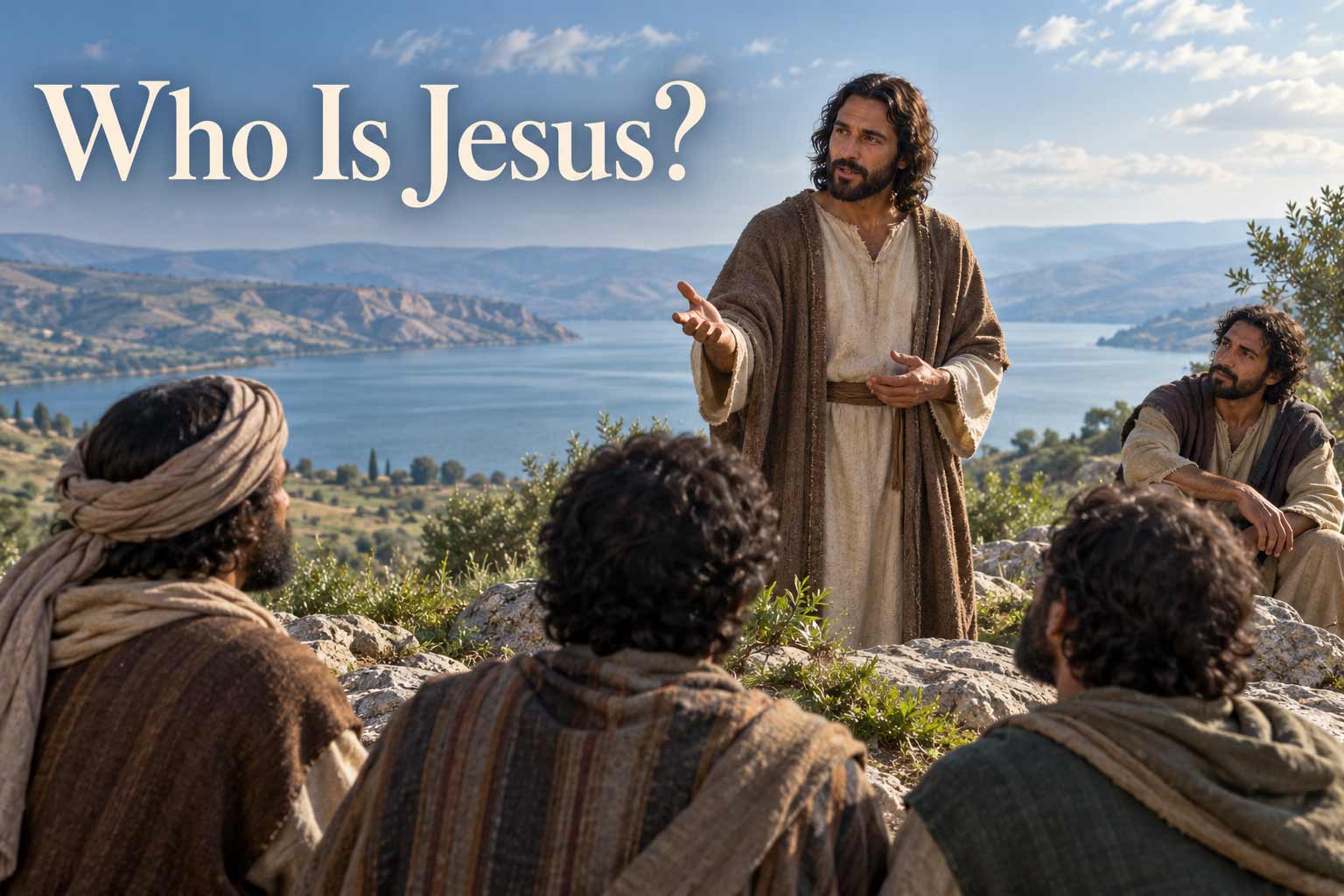
People have a remarkable ability to make Jesus sound like someone who already agrees with them. Some present Him as a revolutionary, others as a defender of traditional values, and others as a teacher whose main concern was helping people feel good about themselves. There’s usually something in His words or actions that they can point to. The problem comes when they leave out everything that complicates the picture.
Jesus asked His own disciples what people were saying about Him. They reported several opinions before He made the question personal: “But whom say ye that I am?” Peter answered that He was the Christ, the Son of the living God (Matthew 16:13–16). That exchange brings us to the central question of Christianity. Who we believe Jesus is shapes what we think His teaching, death, and resurrection mean.
Christians believe that Jesus is the Messiah, the Son of God who became genuinely human, died for our sins, and rose from the dead. Each part of that statement deserves explanation. We can learn facts about His life without understanding why His followers worship Him, and we can repeat religious titles without knowing what they mean. Getting to know Jesus requires paying attention to both His identity and what He came to do.
Jesus Belongs to the Story of Israel
Jesus was Jewish, and His ministry took place within the world of Israel’s Scriptures, worship, and expectations. He taught in synagogues, discussed the Law, celebrated Jewish festivals, and spoke about the God of Abraham, Isaac, and Jacob. His first followers were Jewish as well. Reading Him as though He appeared without that background makes much of His teaching harder to understand.
The title “Christ” comes from a Greek word meaning “anointed one,” corresponding to the Hebrew title “Messiah.” It isn’t Jesus’ last name. In Israel’s history, anointing was associated with people set apart for particular responsibilities, including kings and priests. Calling Jesus the Christ identifies Him as God’s appointed Messiah, the one through whom God’s purposes for His people would be fulfilled.
The Gospels show that even His disciples struggled to understand what that would involve. They could recognize Him as the Messiah while resisting His warnings about suffering and death. They also argued about their own importance, which suggests that they hadn’t quite grasped His approach to leadership. Jesus taught them that greatness involved serving others, and His own life would demonstrate what He meant.
Jesus Is Genuinely Human
Christians can become so concerned with defending Jesus’ deity that His humanity almost disappears. We acknowledge that He had a human body, but sometimes describe His life as though hunger, grief, temptation, and suffering barely affected Him. The Gospels give us a much fuller account. Jesus grew, became tired, wept, experienced anguish, and faced death.
His humanity wasn’t a costume. Luke says that He grew in wisdom and stature, and Hebrews describes Him as sharing our flesh and blood. He entered human life with its relationships, responsibilities, and suffering. When He prayed to the Father, He was expressing a real relationship of dependence and obedience.
His temptations were real, too. Hebrews connects His experience of temptation with His ability to help those who are tempted. We shouldn’t turn those encounters into a performance whose only purpose was to make Him appear human. His faithfulness involved genuine obedience under pressure, including His submission to the Father in Gethsemane.
This gives us a reason to approach Him with confidence. We aren’t bringing our struggles to someone who knows human suffering only as an observer. Jesus experienced life among us and remained faithful through it. His humanity helps us understand both His compassion and the seriousness of what He endured.
Jesus Is the Son of God
The New Testament also says things about Jesus that go beyond identifying Him as a faithful human being. John begins his Gospel by describing the Word as both with God and God, then says that the Word became flesh (John 1:1, 14). Later, Thomas addresses the risen Jesus as “My Lord and my God” (John 20:28). These passages belong to the biblical foundation for Christian belief in His deity.
Calling Jesus the Son of God doesn’t mean that God produced a child through a physical relationship. Nor does it mean that Jesus is merely one more believer who can call God his Father. The New Testament presents His relationship with the Father as unique. He reveals the Father and exercises an authority that requires us to take His identity seriously.
At the same time, Jesus and the Father aren’t interchangeable names for the same person. Jesus prays to the Father, obeys Him, and speaks of being sent by Him. Christian teaching about the Trinity attempts to account for these relationships while affirming that there is one God. We shouldn’t erase the distinction between Father and Son to defend Jesus’ deity.
Christians describe Jesus as fully divine and fully human. That language doesn’t answer every question about how the incarnation works, but it preserves both sides of the biblical account. We shouldn’t reduce Him to a gifted teacher or describe His humanity in ways that make it unreal. The wonder of the incarnation is that the Son of God truly entered our human condition.
Jesus Reveals God Through His Life and Teaching
Jesus’ ministry gives us a way to understand God’s character. His compassion for suffering people, willingness to receive sinners, and opposition to religious hypocrisy show us what mattered to Him. He healed, taught, forgave, and called people to repentance. His care for people and His call for change belonged together.
His teaching about the kingdom of God announced God’s reign and called people to respond to it. This wasn’t simply advice for becoming more successful or feeling more spiritual. Jesus addressed our loyalties, motives, relationships, and treatment of other people. He challenged the assumption that outward religious respectability necessarily reflects a heart that loves God.
That challenge reached beyond the obviously disreputable people in His audience. A person could know the Scriptures, observe religious practices, and still resist what God was doing. Jesus exposed the use of religion to gain status, excuse cruelty, or avoid responsibility. Those warnings remain uncomfortable because church attendance hasn’t made human beings immune to any of those tendencies.
We should also be careful about choosing between Jesus’ kindness and His authority. He welcomed people who needed mercy, but He didn’t teach that our choices were insignificant. He called people to follow Him and allowed that call to disrupt their lives. His compassion gives us reason to trust Him, while His teaching gives us reason to examine ourselves.
His Death and Resurrection Are Central
An account of Jesus that stops with His teaching leaves out the events at the center of the Christian gospel. Paul summarized the message he had received by saying that Christ died for our sins, was buried, rose on the third day, and appeared to witnesses (1 Corinthians 15:3–8). His death and resurrection weren’t additions to an otherwise complete message. They were essential to it.
Christians have offered different explanations of how Jesus’ death brings salvation, drawing on biblical language about sacrifice, reconciliation, forgiveness, and victory over evil. Those explanations deserve careful consideration, but the basic claim is that He gave Himself for us and dealt with our sin. The cross shows the seriousness of human evil and the depth of God’s love. It also challenges the idea that saving power must look like political dominance or protection from suffering.
The resurrection is equally essential. Christianity claims that Jesus actually rose from the dead, rather than merely surviving in the memories of His followers. Paul understood that the truth of the resurrection affected the truth of the whole message. If Jesus remained dead, Christian hope would require more than an inspiring account of His courage.
Because He lives, Christians look to Him as their present Lord. We believe that forgiveness, reconciliation with God, and hope beyond death are grounded in what He has done. That belief doesn’t remove every question or hardship from our lives. It gives us a reason to trust that sin and death don’t have the final word.
Knowing Who He Is Calls for a Response
We can admire Jesus from a comfortable distance. We can appreciate His concern for the poor, quote His teaching about love, or defend Christian beliefs in an argument. Following Him asks more of us. It involves trusting Him, receiving His correction, and learning to live according to His teaching.
That doesn’t mean we must understand every theological question before we begin. His first disciples had plenty to learn, and the Gospels make no effort to hide their confusion or failures. What mattered was their willingness to keep listening and follow Him. We can do the same while asking honest questions and growing in understanding.
A good place to begin is to read the Gospels with attention to what Jesus actually says and does. Notice whom He welcomes, what He challenges, how He responds to suffering, and what He asks of His followers. Let the account complicate the version of Jesus you may have inherited. His question to the disciples remains a useful one for us, because our answer should come from encountering Him rather than simply repeating what we’ve heard.