

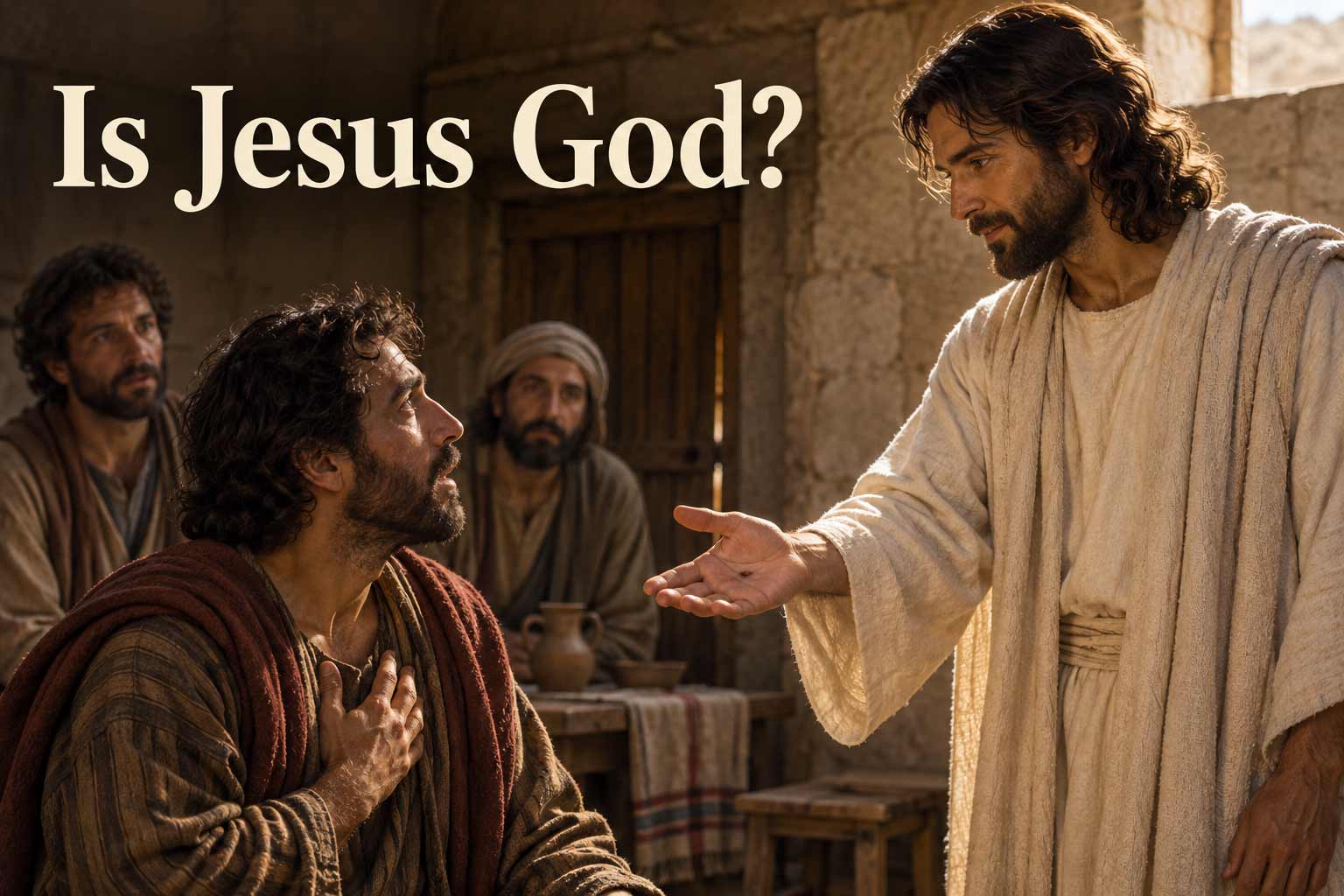
Yes. I believe Jesus is God the Son who became human, and there’s a substantial biblical basis for that belief. But saying “Jesus is God” can raise questions as quickly as it answers them. If Jesus is God, whom was He praying to? Why did He say that the Father was greater than He was? And how can someone who became tired, suffered, and died be divine?
Those are reasonable questions. The New Testament presents Jesus as genuinely human while also describing Him in ways that go far beyond a prophet or religious teacher. We shouldn’t defend one part of that account by explaining away the other. The task is to consider the passages together and ask what understanding of Jesus best accounts for them.
What Does It Mean to Say Jesus Is God?
When Christians affirm Jesus’ deity, we mean that He shares the divine nature. He isn’t merely a person through whom God worked, or a created being promoted to an unusually important position. The Son belongs on the divine side of the distinction between God and creation. His becoming human brought Him into our world without making His divine identity something He acquired along the way.
That doesn’t mean Jesus is the Father. The New Testament describes the Father sending the Son, the Son praying to the Father, and a relationship of love between them. Those distinctions are real. Saying that Jesus is divine doesn’t require us to turn His conversations with the Father into conversations with Himself.
Christian teaching about the Trinity holds these claims together: there is one God, and the Father, Son, and Holy Spirit are distinct. The language can be difficult, but the reason for it is understandable. Christians are trying to account for the biblical witness without teaching either three separate gods or one person who merely changes roles. We may not fully understand how God’s being works, but we can recognize the claims Scripture makes about Him.
John Identifies the Word as God
John opens his Gospel with a statement that deserves careful attention: “In the beginning was the Word, and the Word was with God, and the Word was God” (John 1:1). Notice that John says both that the Word was with God and that the Word was God. The first statement establishes a distinction; the second affirms deity. Any interpretation needs to account for both.
John then says that all things were made through the Word and that nothing that came into being was made apart from Him (John 1:3). That places the Word in relation to the whole created order. John doesn’t present Him as one more item within it. He presents Him as the one through whom creation came into existence.
The identity of the Word becomes clear when John says that the Word became flesh and lived among us (John 1:14). This is the foundation for what Christians call the incarnation: the Son of God entered human life. John’s account doesn’t begin with a human teacher gradually achieving divine status. It begins with the Word who already existed and then became human.
Thomas Calls Jesus His Lord and God
After the resurrection, Thomas struggled to believe the other disciples’ report that they had seen Jesus. When Jesus appeared and addressed his doubts, Thomas responded, “My Lord and my God” (John 20:28). John explicitly presents those words as Thomas’s answer to Jesus. The natural reading is that Thomas is identifying the person standing before him.
Some interpret this as an exclamation directed toward God rather than a confession about Jesus. But that reading is difficult to reconcile with the way John tells the encounter. Thomas answers Jesus, and Jesus responds by discussing Thomas’s belief. He doesn’t correct Thomas for giving Him an identity or honor that belongs elsewhere.
This confession also fits the opening of John’s Gospel. The Word is identified as God at the beginning, and the risen Jesus is addressed as God near the end. We shouldn’t build a doctrine from an isolated expression without considering its setting. Here, the setting reinforces the meaning of the words.
The Letters Describe His Deity Too
Paul writes that the fullness of deity dwells bodily in Christ (Colossians 2:9). That is stronger language than saying that Jesus was inspired by God or unusually sensitive to His presence. Paul connects divine fullness with the embodied Christ. His humanity and His deity appear together in the statement.
Hebrews develops a similar picture by describing the Son as the radiance of God’s glory and the exact representation of His being (Hebrews 1:3). The chapter distinguishes Him from angels and says that the angels are to worship Him. It also applies the words “Thy throne, O God” to the Son (Hebrews 1:8). The argument presents Him as far more than a heavenly messenger.
These passages contribute to a larger pattern. Jesus is associated with creation, described as sharing divine fullness, addressed as God, and given extraordinary honor. Individual texts have been debated, and we should examine those debates honestly. But the case for His deity rests on several passages reinforcing one another.
Why Did Jesus Pray to God?
Jesus prayed because He was genuinely human and because the Father and Son are distinct. His prayers expressed dependence, love, and obedience. In Gethsemane, His submission to the Father came in the midst of real anguish. We shouldn’t describe it as a performance designed to give the disciples a lesson.
The incarnation means that the Son entered human life rather than simply appearing to participate in it. He grew, experienced physical needs, and lived in relationship with the Father. Those experiences don’t cancel the passages affirming His deity. They tell us that His humanity must be taken just as seriously.
Our difficulty often comes from assuming that a divine Son couldn’t live a genuinely dependent human life. Yet that is part of what the New Testament describes. We may disagree about the precise explanation of how His divine identity and human experience relate. We still need an explanation that preserves both, rather than making either one disappear.
What About His Limitations?
Jesus said that the Father was greater than He was (John 14:28). He also said that the Son didn’t know the day or hour of the events He was describing, while the Father did (Mark 13:32). These are important passages, and defending Jesus’ deity doesn’t give us permission to change what they say. His earthly life included genuine humility and limitations.
Philippians 2 helps us think about that life. Paul describes Christ as existing in the form of God, taking the form of a servant, becoming human, and humbling Himself in obedience even to death. The passage connects His divine identity with His willingness to serve. His lowly condition was part of His mission.
Christians explain the details differently. Some emphasize the limitations of His human knowledge, while others emphasize His voluntary restraint in the exercise of divine attributes. I take His humanity seriously enough to believe that when He said He didn’t know something, He meant it. We don’t need to make Him secretly know everything at every moment of His earthly life in order to affirm who He is.
These passages also remind us to distinguish identity from position and experience. The Son’s submission to the Father during His earthly mission doesn’t, by itself, settle the question of His divine nature. We need to read it alongside the passages that identify Him as divine. A sound interpretation should have room for His humility as well as His glory.
Why His Deity Matters
Belief in Jesus’ deity affects how Christians understand God’s involvement in salvation. In the incarnation, the Son entered the human condition. His compassion, obedience, suffering, and death belong to that act of coming among us. We encounter God’s commitment to humanity through the life He actually lived.
It also explains why Christians worship Jesus. We don’t simply admire His teaching or regard Him as an exceptionally reliable guide. We entrust ourselves to Him as Lord. If He were merely a creature, the worship Christians offer Him would raise a serious problem; if He is divine, that worship recognizes His identity.
Paul’s discussion in Philippians 2 brings this belief into daily life. He presents Christ’s humility as a reason for believers to abandon selfish ambition and care about others. Understanding who Jesus is should deepen our worship and shape our conduct. The Son who shares divine glory chose to serve, and following Him means taking that choice seriously.