

The virgin birth is familiar enough that people can repeat it without asking what it means. We hear it in Christmas readings, sing about it in carols, and recognize it as part of traditional Christian belief. But familiarity doesn’t explain its importance. Why would Jesus’ conception matter to our understanding of who He is and what He came to do?
Some Christians answer by saying that every part of the gospel depends on it. Others regard it as a meaningful account of Jesus’ origins without making it the foundation of their faith. Before deciding how much weight it should carry, we need to distinguish what Matthew and Luke actually say from explanations Christians have added. The accounts make a remarkable claim, but they don’t answer every question we might ask about its necessity.
What Do Matthew and Luke Say?
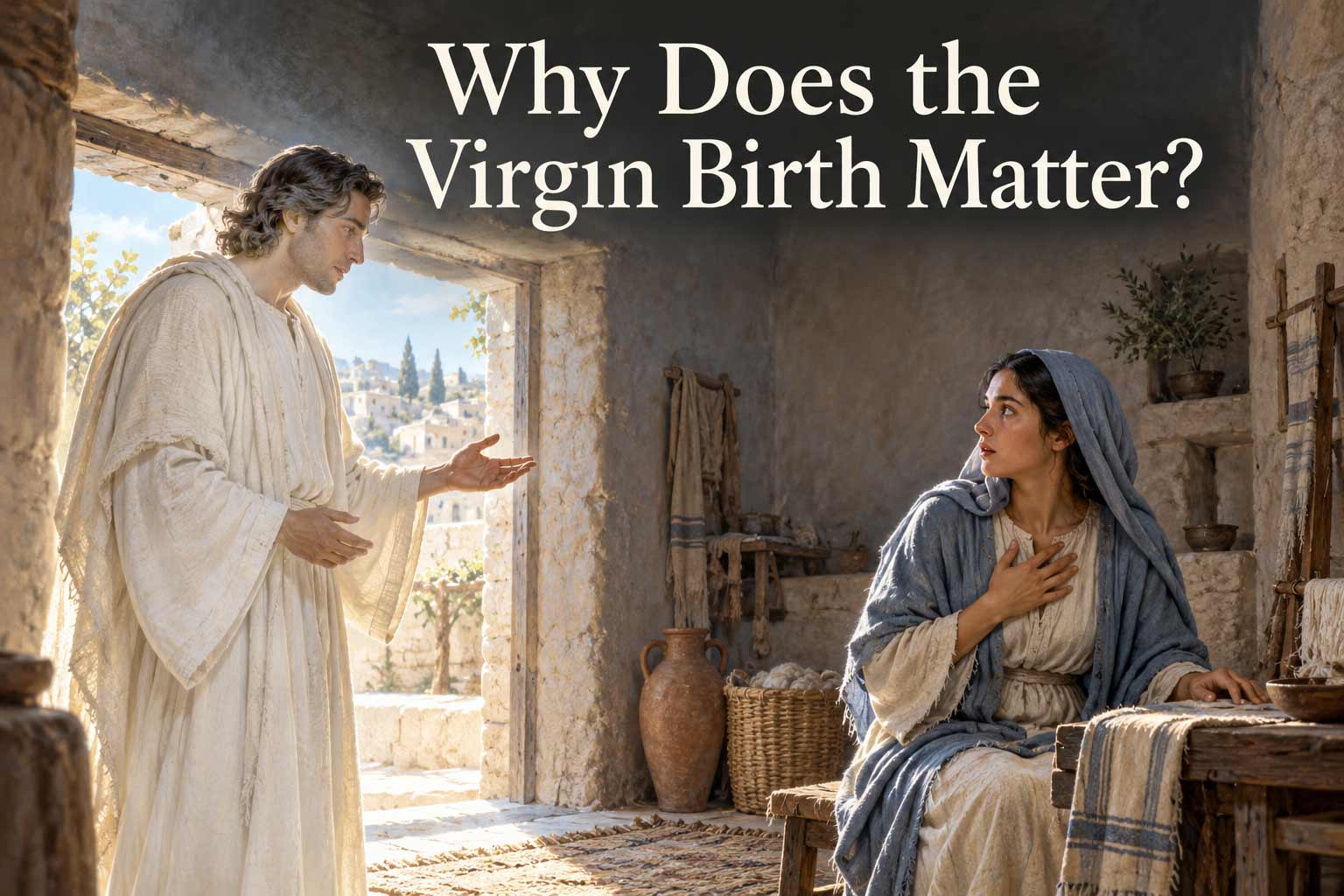
Strictly speaking, “virgin birth” refers to Jesus’ conception without sexual intercourse. The central claim concerns how Mary became pregnant, rather than describing a different biological process of childbirth. Matthew says that Mary was found to be pregnant through the Holy Spirit before she and Joseph came together (Matthew 1:18). Joseph initially understood the pregnancy as a reason to end their betrothal.
Matthew’s account takes Joseph’s concern seriously. He doesn’t immediately recognize the pregnancy as a miracle. An angel tells him that the child was conceived through the Holy Spirit and instructs him to receive Mary as his wife. Joseph then follows that instruction, and Matthew says that he had no sexual relations with her before Jesus was born.
Luke tells the account from Mary’s perspective. When the angel announces that she will bear a son, she asks how this can happen because she hasn’t had sexual relations with a man. The answer is that the Holy Spirit will come upon her and the power of the Most High will overshadow her (Luke 1:34–35). Luke connects this divine action with the child’s holiness and identity as the Son of God.
Neither account describes a sexual encounter between God and Mary. The language concerns God’s creative power. Nor do the passages provide a medical explanation of conception. Their purpose is to tell readers that Jesus’ coming involved an extraordinary act of God.
It Emphasizes God’s Initiative
One reason Christians value these accounts is that they present Jesus’ arrival as God’s initiative. Mary and Joseph don’t produce a plan to save humanity and then ask God to bless it. They receive an announcement about something God is doing. Their part involves trust and obedience within circumstances they hadn’t chosen.
That emphasis fits the broader Christian understanding of grace. Salvation begins with God coming toward us, rather than humanity finding a way to reach Him through achievement. The conception accounts give that truth a concrete expression. God acts, and people are invited to respond.
We should still distinguish the meaning of the account from a claim that God had no other possible way to act. Matthew and Luke tell us how Jesus was conceived; they don’t examine every alternative God might have chosen. Saying that an event expresses divine initiative is different from proving that divine initiative requires that particular event. We don’t strengthen our explanation by claiming more than the passages establish.
It Points to Jesus’ Unique Identity
Luke connects Jesus’ conception through the Holy Spirit with His identity as the Son of God. Matthew connects His birth with the name Emmanuel, meaning “God with us.” Both writers present His origins as relevant to understanding Him. This child’s life has a significance that Mary and Joseph are called to recognize before His public ministry begins.
But the virgin birth shouldn’t be described as the moment when Jesus became divine. John’s Gospel presents the Word as already existing with God and as God before becoming flesh (John 1:1, 14). Within that understanding, conception marks the Son’s entrance into human life. It doesn’t mark the beginning of His divine existence.
Nor does a miraculous conception, considered by itself, explain everything Christians believe about Jesus. His deity is supported by the broader New Testament witness, including statements about His identity, authority, and relationship with the Father. The virgin birth belongs within that account. It shouldn’t be asked to establish the whole doctrine on its own.
Does It Explain His Sinlessness?
A common explanation says that Jesus needed to be conceived without a human father so that He wouldn’t inherit a sinful nature. That argument is often presented as though the Bible explicitly teaches that sin passes through the male parent. Matthew and Luke don’t say that. We should be cautious about turning a theological theory into a biological fact.
Mary was genuinely human, and Jesus received His humanity through her. If the problem is simply that human parentage transmits sin, removing one human parent doesn’t automatically explain why the other is exempt from the problem. Different Christian traditions have developed different explanations of inherited sin and Jesus’ holiness. Those explanations need to be evaluated on their own merits.
Luke does connect the Holy Spirit’s action with the holiness of the child. That gives Christians reason to associate Jesus’ conception with God’s work in setting Him apart. It doesn’t provide a genetic account of sinlessness. We can affirm Jesus’ holiness without treating moral corruption as something Scripture says is carried exclusively through a father’s contribution.
What About Isaiah’s Prophecy?
Matthew connects Jesus’ birth with Isaiah 7:14, quoting the promise of a child called Emmanuel. This has become a major part of Christian discussion of the virgin birth. However, Isaiah’s passage also belongs to a historical situation involving King Ahaz and a threat to Judah. Its original setting deserves attention.
The Hebrew word commonly translated “virgin” in this verse can be translated “young woman” and doesn’t, by itself, settle the question of sexual experience. The Greek wording Matthew uses is traditionally understood as referring to a virgin. Christians differ over how the sign in Isaiah’s own time relates to Matthew’s application to Jesus.
That debate shouldn’t be reduced to a slogan about one word proving or disproving the whole account. Matthew’s description of Mary’s pregnancy is explicit apart from the quotation. The question about Isaiah concerns how he reads Israel’s Scriptures in relation to Jesus. It’s an important interpretive question, but it isn’t the only basis for the belief.
Is Belief in It the Same as Belief in the Incarnation?
The virgin birth and the incarnation are related, but they aren’t identical claims. The incarnation concerns the Son of God becoming human. The virgin birth concerns the manner of His conception. Traditional Christian teaching affirms both, but distinguishing them helps us understand what each claim contributes.
The New Testament also gives different subjects different levels of attention. Matthew and Luke explicitly describe the conception, while Mark doesn’t include a birth account. Paul says that God sent His Son, born of a woman and born under the law, without explicitly describing a virginal conception in that passage (Galatians 4:4–5). That silence doesn’t prove rejection or ignorance, but it cautions us against pretending that every writer builds his presentation of Jesus around it.
The resurrection receives a particularly explicit statement of necessity from Paul: if Christ hasn’t been raised, Christian faith is futile (1 Corinthians 15:17). The New Testament doesn’t give the virgin birth that same argument. This doesn’t make the conception accounts meaningless. It means we should explain their importance in terms of what they actually contribute.
Taking the Accounts Seriously
We shouldn’t dismiss the virgin birth simply because it involves a miracle. Someone who believes that God created the world has no automatic reason to conclude that God couldn’t bring about an extraordinary conception. But establishing that a miracle is possible isn’t the same as establishing that a particular miracle happened. The accounts and their reliability still deserve examination.
We should also make room for honest questions. A person may be uncertain about these passages while taking Jesus’ deity, resurrection, and lordship seriously. That uncertainty deserves thoughtful discussion rather than an immediate judgment about the person’s sincerity. Respecting Scripture includes being honest about what we understand and what we’re still considering.
The virgin birth matters because Matthew and Luke use it to present Jesus’ coming as a distinctive act of God, connected with His identity and mission. Mary and Joseph respond to that act with costly trust. We can recognize those themes without inventing explanations about genetics or declaring that we know every reason God acted as He did. Careful belief asks us to listen closely to the accounts and let them say what they say.