

When Jesus began preaching, He announced that the kingdom of God was near and called people to repent and believe the good news (Mark 1:14–15). That language runs throughout His teaching. He described the kingdom through parables, connected it with His works of healing and deliverance, and taught His followers to pray for its coming. Understanding the kingdom helps us understand what His ministry was about.
The phrase can sound unfamiliar because most of us don’t live under a king. We may picture a territory, a palace, or a place people enter after they die. Those associations can capture something about kingdoms, but Jesus’ teaching centers on God’s reign: His authority becoming manifest, His purposes being accomplished, and people being called to live under His rule. That reign was already being demonstrated through Jesus, while its complete fulfillment remained ahead.
The Kingdom Concerns God’s Reign
A kingdom involves a ruler, people, and the sphere in which that ruler’s authority is exercised. When Jesus spoke of God’s kingdom, He announced God’s action to establish His righteous rule. This includes people’s relationship with God, but it reaches into the way they live together. God’s purposes concern justice, mercy, faithfulness, and the defeat of evil.
Christians believe that God is already sovereign over creation. The announcement of His kingdom therefore doesn’t mean that He had previously lacked authority. It concerns His acting to confront rebellion, rescue people, and bring His purposes to fulfillment. We can recognize God’s sovereignty while acknowledging that much of what happens in the world opposes His will.
Jesus’ prayer brings this distinction into focus: “Thy kingdom come, Thy will be done in earth, as it is in heaven” (Matthew 6:10). The prayer anticipates a fuller expression of God’s rule. It also connects that rule with His will being done here. We shouldn’t reduce the kingdom to leaving earth behind when Jesus taught His followers to pray for God’s purposes to be accomplished on earth.
The Kingdom Was Present in Jesus’ Ministry
Jesus spoke of the kingdom as something people were encountering through Him. When He defended His work of deliverance, He said that if He cast out demons by God’s Spirit, then God’s kingdom had come upon His hearers (Matthew 12:28). His actions demonstrated divine authority confronting evil. The kingdom was more than a promise about a distant future.
His healings also showed the restoring character of His mission. Suffering people received help, and those who had been marginalized were brought into encounters with God’s mercy. These works didn’t eliminate every illness or instance of suffering around Him. They gave concrete expression to the good He had come to accomplish.
His teaching and forgiveness belonged to the same ministry. People were called to repent, trust God, and live differently. Jesus didn’t separate the announcement of the kingdom from the need to respond to it. God’s reign brought an invitation, but it also challenged loyalties and behavior.
In Luke 17:20–21, Jesus tells the Pharisees that the kingdom is “within you” in the King James wording. Many contemporary translations render the phrase “in your midst.” Given that He was addressing Pharisees, the passage is better understood as directing attention to the kingdom present among them through His ministry than as declaring that each of them had an inward divine kingdom. They were asking when it would come while failing to recognize what was already before them.
Its Fullness Still Lies Ahead
Jesus also spoke of the kingdom as something yet to come. He taught His followers to pray for it, and at the Last Supper He looked forward to drinking again when the kingdom came (Luke 22:18). His teaching therefore includes both a present reality and a future expectation. We need both to understand the world His followers inhabit.
Christians often describe this relationship as “already and not yet.” God’s reign has been manifested through Christ, and believers can experience its benefits now. Yet evil, suffering, and death remain, and the final fulfillment is still ahead. The phrase helps explain why genuine experiences of God’s power can exist alongside continued hardship.
This guards against two mistakes. We shouldn’t assume that nothing of the kingdom can be experienced until Jesus returns. We also shouldn’t claim that its complete fulfillment is already available if we can produce enough faith. Both approaches overlook part of Jesus’ teaching.
I believe we should pray for healing, expect the Holy Spirit to work, and seek deliverance where people are oppressed. But an unanswered prayer doesn’t automatically prove that someone failed to believe. We live in a world where God’s restoring work is real and suffering has not yet been finally removed. That calls for faith, compassion, and patience together.
Jesus Challenged Expectations About Power
Jesus’ way of exercising authority often differed from what people expected. He welcomed people others disregarded, taught His followers to serve, and refused to make status the measure of greatness. His mission led through suffering and the cross. Recognizing Him as King required learning what His kingship meant.
Before Pilate, Jesus said that His kingdom was not of this world and connected that statement with the fact that His servants weren’t fighting to prevent His arrest (John 18:36). His authority didn’t arise from the same source or operate by the same methods as the powers confronting Him. We shouldn’t read that as saying His kingdom has no consequences for life in this world. We should take seriously what it says about how His reign is expressed.
Christians can participate in public life and work for just laws. But we should be cautious about equating God’s kingdom with a political party, nation, or program. No earthly institution becomes the kingdom merely by using Christian language. Its claims and conduct still need to be examined in light of Jesus’ teaching.
The temptation to use power selfishly doesn’t disappear when we believe our cause is right. Following Jesus requires attention to our methods as well as our goals. A church that humiliates people or excuses dishonesty can’t justify that conduct by claiming to advance His kingdom. The King’s character should shape the behavior of His followers.
His Parables Teach Us How to Recognize It
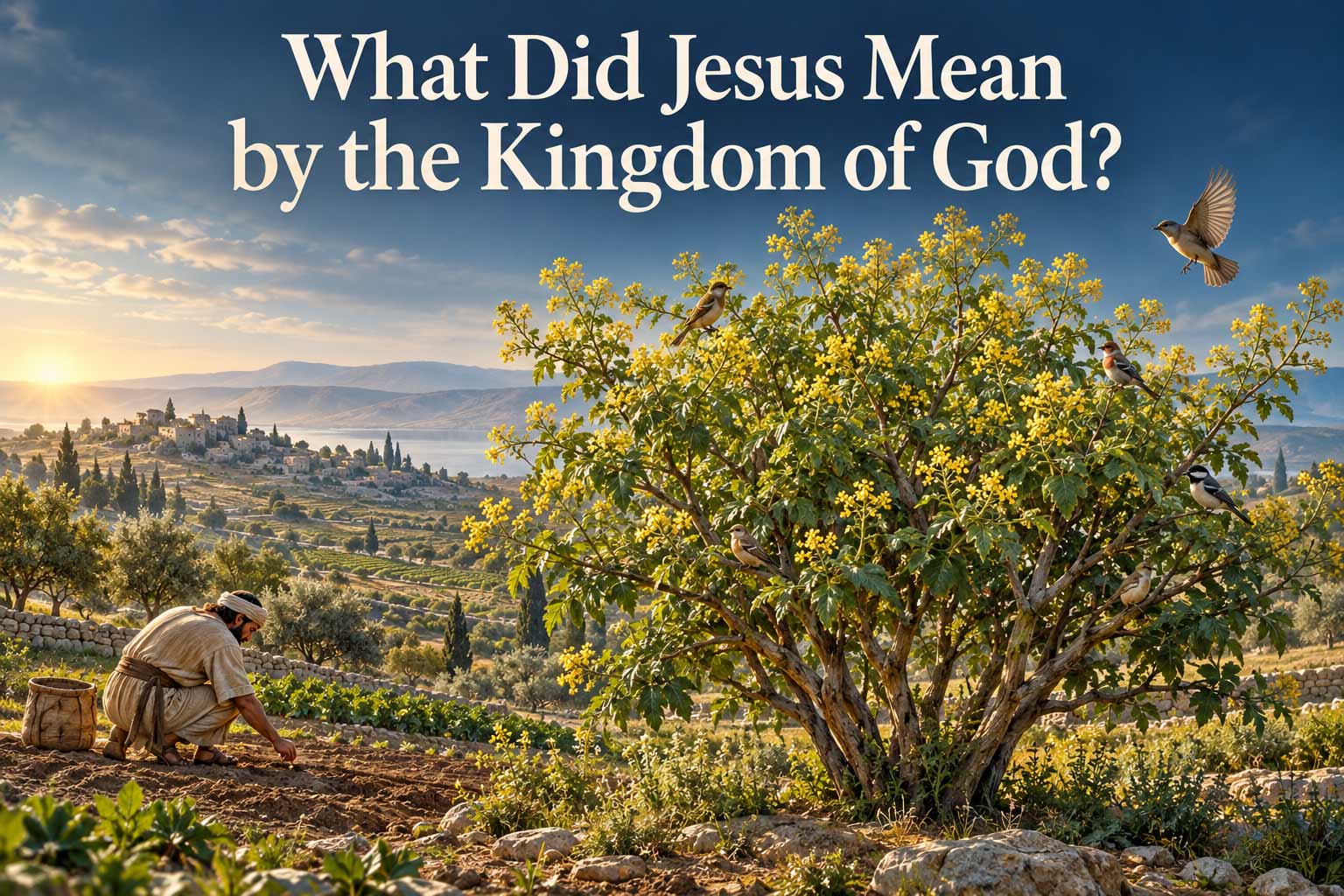
Jesus compared the kingdom to a mustard seed and to yeast working through dough (Matthew 13:31–33). Both comparisons draw attention to a beginning whose significance may be easy to underestimate. What looks small can have a far greater result. God’s work shouldn’t be measured only by immediate visibility or impressive scale.
That doesn’t mean every small religious effort is necessarily an expression of the kingdom. The parables concern God’s reign, not a guarantee that whatever we begin will prosper. They encourage confidence in His work rather than confidence in our ability to manufacture success. We still need discernment about what we’re doing.
His kingdom teaching also includes accountability and judgment. Mercy doesn’t make our response irrelevant, and patience doesn’t mean evil will be tolerated forever. The kingdom offers hope because God intends to set things right. That same purpose gives us reason to repent and examine our own lives.
What Does It Mean to Seek the Kingdom?
Seeking God’s kingdom means giving His purposes priority. It involves trusting Christ, receiving His correction, and learning to treat people in ways consistent with His reign. Paul describes the kingdom in terms of righteousness, peace, and joy in the Holy Spirit rather than disputes over food and drink (Romans 14:17). Religious arguments can become so absorbing that we lose sight of the life God is calling us to share.
The church should bear witness to that life. Worship, teaching, generosity, prayer, reconciliation, and care for suffering people can all express our allegiance to Christ. But the church isn’t identical with everything God’s kingdom means, and its institutions remain capable of failure. We should judge our conduct by the King rather than assume that whatever a church does must represent Him.
When we pray for the kingdom to come, we ask God to accomplish what we cannot bring about ourselves. We also place our lives at His disposal. That prayer reaches toward the future while challenging us in the present: our relationships, ambitions, use of money, and response to people in need. Jesus announced God’s reign and invited people to follow Him within it, and that invitation still calls for a response.