

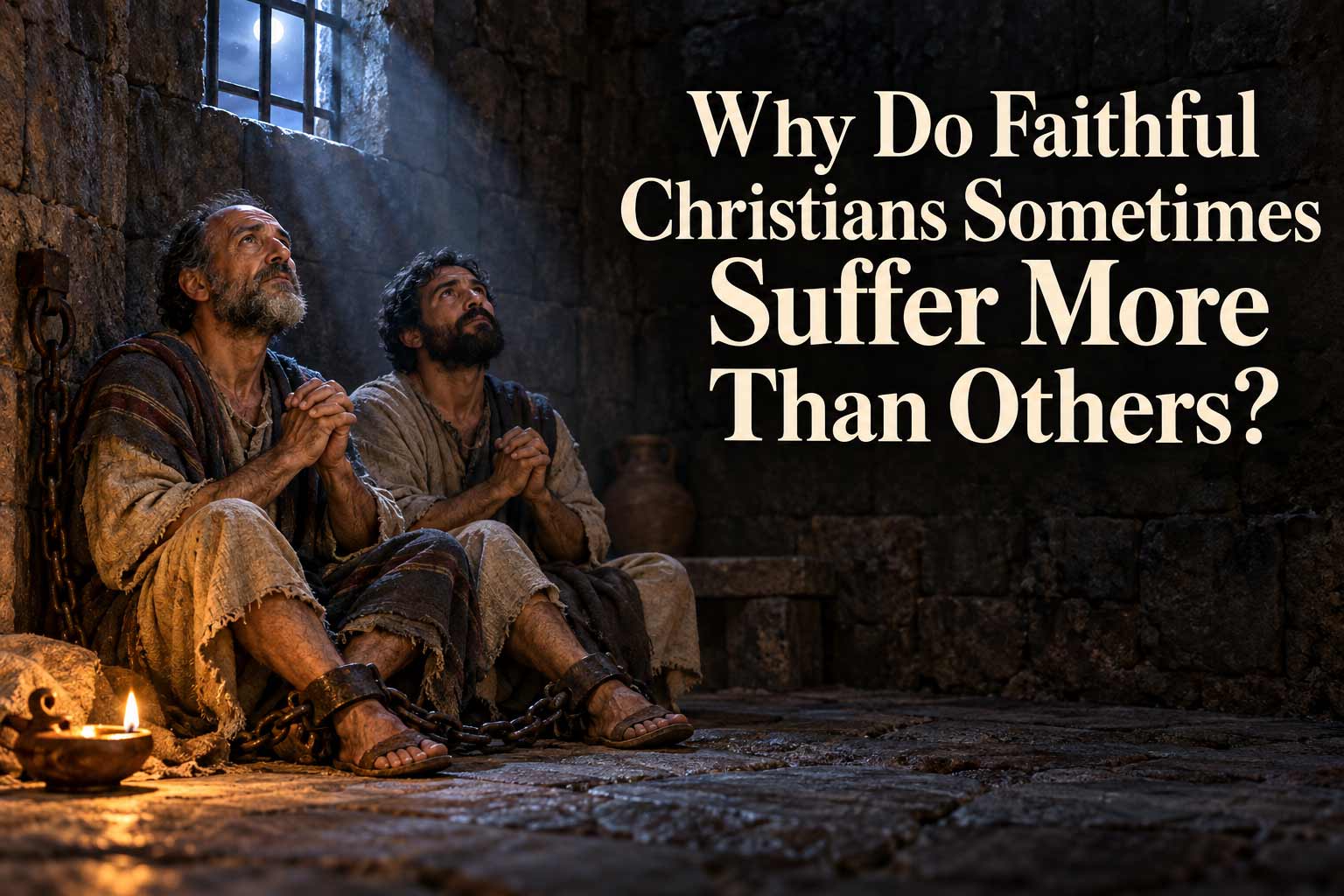
You probably know someone who loves God, treats people well, and still seems to experience one hardship after another. They recover from an illness only to lose their job, or spend years caring for a family member while facing problems of their own. Meanwhile, someone who appears to have little concern for God or anybody else seems to be doing quite nicely. It’s understandable to wonder whether faithfulness makes any difference when the circumstances look so uneven.
The Bible doesn’t dismiss that question, and it doesn’t promise that the most faithful people will have the easiest lives. Sometimes obedience brings trouble that dishonesty or compromise would have avoided. At other times, faithful Christians experience the same illnesses, losses, and accidents that affect everyone else. We can explain some of those differences, but we shouldn’t pretend we know why every person carries the particular burdens they do.
The Bible Recognizes the Unevenness
Psalm 73 describes Asaph struggling with the apparent prosperity of wicked people. He sees their confidence, wealth, and apparent freedom from trouble, then compares those circumstances with his own distress. He begins wondering whether keeping his heart clean has accomplished anything. That’s a remarkably honest admission from someone whose words became part of Scripture.
His perspective changes as he considers their ultimate end in God’s presence. Present circumstances don’t tell the whole story, and prosperity doesn’t establish that a person’s life is secure or pleasing to God. That doesn’t make Asaph’s pain imaginary or mean every difficulty disappears. It gives him a larger view than the comparison that had nearly overwhelmed his faith.
We need that perspective without using it to silence people. Someone who asks why life seems unfair isn’t necessarily rejecting God. They may be trying to reconcile what they believe about Him with what they’re experiencing. The Psalms give us room to bring that struggle into prayer rather than pretending we’ve never noticed it.
Faithfulness Can Carry a Cost
Some suffering happens because a Christian refuses to do what would make life easier. An employee who won’t falsify records may lose an opportunity that a dishonest coworker accepts. A believer who refuses to join in mistreating someone may become a target too. Obedience can interfere with the arrangements through which people protect their comfort, influence, or income.
First Peter distinguishes suffering for wrongdoing from suffering while doing good. That distinction prevents us from assuming that every difficult consequence means we made the wrong choice. Sometimes trouble follows a decision precisely because it was right. Jesus’ own life makes that clear, since His faithfulness brought Him into conflict with people who resisted His teaching and authority.
Of course, we shouldn’t call every disagreement persecution. Christians can be rude, careless, or unreasonable, and other people’s objections may have nothing to do with hostility toward Jesus. We need enough honesty to examine our conduct as well as our circumstances. But when someone suffers for genuine faithfulness, we shouldn’t advise them to measure the wisdom of obedience solely by whether it kept them comfortable.
Faith Doesn’t Produce Identical Outcomes
Hebrews 11 is often remembered for people who experienced extraordinary deliverance. Yet the same chapter also honors people who endured imprisonment, mistreatment, deprivation, and death. Some escaped danger, while others remained faithful through it. The writer doesn’t divide them into successful believers and people who failed to use their faith properly.
That challenges the idea that a sufficiently faithful Christian will always receive the outcome they prayed for. Scripture encourages us to trust God, ask for help, and expect Him to act. It also shows that people commended for faith can experience very different circumstances. Their faithfulness can’t be measured simply by comparing their visible results.
I believe we should pray for healing and deliverance. I don’t believe we should use someone’s continued suffering as proof that their faith is defective. A person may be trusting God deeply while receiving treatment, struggling to pay bills, or grieving someone they loved. Adding an accusation of spiritual failure doesn’t explain their circumstances and can make an already painful situation harder.
Faithful People Still Share Human Vulnerability
Following Jesus doesn’t remove us from the physical world. Christians have bodies that can become ill, homes that can be damaged, and relationships in which loss is possible. They’re affected by economic conditions and by decisions other people make. Faithfulness doesn’t create a protective barrier around every part of life.
People also begin with very different resources and responsibilities. One person has stable housing, supportive relatives, and enough savings to weather a crisis. Another carries the same crisis while caring for several dependents and having nobody nearby to help. Those differences can make suffering more severe without revealing anything about which person loves God more.
We should therefore be cautious about turning every hardship into a special spiritual assignment. Sometimes a person needs medical care, reliable transportation, financial assistance, or relief from an exhausting responsibility. Recognizing those needs doesn’t deny God’s involvement in their life. It helps us respond to the actual circumstances instead of reaching immediately for an explanation we can’t verify.
Love Can Lead Us Into Other People’s Pain
Faithful Christians may also suffer because they choose to care. Someone who supports a struggling relative takes on responsibilities that a less involved person avoids. A church member who visits the lonely, helps a grieving family, or stands beside someone facing injustice becomes involved in situations that aren’t easy. Love can make life more demanding.
That doesn’t mean suffering itself proves holiness. Nor does it mean God expects one conscientious person to absorb everyone else’s responsibilities indefinitely. People who care for others still need rest, help, and appropriate boundaries. A church should share those burdens rather than praising someone’s sacrifice while quietly allowing them to become exhausted.
Galatians 6:2 calls believers to bear one another’s burdens. That instruction should affect how we interpret the suffering of faithful people around us. Their hardship may be an opportunity for us to serve, rather than a mystery we’re supposed to explain from a distance. Sometimes the most useful response is to take on a task they’ve been carrying alone.
God Can Work Through Suffering Without Making It Desirable
Difficult experiences can produce perseverance, deepen compassion, and expose things we need to change. God can sustain us through circumstances that would otherwise overwhelm us, and He can bring good from events that were genuinely painful. But growth afterward doesn’t establish that every hardship was sent because we needed it. We should distinguish God’s ability to work within suffering from our claims about why it began.
I’d be careful about telling someone that God keeps hurting them because they’re especially strong or useful. That may sound encouraging, but it can leave them wondering whether faithfulness guarantees more pain. It can also discourage them from seeking relief, as though asking for help would interfere with God’s purpose. Scripture gives us permission to pray for deliverance without apologizing for wanting suffering to end.
Jesus told His disciples that they would have trouble in the world, while also offering them peace in Him (John 16:33). His promise didn’t depend on pretending trouble was pleasant. It directed them toward His presence and victory within a world that would still oppose them. We can hold onto that promise while acknowledging how difficult endurance sometimes becomes.
Don’t Turn Comparison Into a Verdict
We rarely know the full extent of another person’s suffering. Someone who appears comfortable may be carrying grief, fear, or family problems they haven’t disclosed. That doesn’t erase the real inequalities we can see, but it reminds us that our comparisons are incomplete. We don’t have enough information to construct a reliable ranking of everyone’s pain or faithfulness.
If you’re suffering while trying to follow Christ, your circumstances don’t automatically mean you’ve failed or that God has rejected you. There may be something you can understand and address, and there may be questions that remain unanswered. You can seek help, pray honestly, and continue choosing what is right without making your pain the measure of your relationship with God. The church should help you do that by offering care, rather than requiring you to explain why your life hasn’t become easier.