

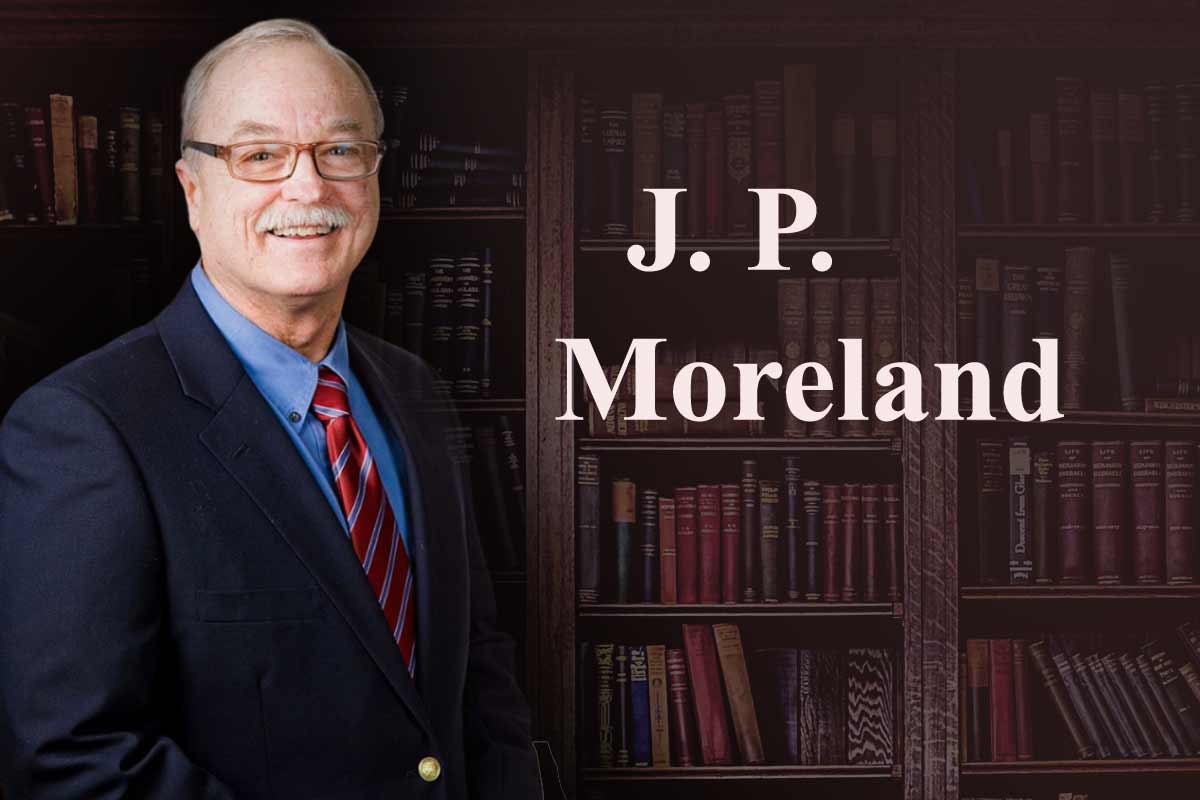
A scientist can describe what happens in the brain when someone feels pain. That description is valuable, but it raises another question: has describing the brain explained the person who experiences the pain? J. P. Moreland has spent much of his career examining questions like that. He believes human beings are more than physical mechanisms, and he has defended that conviction in both academic philosophy and Christian apologetics. His work brings the existence of the soul into discussions where it is often dismissed before the argument begins.
Moreland is also concerned about what Christians do with the minds they already have. He has challenged churches to take intellectual discipleship seriously, encouraged believers to examine the reasons for their faith, and argued that Christianity makes claims about knowledge rather than merely offering religious feelings. At the same time, he has written about prayer, miracles, spiritual formation, and his own experience of anxiety. That combination gives his work an unusual range. He wants Christians to think carefully about God and to live in conscious dependence upon him.
From Chemistry to Christian Philosophy
Moreland’s academic path began in science. He earned a bachelor’s degree in physical chemistry from the University of Missouri before studying theology at Dallas Theological Seminary. He later earned a master’s degree in philosophy at the University of California, Riverside, and a doctorate in philosophy at the University of Southern California. At USC, the philosopher Dallas Willard became an important mentor. The movement from chemistry into theology and philosophy helped shape Moreland’s interest in how these disciplines relate to one another.
His commitment to apologetics also grew out of his conversion. Moreland has described meeting Campus Crusade for Christ workers during college and being surprised that they offered evidence for Christian claims. He had previously regarded religion largely as something inherited from one’s family. After reading and considering the arguments, he became a Christian in 1968. He subsequently served with Campus Crusade, now known as Cru, connecting the study of Christianity with the practical work of evangelism.
Moreland became a major figure in the philosophy program at Talbot School of Theology, part of Biola University in California, where he serves as Distinguished Professor of Philosophy. His career includes scholarly publications, campus lectures, church teaching, and involvement in church planting. He has worked with other prominent Christian thinkers without limiting himself to a single popular argument or public debate. His collaboration with William Lane Craig on Philosophical Foundations for a Christian Worldview illustrates that breadth. The book introduces readers to major philosophical questions while showing how those questions bear upon Christian belief.
Loving God with Your Mind
One of Moreland’s most influential books is Love Your God with All Your Mind, first published in 1997. Its concern is larger than helping Christians win arguments with atheists. Moreland connects the cultivation of the mind with spiritual maturity, worship, service, and the ordinary responsibilities of life. Jesus’ command to love God with the mind should affect the way believers learn and think. Intellectual growth belongs within discipleship rather than being reserved for a few people who happen to enjoy difficult books.
Consider a young Christian who has been taught what the church believes but has received little explanation of why it believes those things. When a teacher or classmate raises an objection, the young person may discover that familiar statements don’t answer the actual question. Repeating them more confidently won’t necessarily help. Nor should the presence of a question be treated as evidence that the student has become spiritually defective. A church that welcomes thoughtful inquiry can prepare people for conversations they will eventually encounter anyway.
Moreland’s challenge also applies to Christians who enjoy apologetics. Collecting persuasive illustrations isn’t the same as learning to reason, and familiarity with a favorite speaker doesn’t guarantee understanding of an opposing view. We need to recognize the difference between an argument’s conclusion and the reasons offered to support it. We also need to be willing to revise a weak argument even when we agree with its conclusion. Loving God with the mind involves the discipline of becoming more accurate, not simply becoming harder to contradict.
Science and Scientism
Moreland draws a sharp distinction between science and scientism. Science investigates the natural world through observation, experimentation, and other methods appropriate to the question under study. Scientism is a philosophical position about the authority and limits of knowledge. In its strongest form, it claims that the natural sciences provide the only genuine knowledge of reality. Religion, ethics, and philosophy are then assigned to the less respectable category of personal opinion.
In Scientism and Secularism, Moreland argues that this position fails its own test. The claim that only scientific methods produce knowledge isn’t itself the result of a scientific experiment. It is a philosophical assertion about which methods count. A person making it is already using a form of reasoning that the assertion appears to disqualify. Recognizing that problem doesn’t diminish the achievements of science; it challenges an attempt to make those achievements settle every kind of question.
We can see the distinction in an ordinary research setting. An experiment might establish that a procedure produces a particular physical effect, but that result doesn’t, by itself, determine whether performing the procedure on an unwilling person is morally acceptable. Evaluating the experiment also requires logical standards, an understanding of evidence, and judgments about responsible conduct. Scientific work operates within those commitments. Moreland’s point is that acknowledging knowledge beyond the laboratory can help us understand science more clearly rather than asking us to abandon it.
Consciousness and the Existence of God
Moreland’s work in philosophy of mind examines the relationship between physical processes and conscious experience. Consciousness includes what it is like to feel pain, remember a conversation, consider an argument, or enjoy music. A description of neurons and chemical activity tells us important things about the conditions associated with those experiences. The philosophical question concerns whether such a description fully accounts for the experiences themselves. Moreland argues that the mental has features that cannot be reduced to the physical.
For example, suppose two people study a detailed account of what occurs when a person tastes a lemon. They can learn about sensory receptors, nerve signals, and activity in the brain. Someone who has never tasted one may nevertheless lack the immediate acquaintance with that sour experience. This difference doesn’t prove every claim about the soul. It does illustrate why explaining an experience from the outside and undergoing it from the inside are distinguishable kinds of understanding.
In Consciousness and the Existence of God, Moreland develops the argument that irreducible consciousness is better explained by a reality grounded in a conscious God than by an ultimately impersonal physical order. A Creator who possesses understanding and intention supplies a different starting point for explaining creatures who possess them. The argument asks which account gives us better reason to expect conscious persons and their relationship to the physical world. Moreland therefore treats consciousness as evidence for theism rather than merely as a subject for psychology. Establishing Christian claims about Jesus still requires additional reasoning beyond that argument.
What Does Moreland Mean by the Soul?
Moreland defends substance dualism, the view that a human person includes an immaterial soul and a physical body. Substance here means a real entity that possesses properties and capacities; it doesn’t mean a hidden chemical ingredient. The soul is the subject who thinks, feels, intends, and acts. Moreland’s account therefore goes beyond saying that unusual mental properties emerge from matter. He argues that there is an enduring self whose experiences and capacities belong to that self.
Personal identity helps explain why the issue matters. We change physically and psychologically throughout life, yet we ordinarily understand the child in an old photograph and the adult holding it to be the same person. Our memories, obligations, and relationships depend upon some account of that continuity. Moreland sees the soul as providing a unified subject through those changes. Philosophers who disagree offer other accounts, including forms of psychological and bodily continuity, so the observation begins a discussion rather than ending one.
His defense of the soul also differs from a view that treats the body as an unfortunate prison. Moreland affirms the importance of human embodiment and the Christian hope of bodily resurrection. In The Soul, he argues for an existence between death and the final resurrection without making permanent disembodiment the Christian goal. His later collaboration with Brandon Rickabaugh, The Substance of Consciousness, develops a detailed contemporary defense of dualism. The project is intended to engage philosophy and the sciences rather than preserve an idea by isolating it from scrutiny.
The Brain Still Matters
A serious account of the soul has to address the evident relationship between mental life and the brain. Injury, illness, medication, and physical exhaustion can affect a person’s awareness and behavior. These connections give critics of dualism substantial material to consider. Moreland doesn’t solve the problem by pretending those connections are absent. His argument concerns whether dependence and interaction establish that the mind and the brain are identical.
That distinction is important even before we decide which explanation succeeds. Finding that one thing changes when another changes establishes a relationship, but further reasoning is needed to identify the nature of that relationship. A dualist must explain why damage to the brain affects conscious life, while a physicalist must explain how the physical account accommodates experience and the subject who has it. There are several forms of physicalism, and they shouldn’t all be reduced to the crudest possible version. The debate requires attention to what each position actually claims.
Moreland’s position also encounters the longstanding question of how an immaterial soul interacts with a physical body. Critics regard this as a serious explanatory difficulty. Dualists respond that denying interaction also carries costs if our deliberations and intentions genuinely help explain our actions. The issue cannot be settled merely by attaching the word scientific to one view and the word religious to the other. Moreland’s contribution is to insist that the competing explanations receive philosophical examination alongside the relevant empirical findings.
Human Nature and Human Worth
The question of what a person is has consequences beyond academic philosophy. In Body & Soul, written with Christian ethicist Scott Rae, Moreland connects human nature with moral questions about the beginning and end of life. If personal worth depends entirely upon presently exercised abilities, people with limited awareness or severely impaired capacities may become vulnerable to exclusion. Their argument locates human dignity in what a human being is rather than in a ranking of current performance. That concern explains why a discussion of the soul can lead directly into bioethics.
The distinction between possessing a capacity and exercising it is useful here. A sleeping person isn’t presently engaging in deliberate reasoning, but we don’t usually conclude that sleep has removed the person’s moral standing. More difficult situations require more careful analysis, and Christians disagree about some of the conclusions drawn from different accounts of human nature. Nevertheless, assumptions about personhood are already operating when we discuss these cases. Moreland wants those assumptions made explicit so that ethical conclusions can be examined rather than smuggled into the conversation.
Creation and the Limits of Explanation
Moreland has also participated in debates about creation, intelligent design, and evolutionary accounts of life. He was one of the editors of Theistic Evolution: A Scientific, Philosophical, and Theological Critique, published in 2017. The volume challenges proposals that reconcile Christian creation doctrine with evolutionary mechanisms while excluding detectable divine design. Moreland’s concerns include what happens when Christians treat scientific explanations as grounds for revising major theological claims. This places him within a significant disagreement among Christian scholars rather than outside the discussion of science altogether.
Readers should distinguish several questions that can become tangled together. Evidence for a particular biological process, a philosophy asserting that nature is all that exists, and a theological account of God’s providence aren’t identical claims. An objection to materialism doesn’t automatically refute a biological theory, just as accepting a biological explanation doesn’t automatically establish atheism. Christian defenders of evolutionary creation also dispute Moreland’s assessment of their positions. His arguments should be evaluated at the level where they are made, with scientific, philosophical, and theological claims given the attention each requires.
The Spirit and the Christian Life
Moreland’s interest in rational argument has never meant that he regards Christianity as an entirely intellectual activity. In Kingdom Triangle, published in 2007, he brings together the development of the Christian mind, the formation of character, and dependence upon the Spirit’s power. He sees these as related features of Christian maturity. A church can neglect thought, neglect the transformation of its people, or become hesitant to expect God’s active involvement. His proposal challenges those weaknesses together.
This emphasis makes him especially interesting to readers accustomed to separating academically serious apologetics from charismatic Christianity. Moreland affirms contemporary divine healing, guidance, and other supernatural activity. In A Simple Guide to Experience Miracles, he discusses prayer, testimony, the assessment of reported miracles, and unanswered prayer. He encourages believers to expect God to act while asking how genuine divine activity can be distinguished from coincidence. His approach brings questions about evidence into the discussion of spiritual experience rather than assuming experience should be immune from them.
That combination needs care in practice. A testimony can encourage faith without settling every question about what occurred, and confidence in divine healing doesn’t justify treating every sick person as responsible for remaining sick. Claims about God’s guidance should receive biblical and communal discernment. Nor should enthusiasm for supernatural ministry crowd out ordinary compassion and responsible care. Christians who share Moreland’s openness to the Spirit can appreciate his effort to connect expectation with thoughtful examination.
Anxiety and Finding Quiet
Moreland’s writing became particularly personal in Finding Quiet, published in 2019. He described severe episodes of anxiety, including crises in 2003 and 2013, and the process of seeking relief. His account is striking because it comes from someone who had already spent years defending Christian truth. Intellectual conviction hadn’t prevented psychological suffering. That experience gave him a reason to investigate the relationship between belief, habits, bodily life, and spiritual formation more deeply.
In describing his recovery, Moreland draws upon spiritual practices and psychological resources rather than treating them as rival loyalties. His account includes attention to prayer, patterns of thought, and the interconnectedness of the person’s physical and emotional life. It is a testimony about what he learned through a difficult experience, not proof that one program will resolve every person’s condition. The book’s personal openness can be valuable even for readers who would assess some of its explanations or practices differently. It gives Christians permission to discuss suffering that religious confidence can sometimes pressure them to hide.
His concern with suffering has continued beyond that book. In a 2026 conversation with Sean McDowell, Moreland described repeated surgeries, physical pain, and efforts to remain open to God’s presence through them. That account adds depth to his advocacy of miracles and spiritual formation. Expecting God to act hasn’t spared him the need for medical care or the experience of prolonged difficulty. His life presents a more complicated picture than the suggestion that a convincing argument or a confident prayer removes every burden.
A Whole Person Approach to Apologetics
Moreland’s academic and popular books serve different readers. Philosophical Foundations for a Christian Worldview requires sustained study, while Love Your God with All Your Mind addresses the church’s broader intellectual life. The God Conversation, written with Tim Muehlhoff, explores the use of stories and illustrations in discussing Christian belief. The range reflects an awareness that understanding an argument and communicating it are related but distinct tasks. A good illustration can make a difficult idea intelligible without carrying the full burden of proving it.
We don’t need to agree with every position Moreland defends to recognize the questions his work brings into focus. What accounts for conscious persons, and what follows from the answer for their worth? How should scientific knowledge relate to moral and theological knowledge? What would a church look like if thoughtful study, spiritual formation, and prayer regularly informed one another? His work keeps those questions connected instead of assigning them to separate Christian lives.
Perhaps the most useful way to read Moreland is to allow that connection to challenge our habits. A Christian can learn a sophisticated argument about the soul while giving little attention to the character of the person making it. Another can pursue spiritual experiences while becoming impatient with the work of understanding what they mean. Moreland asks us to take both understanding and transformation seriously. The mind we bring to the defense of Christianity belongs to a person who is also learning to pray, to serve, and to live with limitations that an argument alone cannot remove.