

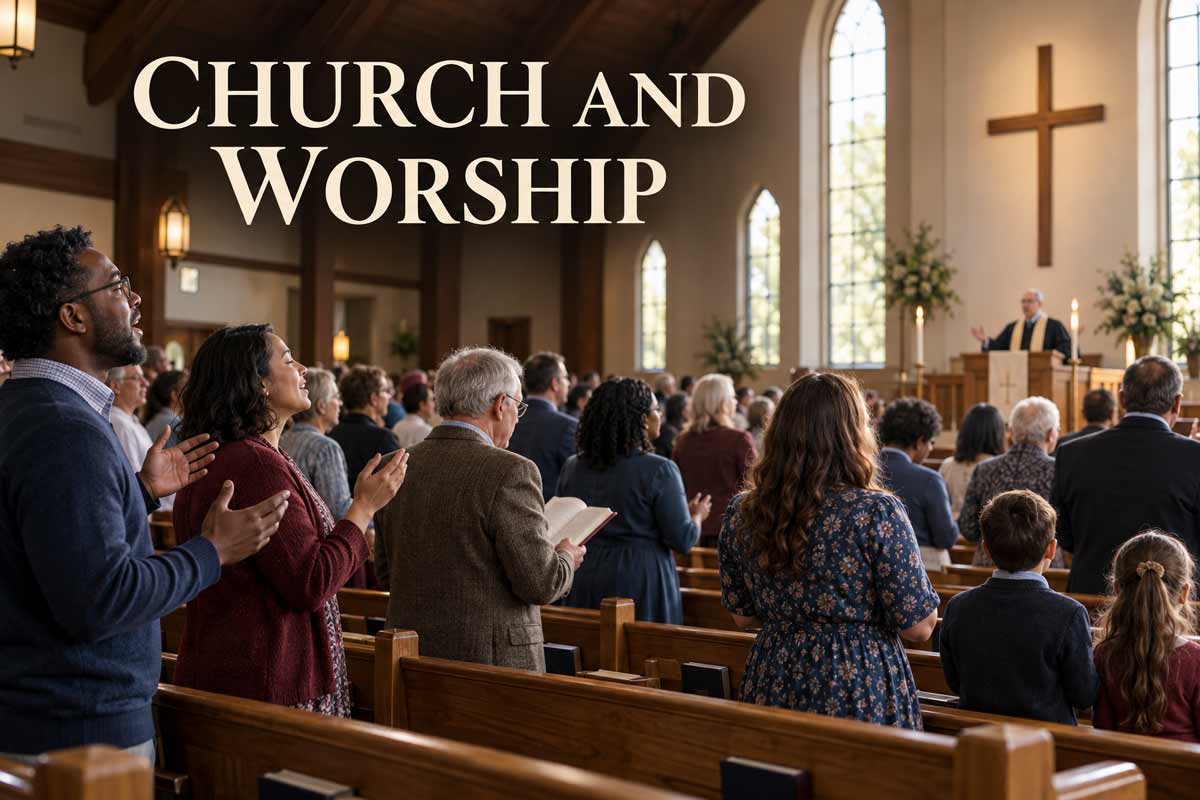
For some people, church has been a place of friendship, encouragement, and spiritual growth. For others, it brings memories of conflict, disappointment, or pressure to accept things they weren’t allowed to question. Those experiences affect how we approach the subject, but they don’t settle what the church is supposed to be. Understanding its purpose requires us to examine what Scripture teaches about believers gathering, worshiping, serving, and caring for one another.
The church is the community of people who belong to Jesus Christ. Local congregations give that shared life a practical expression through teaching, prayer, worship, fellowship, and service. Buildings and organizations help support those activities, but a congregation’s health depends on more than its facilities or attendance. We also need to consider whether its teaching is sound, its leaders are accountable, and its people are growing in love and maturity.
Questions About the Church
This section addresses questions about choosing a church, participating in a congregation, and understanding the differences among Christian traditions. Why are there so many denominations? What should we look for in a pastor? How do we handle disagreement without turning every difference into a reason to leave? These questions become easier to approach when we distinguish foundational beliefs from matters on which faithful Christians can disagree.
Churches differ in how they understand leadership, membership, ministry, and the responsibilities of the congregation. Some decisions reflect theological convictions, while others reflect local needs or inherited customs. We’ll examine the biblical reasons offered for different practices and consider how those practices affect church life. Something being familiar doesn’t automatically make it biblical, and something being unfamiliar doesn’t automatically make it wrong.
Worship, Baptism, and Communion
Christian worship includes prayer, praise, attention to Scripture, and our response to God. Congregations express those things through different forms of music and different approaches to a service. Some follow an established liturgy, while others leave more room for spontaneous participation. The style deserves consideration, but so do the words being spoken and sung, the teaching being offered, and whether people are being helped to participate meaningfully.
Baptism and Communion also raise important questions. Christians disagree about who should be baptized, how baptism should be administered, and how to understand its relationship to faith and salvation. They likewise differ in their explanations of Christ’s presence in Communion and who should receive it. We’ll work through those subjects carefully, explaining the passages and convictions behind the practices.
Leadership, Accountability, and Care
Church leadership carries responsibility for teaching, guiding, and caring for people. That authority should come with accountability and a willingness to receive correction. Members need room to ask reasonable questions, raise concerns, and seek help without being treated as enemies of the ministry. A leader’s position doesn’t make every decision wise or every demand legitimate.
We’ll also address spiritual abuse, financial responsibility, the role of women in ministry, and ways to resolve conflict. These subjects require careful attention to Scripture and to the people affected by the decisions. Encouraging someone to participate in church life should include helping them recognize a healthy congregation. When wrongdoing occurs, preserving an organization’s reputation must not take priority over addressing the harm.
The purpose of this section is to help you understand church life and participate responsibly. Begin with the question that concerns you, examine the relevant passages, and consider how the teaching applies in practice. A healthy congregation gives us opportunities to learn, serve, receive care, and contribute to the growth of others. That shared life is worth taking seriously, including the work required to make it healthy.