

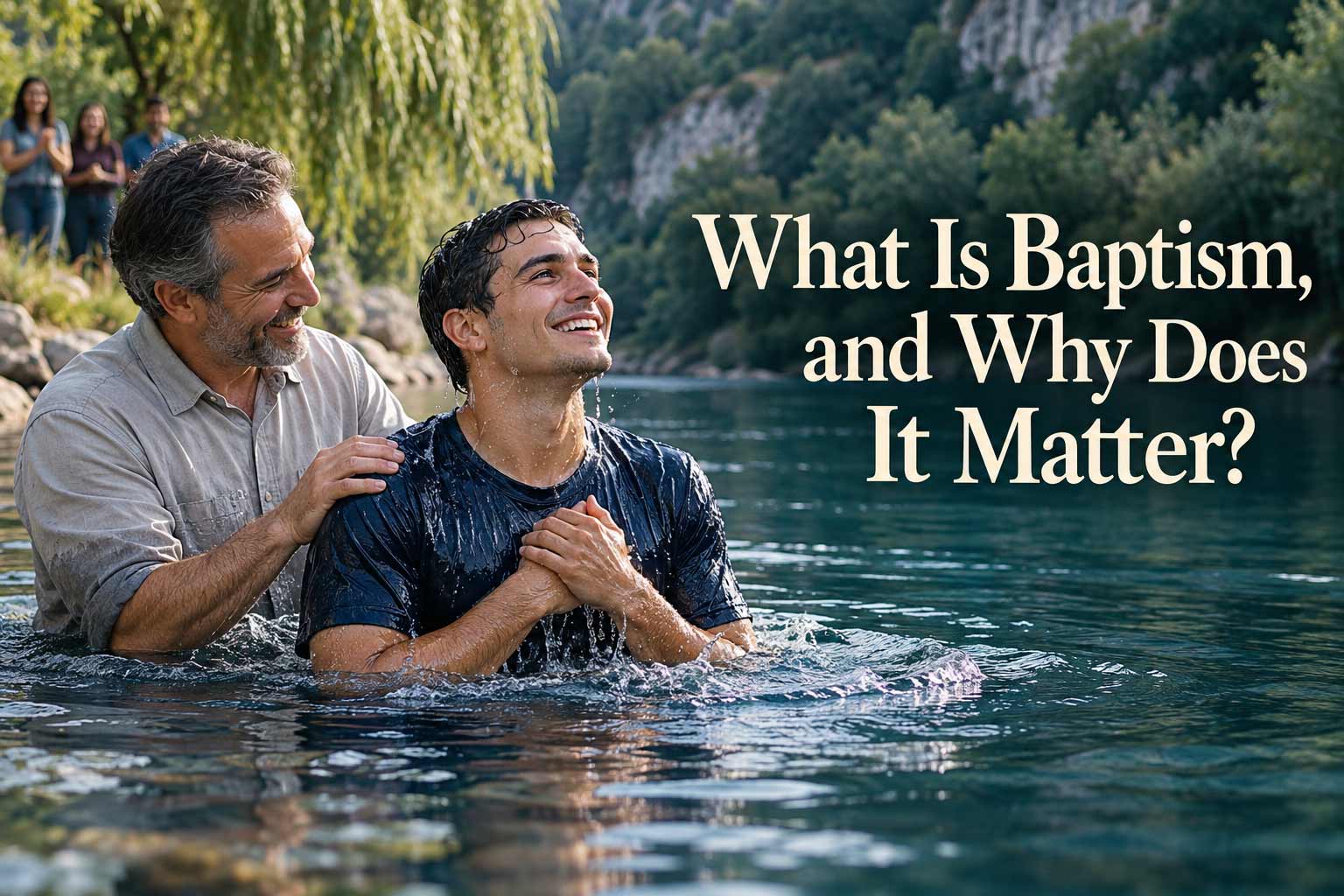
A baptism can look fairly simple from the outside. Someone enters the water, a minister speaks a few words, and the person comes back out while the congregation celebrates. Without an explanation, you might wonder why Christians attach so much importance to it. The answer has to do with what baptism expresses about Jesus, the person being baptized, and the life they’re beginning.
Christian baptism is a God-given act of initiation into the life of discipleship. It connects water with repentance, cleansing, identification with Christ, and belonging to His people. Christians disagree about some aspects of baptism, including who should receive it and precisely how it relates to salvation. But those disagreements shouldn’t obscure the fact that Jesus commanded it and the apostles practiced it.
Jesus Included Baptism in Making Disciples
In Matthew 28:18–20, Jesus instructed His followers to make disciples, baptizing them in the name of the Father, the Son, and the Holy Spirit, and teaching them to obey Him. Baptism belongs within that larger responsibility. The church is to announce the gospel, welcome people into discipleship, and help them learn how to live as followers of Jesus. Baptism marks that commitment in a visible, embodied way.
This also explains why baptism isn’t simply a ceremony invented by a particular denomination. Churches have developed different customs surrounding it, but its place in Christian life comes from Jesus’ instruction. The person being baptized is responding to Him. A congregation witnesses that response and accepts a responsibility to help the new disciple grow.
Baptism therefore deserves more consideration than deciding whether you’d enjoy participating in a religious event. If you’ve trusted Christ, obedience to Him includes taking His instruction seriously. You don’t need to understand every theological debate before being baptized. You should, however, understand enough to know whose follower you’re declaring yourself to be.
Baptism Points to Death and New Life
Romans 6 connects baptism with Jesus’ death, burial, and resurrection. Paul uses that connection to explain why believers shouldn’t continue treating sin as their rightful master. Their relationship with Christ means that the old life no longer defines who they are. They’re called to live in the new life His resurrection makes possible.
Immersion gives a particularly vivid expression of that truth. Going beneath the water resembles burial, and rising from it pictures resurrection. The water doesn’t reproduce Jesus’ death or add anything to His saving work. It expresses the believer’s identification with the One who died and rose again.
That meaning extends beyond the day of the ceremony. Baptism points toward a life in which allegiance, conduct, and priorities are being changed. A baptized person will still face temptation and need forgiveness, but following Jesus involves a real departure from the old way of life. Baptism should remind us of that commitment rather than serve as a substitute for living it.
More Than an Empty Symbol
Sometimes Christians defend salvation by faith by describing baptism as “just a symbol.” I understand the concern behind that language, but the word “just” can make baptism sound less significant than the New Testament presents it. Baptism is an act of obedience through which a believer openly identifies with Christ and His people. Its symbolic meaning is substantial because it expresses a substantial commitment.
We understand this distinction in other settings. Wedding vows don’t create love out of nothing, but speaking them is a meaningful act of commitment. Their importance isn’t reduced because the words themselves have no magical power. Likewise, baptism can be deeply significant without our believing that water automatically changes a person’s heart.
The New Testament uses strong language about baptism, and we should take that language seriously. Acts 2:38 connects repentance, baptism, and forgiveness, while Acts 22:16 associates baptism with washing away sins and calling on the Lord. These passages belong to the larger picture of responding to the gospel. We shouldn’t reduce baptism to an optional illustration, but neither should we separate it from repentance, faith, and the saving work of Christ.
Does Baptism Save Us?
Christians differ in how they answer that question. Catholic teaching understands baptism as a sacrament through which God grants cleansing and new birth, with qualifications concerning those who cannot receive it. Many evangelical churches understand it as an act of obedience that expresses faith already present. Other traditions explain the relationship between baptism, faith, and grace in different ways. A fair discussion needs to recognize those differences rather than assume everyone means the same thing by “baptism saves.”
My understanding is that God gives new life through faith in Christ, rather than through the application of water itself. Acts 10 provides an important example: Cornelius and those listening to Peter received the Holy Spirit before they were baptized in water. Peter then instructed that they be baptized. Their reception of the Spirit didn’t make baptism unnecessary, but it showed that God had already received them.
First Peter 3:21 also connects baptism’s saving significance with Jesus’ resurrection and distinguishes it from removing dirt from the body. Peter directs our attention beyond physical washing to the person’s response to God. The passage deserves more than a quick dismissal, but it doesn’t support treating the water as a mechanical guarantee of salvation. Christ saves us, and baptism belongs within our faithful response to Him.
A person who has been baptized shouldn’t assume that the ceremony makes repentance and faith unnecessary. Conversely, someone who trusts Jesus shouldn’t use salvation by faith as a reason to refuse His command. There’s a difference between being unable to receive baptism and deliberately dismissing it. Grace gives us a reason to obey, rather than a reason to consider obedience irrelevant.
Who Should Be Baptized?
Some churches baptize infants, understanding baptism in relation to God’s promises and the child’s inclusion in the covenant community. Churches that practice believers’ baptism reserve it for those who personally profess faith. The disagreement involves how Christians understand the church, the relationship between the Old and New Testaments, and the household baptisms described in Acts. It can’t be resolved simply by accusing one side of caring less about Scripture.
I favor baptism following a personal response of repentance and faith. That pattern appears repeatedly in the accounts of people receiving the gospel in Acts. The person should understand, in an age-appropriate way, that Jesus is the Savior and that baptism expresses a commitment to follow Him. Being able to repeat the expected answers isn’t necessarily the same as understanding them.
Children can have genuine faith, so adulthood isn’t a requirement. At the same time, parents and church leaders should avoid pressuring children into a ceremony they don’t understand. There’s no universal biblical birthday at which every child becomes ready. Patient conversation is more useful than either rushing the process or assuming that childhood faith can never be real.
How Should Baptism Be Performed?
I favor immersion because it fits the New Testament’s burial and resurrection imagery and the ordinary sense of the language used for baptism. Other churches practice pouring or sprinkling, sometimes as their normal practice and sometimes because immersion isn’t possible. Those differences deserve discussion, but a person’s physical limitations shouldn’t become a reason for humiliation or exclusion. The church should help people respond faithfully without turning the event into a test of physical ability.
Jesus’ instruction in Matthew 28 provides the wording I believe churches should ordinarily use: baptism in the name of the Father, the Son, and the Holy Spirit. Acts also describes baptism in the name of Jesus Christ. I understand those descriptions as identifying baptism with Jesus and His authority, rather than canceling the instruction He gave. The wording expresses the faith into which the person is being baptized; it isn’t a magical formula.
Water baptism should also be distinguished from the baptism in the Holy Spirit. The two are related to Christian life, but Acts doesn’t present them as identical experiences. Cornelius’s household received the Spirit before water baptism, while other accounts describe a different sequence. We should allow those passages to inform our understanding rather than force every experience into one rigid timetable.
Baptism Begins a Life of Discipleship
If you believe in Jesus and haven’t been baptized, talk with a trustworthy pastor about preparing for it. Ask what the church teaches and make sure you understand the commitment involved. You don’t need to become spiritually flawless first, but you should be responding sincerely rather than participating to satisfy someone else. Baptism is an early step in following Christ, not an award for finishing the Christian life.
Afterward, continue learning, praying, gathering with believers, and putting Jesus’ teaching into practice. The congregation’s responsibility continues too, because making disciples includes teaching and care. Baptism matters because Jesus commanded it and because it expresses our identification with His death, resurrection, and people. What happens in the water should have a continuing expression in the life that follows.