

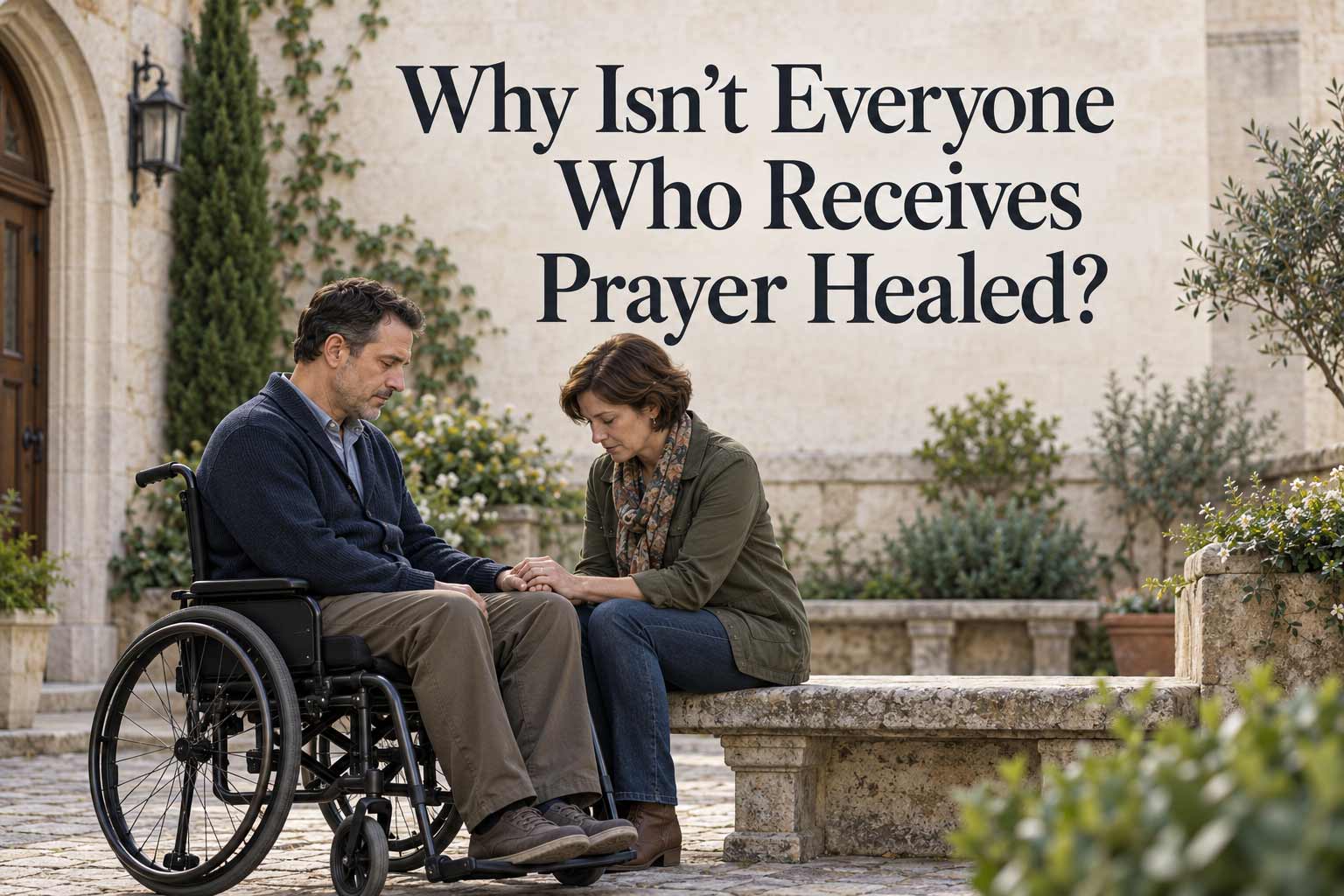
Few experiences are more difficult than praying earnestly for healing and watching someone remain sick. The person believes God can heal, the church gathers around them, and everyone asks sincerely. Yet the symptoms continue, the test results don’t improve, or the person eventually dies. For someone who believes that God still heals, this raises a painful question: Why does healing happen for some people and not for others?
I believe we should pray for healing with genuine expectation. I also believe we should admit that we don’t know why every person isn’t healed. Scripture gives us reasons to trust God and instructions for ministering to the sick, but it doesn’t provide a complete explanation for every outcome. When we pretend that it does, we often place a burden on suffering people that the Bible never told us to place there.
The New Testament Includes Believers Who Were Sick
The healing accounts in the Gospels and Acts give us strong reasons to believe in God’s power. Jesus healed people with conditions they couldn’t overcome themselves, and the apostles continued ministering healing after His resurrection. These accounts should encourage us to pray rather than assume that sickness is beyond God’s concern. However, they aren’t the only passages we need to consider.
Paul wrote that he had left Trophimus sick at Miletus (2 Timothy 4:20). He also described Epaphroditus as having been so ill that he nearly died, although God had mercy on him and he recovered (Philippians 2:25–27). These were people serving alongside an apostle through whom remarkable miracles occurred. Their illnesses show that participation in faithful Christian ministry didn’t mean immediate freedom from every physical problem.
We shouldn’t add details these passages don’t give us. Paul doesn’t tell us whether he prayed for Trophimus, why Trophimus remained sick, or what happened afterward. We can’t use that brief statement to reconstruct an entire theology of his illness. But we also can’t reasonably claim that faithful Christians always enjoyed perfect health when the New Testament itself describes faithful Christians who were seriously ill.
Faith Matters, but Illness Doesn’t Measure It
Faith has an important place in prayer. Jesus frequently encouraged people to believe, and James instructed the church to pray in faith for the sick. We shouldn’t respond to disappointing experiences by deciding that faith is irrelevant or that we should expect nothing from God. Prayer involves trusting someone who can actually respond.
The problem comes when we turn that truth into a diagnosis of everyone who remains sick. “Faith matters” doesn’t establish that “you weren’t healed because you lacked faith.” The second statement claims knowledge about a particular person and a particular outcome. Unless God has actually made that known, we’re making an accusation that we can’t substantiate.
In Mark 9, a distressed father asked Jesus to help his son and confessed, “Lord, I believe; help thou mine unbelief” (Mark 9:24). His trust was mixed with struggle, and he admitted it openly. Jesus delivered the boy rather than requiring the father to conceal every trace of doubt. That account should make us cautious about presenting perfect emotional certainty as the qualification for receiving God’s help.
A sick person may feel afraid, discouraged, or exhausted and still genuinely trust God. Faith doesn’t require pretending that pain isn’t painful or that frightening news isn’t frightening. Someone who keeps turning toward God while struggling may be exercising considerable faith. We shouldn’t judge the strength of that faith by whether we like the outcome of their prayer.
What About the Promise in James?
James 5:14–16 tells sick believers to call for the elders of the church, who are to pray over them and anoint them with oil in the Lord’s name. It speaks strongly about the prayer of faith and the Lord raising up the sick person. This passage deserves to shape what churches actually do. Sick people should be able to ask their church for prayer and receive more than an explanation of why prayer probably won’t help.
Christians understand some details of this passage differently, including the nature of the “prayer of faith” and how its promise relates to other biblical teaching. Some understand it as prayer accompanied by a particular assurance God gives concerning healing. Others emphasize the confidence with which the whole church should seek God’s restoring work. These differences deserve careful discussion, but neither interpretation gives us permission to blame every person who remains ill.
James places responsibility on the praying community, including its elders. He also connects prayer with confession and restoration, while saying “if” the sick person has committed sins. We should take spiritual matters seriously without assuming that every illness reveals hidden wrongdoing. The passage calls the church to faithful ministry; it doesn’t supply a checklist by which we can identify the supposed failure behind every unhealed condition.
God’s Help Doesn’t Always Take the Form We Requested
Paul’s account of his thorn in the flesh is relevant here, although we need to handle it carefully. Christians disagree about what the thorn was, and the passage doesn’t identify a particular medical condition. We shouldn’t confidently diagnose Paul and then apply that diagnosis to everyone else. What the passage clearly tells us is that Paul repeatedly asked for something distressing to be removed.
God’s response was, “My grace is sufficient for thee: for my strength is made perfect in weakness” (2 Corinthians 12:9). Paul received a response, but it wasn’t the removal he had requested. This shows that sincere prayer can be met with sustaining grace while a difficulty continues. It doesn’t establish that every illness is someone’s thorn or that God has told every sick Christian to stop seeking healing.
We can recognize God’s sustaining work without claiming to know why a particular condition remains. God may bring courage, practical help, renewed relationships, and strength through suffering. Those are real gifts, but their presence doesn’t prove that He caused the illness to produce them. We should be grateful for what God does without inventing an explanation for what we don’t understand.
We Still Await the Full Redemption of Our Bodies
Romans 8:23 describes believers who have the firstfruits of the Spirit and still groan while awaiting the redemption of their bodies. Having the Spirit doesn’t remove every experience of physical weakness from the present life. We belong to Christ, but we still live in bodies that can become sick and eventually die. The fullness of bodily restoration remains ahead of us.
Present-day healing is a reason for gratitude and hope, but it isn’t the same as the resurrection. Even someone who receives a remarkable healing hasn’t become immune to every future illness. That helps explain why the Christian promise can include both healing now and complete restoration in the future. It doesn’t explain why one particular person recovers while another doesn’t, and we should acknowledge that limitation.
Future hope also needs to be offered with compassion. Telling a grieving family that their loved one is no longer suffering doesn’t mean the family no longer suffers. Resurrection hope gives Christians something substantial to hold onto, but it doesn’t make death insignificant. People can believe God’s promises and still need room to mourn.
Keep Praying, and Keep Caring
When someone remains ill, we should continue caring for them without making every conversation another investigation into their faith. They may welcome further prayer, and they may also need meals, transportation, financial help, or someone willing to listen. We should ask what would help rather than assume we know. Long-term illness shouldn’t cause someone to disappear from the church’s attention once the initial excitement about praying has passed.
Prayer and appropriate medical care can continue together. People shouldn’t be pressured to stop treatment or deny symptoms to demonstrate belief. Decisions about treatment belong in conversation with qualified medical professionals, and claims of healing should be reported honestly. If someone improves gradually, we can be thankful; if they remain sick, they should be free to say so.
I don’t know why everyone who receives prayer isn’t healed. I do know that we have biblical reasons to keep asking God for healing and biblical reasons to resist simplistic accusations against suffering believers. Our responsibility is to pray faithfully, speak truthfully, and stay beside people whose suffering continues. A person who leaves a prayer meeting still sick should leave knowing that the church will still be there for them.