

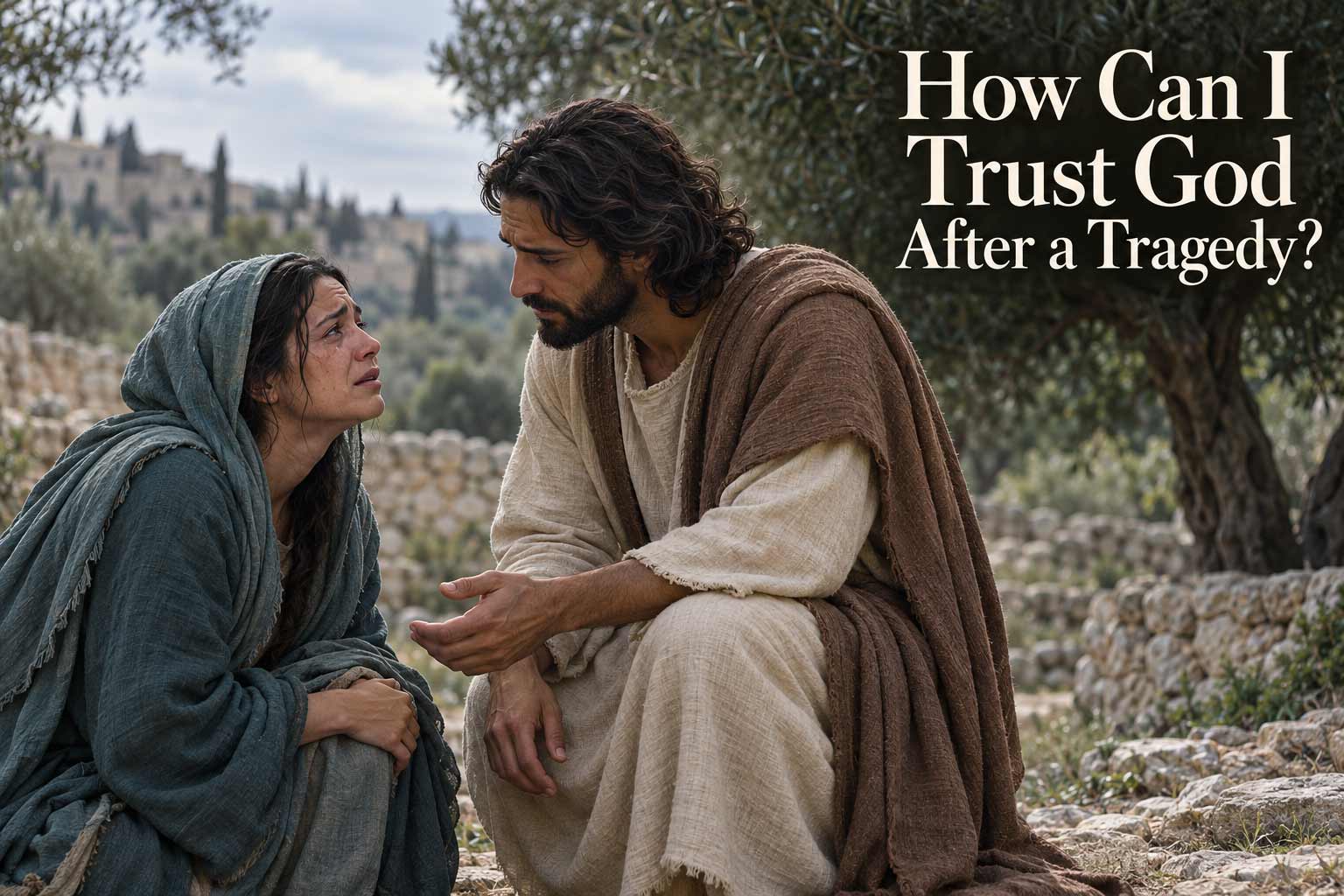
Before a tragedy, trusting God may have seemed fairly straightforward. You prayed, believed He cared, and expected Him to help you through whatever came. Then something happened that you couldn’t reconcile with that confidence. Now the same prayers, songs, and verses may raise questions they once seemed to answer.
The difficulty isn’t always whether you believe God exists. You may believe He could have prevented what happened, and that can make trusting Him harder. Rebuilding trust doesn’t require pretending the tragedy was good or claiming you understand why He allowed it. It can begin with bringing that unresolved pain into the relationship, even when you aren’t sure what to say.
Let Yourself Grieve
Grief isn’t evidence that your faith has failed. When Lazarus died, Jesus entered a setting filled with mourning and wept Himself. He knew He would raise Lazarus, yet that knowledge didn’t make the sorrow around Him unworthy of His attention. His response gives us reason to reject the idea that strong faith should make us emotionally untouched by loss.
First Thessalonians 4:13–14 distinguishes Christian grief from grief without hope. Paul doesn’t tell believers that they shouldn’t grieve. He places their sorrow within the hope of Jesus’ resurrection and the future of those who belong to Him. Missing someone and believing in resurrection can exist together.
You therefore don’t have to apologize for tears, painful memories, or days when ordinary responsibilities feel especially difficult. Nor must you produce an encouraging testimony before you’re ready. Trust can be present in a person who is still deeply sad. The absence of cheerfulness doesn’t establish the absence of faith.
Tell God What Has Become Difficult
In John 11, both Martha and Mary told Jesus that their brother wouldn’t have died if He had been there. Their words brought the painful connection between His absence and their loss directly into the conversation. They didn’t need to hide that thought before approaching Him. Jesus met them within their grief.
You can be similarly honest about what has happened to your trust. Perhaps you feel that God didn’t protect someone you loved, that your prayers made no difference, or that you can no longer tell what to expect from Him. Those concerns deserve more attention than a vague instruction to “just have faith.” Naming them can help you understand what you’re actually struggling with.
Psalm 62:8 places trust and pouring out our hearts together. That suggests trust doesn’t always look like calm certainty. Sometimes it looks like telling God exactly why confidence has become difficult and asking Him to help. You can begin there without having an explanation for the tragedy or a clear picture of what comes next.
Examine What You Expected God to Promise
A tragedy can expose expectations we didn’t realize we had. We may have believed that prayer would guarantee protection, that faithful people would avoid certain losses, or that God would always provide enough warning to keep us safe. Those beliefs can be reinforced by well-meaning Christians who speak more confidently than Scripture warrants. When events contradict them, it can feel as though God has broken His word.
I believe God heals, protects, guides, and answers prayer. I also recognize that Scripture describes faithful people who suffered and died despite their devotion to Him. We should ask for His help without turning particular outcomes into promises He hasn’t made. Reconsidering an expectation may be part of rebuilding trust.
That doesn’t mean your disappointment was foolish or that correcting an assumption will remove your grief. Even after recognizing that God didn’t guarantee a particular outcome, you may still ask why He didn’t intervene. The question remains legitimate. Examining what He promised helps clarify the struggle rather than making it disappear.
Don’t Force a Meaning onto the Tragedy
People may tell you that God needed another angel, that the loss prevented something worse, or that He was teaching you a lesson. Those explanations often depend on knowledge the speaker doesn’t have, and some introduce ideas Scripture doesn’t teach. You don’t have to accept them simply because they were offered with good intentions. Someone’s attempt to comfort you isn’t necessarily an accurate account of God’s purpose.
God can bring good after a tragedy without making the tragedy itself good. You may eventually recognize help, growth, or a new direction that emerged during the aftermath. That doesn’t require you to conclude that the loss was necessary or that you should be glad it happened. Gratitude for what God provides can coexist with sorrow over what you lost.
It’s also possible that you won’t identify a satisfying explanation in this life. Christian hope reaches beyond the circumstances we can presently understand. You can seek restoration without requiring every question to be answered first. Trusting God’s character doesn’t depend on defending every event as something He wanted.
Return to What You Know About Jesus
When circumstances make God seem distant or uncaring, the Gospels give us something more substantial than speculation about His hidden reasons. Jesus notices people who are overlooked, responds to suffering, and receives those who need mercy. His compassion isn’t merely an idea attached to a theological system. It appears in how He treats people.
His own suffering also matters. Betrayal, injustice, abandonment, and death aren’t experiences outside the story through which Christians understand God. The resurrection gives us reason to believe those things won’t have the final word. That doesn’t explain why your particular tragedy occurred, but it provides a foundation for hope that isn’t limited to present appearances.
You may find it helpful to spend time with a Gospel account without trying to solve every question at once. Consider how Jesus responds to Martha, Mary, and the mourners in John 11. Let that encounter inform your understanding of His character. Rebuilding trust may involve returning repeatedly to what you have reason to believe about Him while acknowledging what you still don’t understand.
Allow Other People to Help
After tragedy, even ordinary tasks can become burdensome. Someone bringing a meal, handling an errand, or sitting beside you may provide more help than a lengthy explanation. Receiving that care doesn’t mean your faith is weak. Christians are called to bear one another’s burdens because we aren’t expected to carry everything alone.
Choose people who can listen without rushing you toward an acceptable conclusion. A trustworthy pastor, friend, grief support group, or counselor may give you room to speak honestly and receive steady support. Seeking help doesn’t compete with prayer. It can be part of how you move through circumstances that are too difficult to manage alone.
If other Christians have responded poorly, their failure may add another layer to your struggle. You don’t have to pretend their words were helpful or their conduct represented Jesus well. It may take time to find people you can trust. Their mistakes don’t require you to accept the picture of God they presented.
Take the Next Step You Can Take
You may not be able to return immediately to the habits that once felt natural. A long prayer may feel impossible, while a brief appeal for help is manageable. You might read a few verses, allow someone to pray with you, or attend worship without feeling able to sing. Those can be honest ways of continuing to seek God.
There’s no need to turn recovery into another performance you’re expected to complete correctly. Some days may feel more settled than others, and questions you thought had quieted may return. You can keep bringing them to God without declaring the entire effort a failure. Trust is expressed through continuing to turn toward Him, even when confidence feels fragile.
Psalm 34:18 describes the Lord as near to the brokenhearted. That promise doesn’t require you to stop being brokenhearted before seeking Him. You may still struggle to sense His nearness, but you can ask for His help from exactly where you are. You don’t have to arrive with a completed explanation or a restored sense of certainty.
Trust after tragedy may develop alongside grief rather than replacing it. You can remember, mourn, ask questions, and still choose to seek the God whose compassion you see in Jesus. You don’t need to call the loss good in order to receive good from Him now. For today, an honest prayer and a willingness to accept help may be enough of a next step.