

Barnabas first appears in the story of the early church by giving something away. Acts introduces him as Joseph, a Levite from Cyprus, who sold a field and placed the proceeds at the apostles’ feet (Acts 4:36–37). The apostles called him Barnabas, which Acts explains as “son of encouragement.” That name fits the man we meet in the chapters that follow. He saw possibilities in people whom others distrusted, helped a young church navigate a cultural divide, and took the gospel beyond familiar territory. Yet Scripture doesn’t turn him into a flawless hero. His failures are part of the record too, which makes his faithfulness more instructive, not less.
A Levite from Cyprus
Acts tells us that Barnabas belonged to the tribe of Levi and came from Cyprus, but it says nothing about his childhood or conversion. His ownership of a field has prompted questions because Levites weren’t given a tribal territory under the law of Moses. That restriction didn’t mean no Levite could ever own property, especially centuries later and outside the land arrangements described in Joshua. The passage is making a different point anyway. Barnabas freely used what he possessed to meet the needs of the Christian community.
His Cypriot background may help explain why he moved comfortably between Jerusalem and the wider Greek-speaking world. Cyprus had a substantial Jewish population and close connections to the ports of Syria and Asia Minor. Still, we should call that context rather than biography; Acts doesn’t tell us what languages Barnabas spoke or how long he had lived in Jerusalem. What it does establish is that the apostles trusted him and that he was already known for open-handed commitment to the church.
The man who welcomed Saul
Barnabas next appears when Saul comes to Jerusalem after his encounter with Christ. The disciples are afraid of Saul, understandably, because he had persecuted believers. Barnabas takes him to the apostles and recounts how Saul had seen the Lord and preached boldly in Damascus (Acts 9:26–27). Barnabas didn’t ignore Saul’s past or ask the church to trust a vague claim. He stood behind credible evidence of change and helped a former persecutor enter a community that had every reason to be cautious.
That episode is often described as Barnabas “believing in Paul when no one else would.” The sentiment is close, but the wording can overstate the case. Ananias and other disciples in Damascus had already received Saul, and Galatians gives a compressed account of Saul’s early contacts in Jerusalem. Acts focuses on Barnabas’s role as an advocate. Whatever questions remain about reconstructing the precise chronology, Barnabas clearly risked his own credibility to help the church recognize what God had done.
Building the church in Antioch
When news reached Jerusalem that Gentiles in Antioch were turning to the Lord, the church sent Barnabas to investigate. He saw the grace of God, rejoiced, and urged the new believers to remain faithful. Acts calls him “a good man, full of the Holy Spirit and faith,” and reports that many more people were added to the Lord (Acts 11:22–24). Barnabas didn’t treat unfamiliar people as a problem to be contained. He recognized God’s work among them and strengthened it.
He also knew that the growing church needed help, so he went to Tarsus to find Saul and brought him to Antioch. The two taught there for a year, and it was in Antioch that the disciples were first called Christians. Later, the congregation sent Barnabas and Saul to carry famine relief to believers in Judea (Acts 11:25–30). Barnabas thus connected Jerusalem, Antioch, and Saul at a critical stage in the church’s expansion. He wasn’t simply being agreeable; he was using discernment, relationships, and practical action to hold together believers whose backgrounds could easily have driven them apart.
Set apart for mission
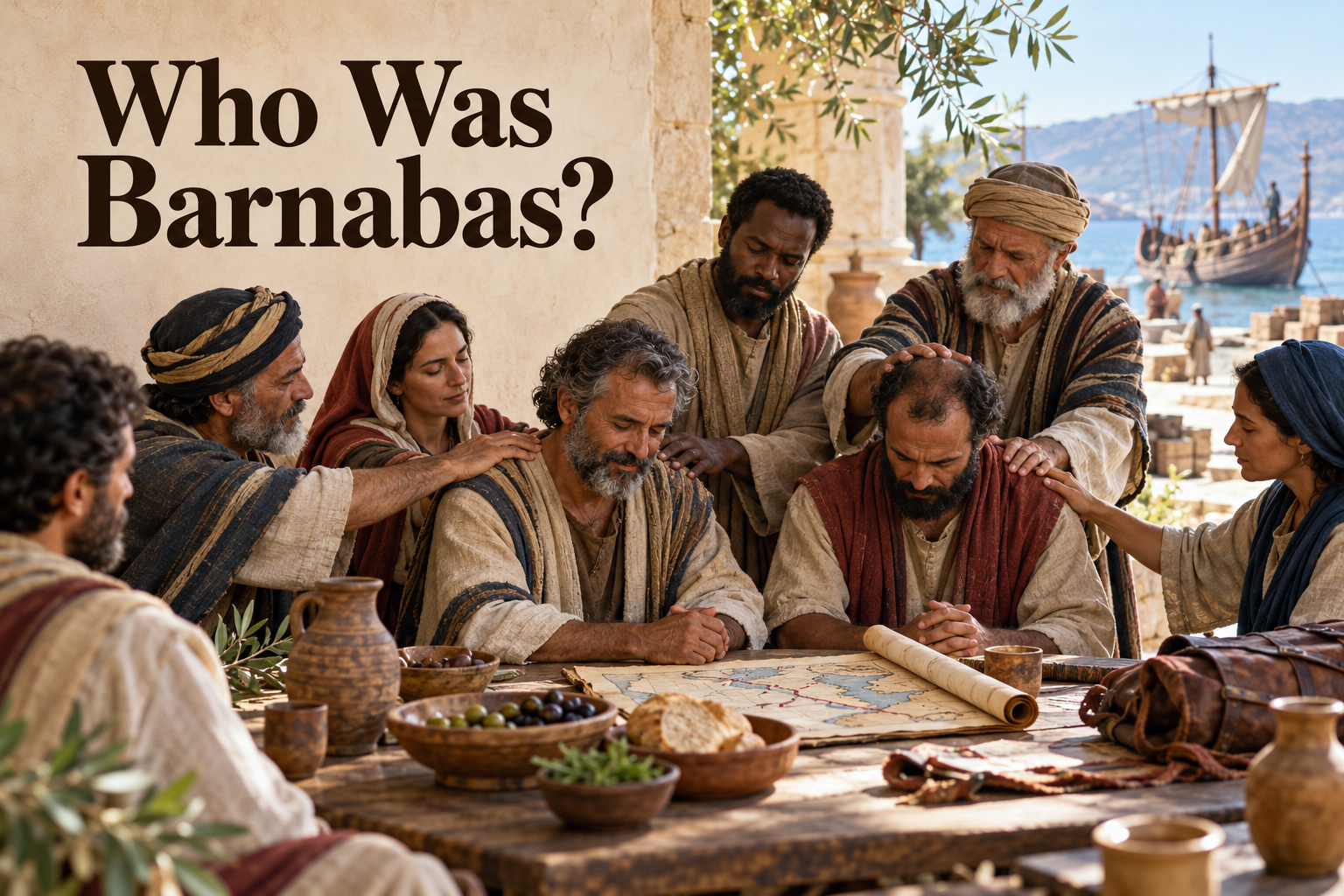
As prophets and teachers in Antioch worshiped and fasted, the Holy Spirit directed the church to set apart Barnabas and Saul for a particular work (Acts 13:1–3). The church prayed, laid hands on them, and sent them out. They began in Cyprus, Barnabas’s home region, accompanied by John Mark. They proclaimed the word in synagogues, confronted opposition, and then traveled into southern Asia Minor. Luke initially speaks of “Barnabas and Saul,” but soon “Paul and his companions” becomes the usual pattern. Barnabas apparently had no need to protect his billing when Paul’s leadership became more prominent.
At Lystra, after a disabled man was healed, the crowd identified Barnabas with Zeus and Paul with Hermes. The missionaries tore their clothes and rushed into the crowd to stop the attempted sacrifice (Acts 14:8–18). The scene shows how easily a genuine miracle could be misunderstood within a pagan framework. Barnabas and Paul didn’t accept spiritual celebrity as a useful opening. They insisted that the crowd turn from worthless idols to the living God.
Grace, conflict, and the Jerusalem council
Barnabas and Paul faced a decisive controversy when some believers taught that Gentile converts had to be circumcised to be saved. They opposed that requirement and went to Jerusalem, where the apostles and elders considered the matter. Acts 15 presents Barnabas and Paul reporting the signs and wonders God had done among the Gentiles. The resulting letter rejected circumcision as a condition of Gentile membership in God’s people while giving instructions meant to protect holiness and table fellowship. Barnabas helped defend the truth that Gentiles are received through the grace of the Lord Jesus, not by becoming Jews first.
Galatians 2 describes another confrontation in Antioch. Paul says that Barnabas joined Peter and other Jewish believers in withdrawing from meals with Gentiles under pressure from visitors associated with James. Paul calls the behavior hypocrisy because their practice contradicted the gospel they confessed. Scholars debate exactly how this incident relates chronologically to the Jerusalem council in Acts, and the New Testament doesn’t settle every detail. It does settle the moral point: Barnabas could be swayed by fear of a respected group, even after he had championed Gentile believers. Scripture preserves both his courage and his inconsistency.
The dispute over John Mark
When Paul proposed revisiting the churches from their earlier journey, Barnabas wanted to take John Mark. Paul objected because Mark had left them in Pamphylia and had not continued in the work. Their disagreement became so sharp that they separated: Barnabas took Mark to Cyprus, while Paul chose Silas (Acts 15:36–41). Colossians 4:10 identifies Mark as Barnabas’s cousin, if the traditional Pauline authorship and personal setting of that letter are accepted, so family loyalty may have played a part. Acts doesn’t tell us that either man handled the argument perfectly, and it doesn’t give us permission to declare one of them the villain.
Barnabas’s decision fits his established willingness to give someone another opportunity, while Paul’s concern about reliability on a demanding mission was reasonable. Later references show that Mark became useful to Paul again (Colossians 4:10; 2 Timothy 4:11), although Scripture doesn’t describe the process of reconciliation or credit it specifically to Barnabas. Paul also refers to Barnabas respectfully in 1 Corinthians 9:6 as a fellow worker who supported himself. Their working partnership ended, but the evidence doesn’t support a lasting personal war.
What happened to Barnabas?
The New Testament doesn’t record Barnabas’s later ministry or death. Early Christian writers associated him with continuing missionary work, and a much later work called the Acts of Barnabas describes his martyrdom in Cyprus. Such traditions may preserve memories, but they aren’t contemporary evidence and shouldn’t be reported with the same confidence as Acts. The Epistle of Barnabas, an early Christian writing, was also circulated under his name, but most scholars don’t think Paul’s companion wrote it.
What Scripture gives us is already substantial. Barnabas used his resources generously, vouched for a changed enemy, recognized grace among Gentiles, taught a growing church, and endured the risks of missionary work. He also yielded to social pressure and became embroiled in a painful disagreement. His life shows that encouragement isn’t mere pleasantness. At its best, it sees what God’s grace can do in people, tells the truth when unity is threatened, and invests in restoration even when the outcome isn’t guaranteed.