
Who Was Jonah?
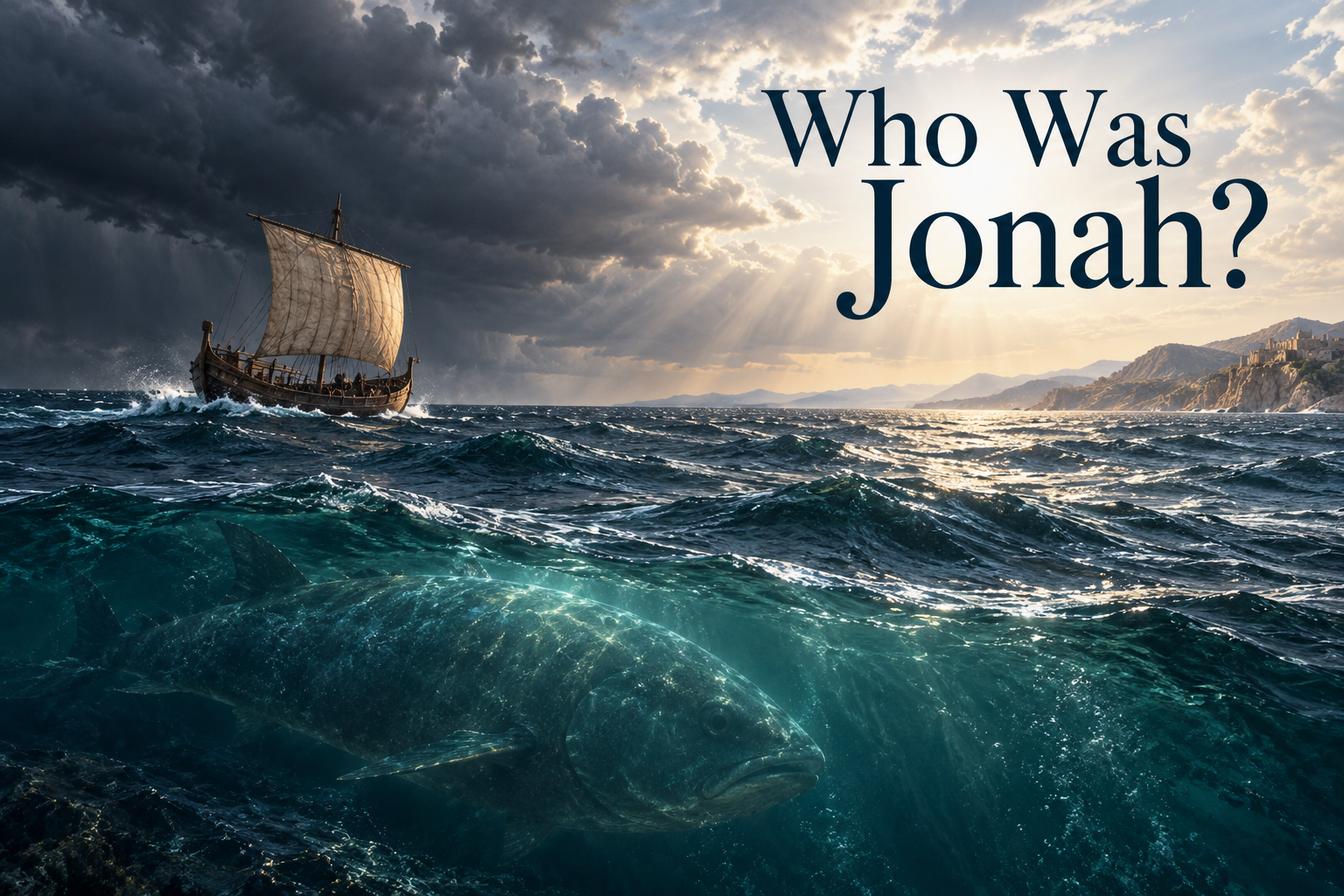
Jonah is probably the only prophet in the Bible who became famous for trying not to deliver his message. Most people remember the great fish, but the book bearing his name is really about a reluctant prophet, a wicked city, and a God whose mercy was considerably broader than Jonah wanted it to be.
Jonah and His Mission to Nineveh
Jonah was the son of Amittai, a prophet from Gath-hepher in the northern kingdom of Israel (2 Kings 14:25). He ministered during the reign of Jeroboam II, in the eighth century BC, and predicted that Israel would recover territory that had been lost to its enemies. That brief reference places him in a real historical setting before the book of Jonah tells us about his much more unusual assignment. God instructed him to go to Nineveh, a major Assyrian city, and announce judgment because of its wickedness (Jonah 1:1–2).
Assyria was a feared power, and its reputation for brutality wasn’t imaginary. Nineveh represented a people who threatened Israel, so Jonah’s reluctance wasn’t simply a case of stage fright. Instead of traveling east toward Nineveh, he boarded a ship at Joppa headed for Tarshish, apparently hoping to put as much distance as possible between himself and his commission. The irony is that a prophet who knew the God of heaven, who made the sea and dry land, tried to escape him by sea (Jonah 1:3, 9).
The Storm and the Great Fish
God sent a violent storm, and the sailors became desperate as their ship threatened to break apart. When they cast lots to discover who was responsible, the lot fell to Jonah. He admitted that he was fleeing from God and told them to throw him overboard. The sailors initially tried to row to safety instead, but eventually did as Jonah requested, and the sea became calm. Their response is one of the book’s striking contrasts: pagan sailors showed increasing reverence for God while his own prophet was running away from him.
Jonah was swallowed by a great fish that God had appointed, and he remained inside it for three days and three nights (Jonah 1:17). The Hebrew text doesn’t identify the animal as a whale, although that’s how the story is often retold. Chapter 2 records Jonah’s prayer, in which he describes his descent toward death and acknowledges that deliverance belongs to the Lord. God then commanded the fish to release him onto dry land. The narrative presents his rescue as God’s intervention, not as an ordinary event that can be explained by the behavior of a particular species.
Repentance in Nineveh
When God repeated his command, Jonah finally went to Nineveh and announced that the city would be overthrown in forty days (Jonah 3:4). To Jonah’s apparent surprise, the people believed God. From the ordinary citizens to the king, they humbled themselves, fasted, and turned from their violent ways. The book says that God saw their response and did not bring the announced disaster upon them. That doesn’t mean God had overlooked their wickedness; it means the warning had accomplished the very thing warnings are meant to accomplish.
Jonah, however, was angry. He explained that he’d fled because he knew God was gracious, compassionate, slow to anger, and abundant in lovingkindness (Jonah 4:2). He hadn’t doubted that God could judge Nineveh. He feared that God might forgive it. The final chapter uses a plant that briefly sheltered Jonah, then withered, to expose how readily he cared about his own comfort while resenting God’s concern for a great city full of people.
Why Jonah Matters
Jesus referred to Jonah when speaking about his own death and resurrection, comparing Jonah’s three days in the fish with the Son of Man’s time in the heart of the earth (Matthew 12:39–41). He also pointed to Nineveh’s repentance as a rebuke to those who refused to respond to a greater messenger. Christians have therefore read Jonah both as a historical prophetic figure and as a sign pointing forward to Christ.
The book ends with God’s question about whether he should not pity Nineveh. It doesn’t tell us how Jonah answered. That unfinished conversation is part of the point: the reader has to decide whether God’s compassion for an enemy is something to celebrate or resent. Jonah knew the right words about God’s mercy, but he still had to learn what those words meant when mercy reached people he didn’t like.