
Who Was Lot?
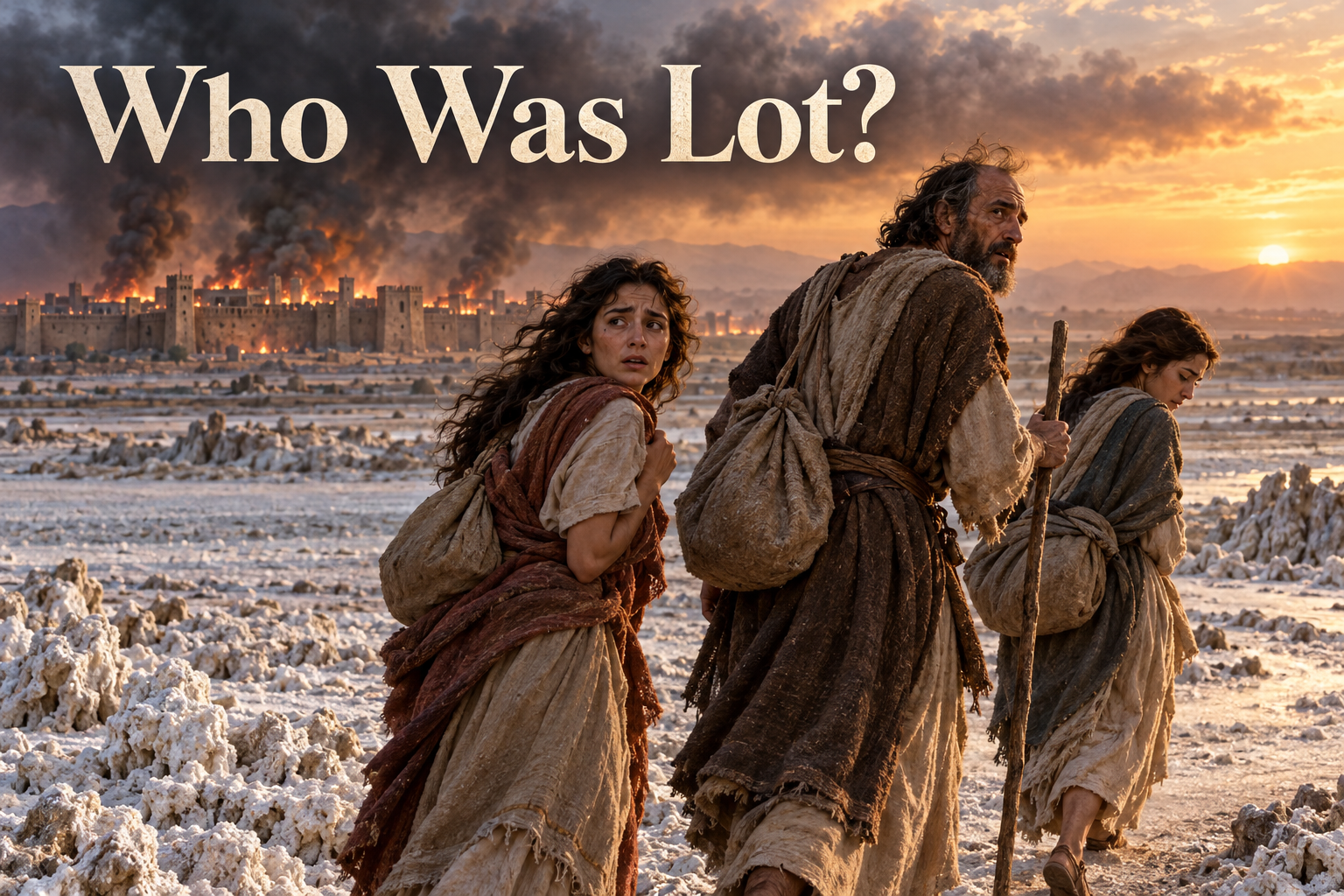
Lot usually appears in Bible lessons as the man who chose the wrong neighborhood. There is truth in that warning, but his story is more disturbing and complicated than a lesson about real estate. He traveled with Abraham, prospered in the land, settled in Sodom, survived its destruction, and became entangled in a family history marked by fear, sexual threat, loss, and shame. Scripture later calls him righteous, yet Genesis never asks readers to approve everything he did.
Abraham’s nephew
Lot was the son of Haran and therefore Abraham’s nephew. After Haran died, Lot went with his grandfather Terah and later traveled with Abraham from Haran toward Canaan (Genesis 11:27-32; Genesis 12:4-5). The two households accumulated enough livestock and servants that the land couldn’t comfortably support them together. When conflict arose between their herders, Abraham offered Lot the first choice of territory rather than allowing wealth to divide the family through open hostility.
Lot saw that the Jordan plain was well watered and chose it for himself, moving his tents toward Sodom. Genesis immediately notes that Sodom’s people were exceedingly wicked (Genesis 13:5-13). The narrative doesn’t say Lot selected the region because he admired its evil, but it does trace a movement from looking at the plain to camping near Sodom and eventually living within the city. What first appeared economically attractive placed his household in a dangerous moral and political environment.
When eastern kings defeated Sodom and its allies, Lot and his possessions were taken captive. Abraham organized an armed rescue and recovered him along with the other captives and goods (Genesis 14:11-16). Lot returned to Sodom even after experiencing how vulnerable the city was. Genesis doesn’t explain his reasoning, so it would be speculation to diagnose his motives. Still, the return shows how settled his life had become in a place the narrator has already marked for judgment.
Visitors at the city gate
Two angels arrived in Sodom and found Lot sitting at the gate, a location associated with civic life and public business. He urged them to stay in his home rather than spend the night in the square and prepared a meal for them (Genesis 19:1-3). His hospitality contrasts with the city’s violence, but the night quickly reveals both Sodom’s brutality and Lot’s own moral failure.
Men from across the city surrounded the house and demanded that Lot bring out his guests so they could sexually assault them. Lot pleaded with the mob and then offered his two daughters instead (Genesis 19:4-8). That offer is indefensible. Ancient obligations of hospitality help explain why he felt responsible to protect his guests, but they don’t excuse treating his daughters as expendable. The angels intervened, brought Lot inside, and struck the attackers with blindness; the narrative records Lot’s action without presenting it as God’s command or moral approval (Genesis 19:9-11).
The scene shows that Sodom’s sin included attempted gang rape, violent domination, and contempt for the vulnerable stranger. Other biblical passages also associate Sodom with pride, prosperous ease, neglect of the poor, and brazen evil (Ezekiel 16:49-50). Debates that reduce the city’s wickedness to a single category miss the breadth of the biblical indictment. Whatever conclusions Christians reach in larger discussions of sexual ethics, Genesis 19 is describing coercive violence, not a consensual relationship.
Escape from Sodom
The angels warned Lot to gather his family because the city would be destroyed. His future sons-in-law thought he was joking, and when morning came, Lot hesitated. The angels seized him, his wife, and his daughters by the hand because the Lord was merciful to him (Genesis 19:12-16). His rescue therefore isn’t a portrait of decisive spiritual leadership. Mercy practically had to pull the family out the door.
Lot asked to flee to a small nearby town, which was spared for his sake and called Zoar. As the family escaped, Lot’s wife looked back and became a pillar of salt (Genesis 19:17-26). The text doesn’t specify whether her look expressed longing, defiance, delay, or something else, though Jesus later uses her as a warning about attachment to a doomed way of life (Luke 17:28-32). Later stories and alleged locations of her pillar belong to tradition; Scripture doesn’t identify a surviving geological formation as her remains.
Genesis says that God remembered Abraham and sent Lot out of the catastrophe (Genesis 19:27-29). That wording places the rescue within God’s relationship with Abraham without making Lot a mere passive object. Second Peter later describes Lot as righteous and distressed by the lawless conduct around him (2 Peter 2:6-9). The description may surprise readers after Genesis 19, but biblical righteousness doesn’t mean moral perfection. Lot recognized and grieved real evil, while still making disastrous decisions within the very environment that troubled him.
The cave and Lot’s descendants
Lot eventually left Zoar because he was afraid and lived in a cave with his daughters. Believing they had no prospect of husbands, the daughters made their father drunk on successive nights and became pregnant by him (Genesis 19:30-38). The story is grim, and the text offers no command or approval for their actions. Their fear may reflect the destruction they had witnessed and the loss of their social world, but explaining desperation isn’t the same as excusing sexual exploitation.
The sons born from these encounters became ancestors of Moab and Ammon, neighboring peoples who later had a difficult relationship with Israel. Genesis may partly explain the remembered kinship and hostility among these nations, but it doesn’t permit contempt for every Moabite or Ammonite. Ruth the Moabite becomes an ancestor of David, while the Law forbids Israel to seize Ammonite or Moabite territory because God had given those lands to Lot’s descendants (Deuteronomy 2:9; Deuteronomy 2:19). Family origins don’t dictate the moral character of every later person.
How should Lot be remembered?
Lot isn’t simply a villain, and he certainly isn’t a spotless saint. He showed hospitality, recognized wickedness, and was delivered by God’s mercy. He also compromised his daughters’ safety, hesitated under warning, and presided over a household deeply damaged by life around Sodom. Genesis is candid enough to hold those facts together.
His life warns about more than choosing bad companions. It shows how people can be genuinely troubled by the evil around them while becoming morally confused by long exposure to it. Lot escaped the city’s judgment, but he didn’t escape all of its effects on his family. His story therefore points less to his competence than to the mercy of God, who rescued an imperfect man and still refused to call evil good.