
Who Was Martha?
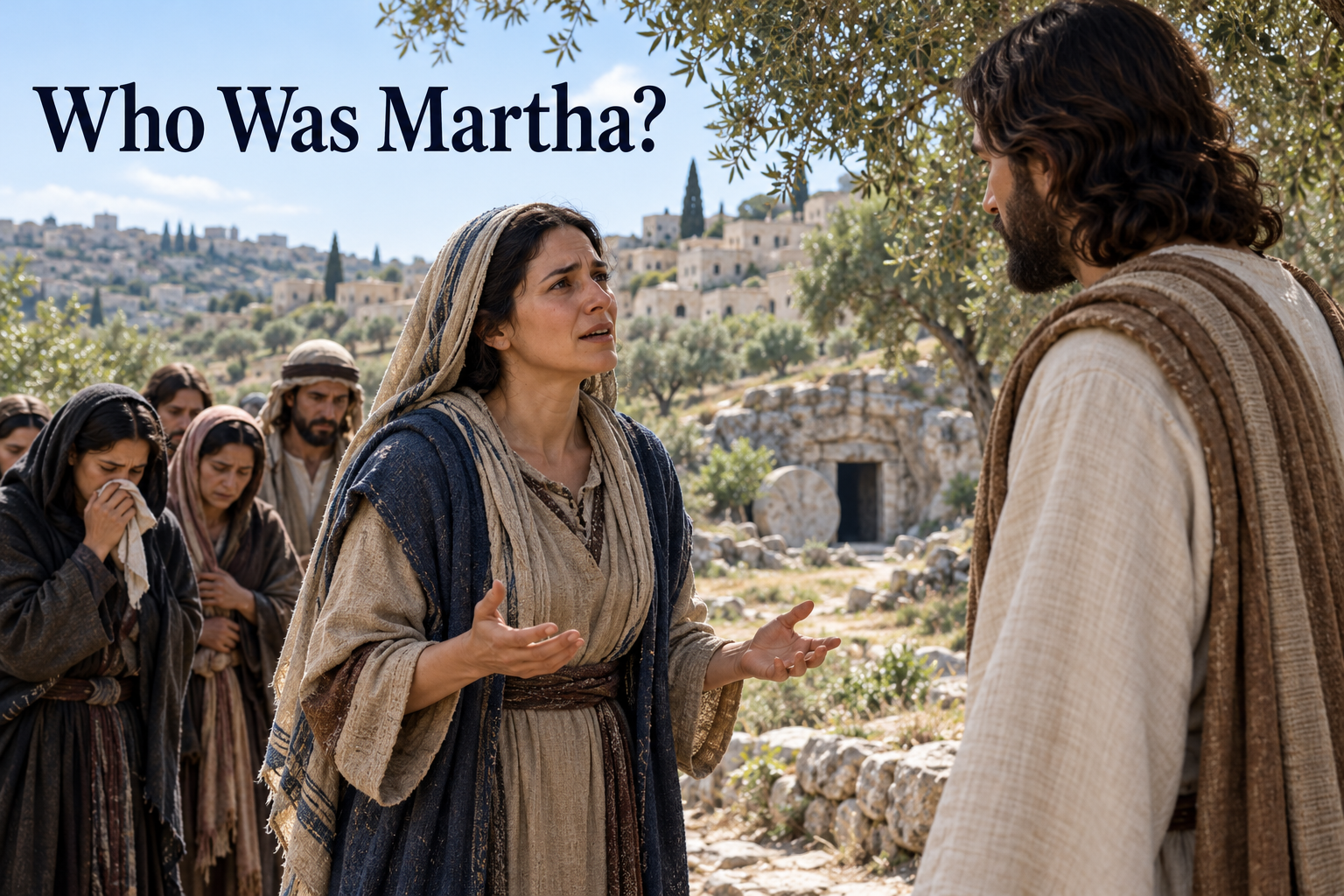
Martha is often reduced to the woman who was too busy in the kitchen. That reading is easy to remember, especially when she’s contrasted with her sister Mary sitting at Jesus’ feet, but it isn’t large enough for the Gospel portrait. Martha welcomed Jesus into her home, spoke to him with unusual honesty after her brother’s death, and confessed him as the Messiah and Son of God. She did become distracted by serving, and Jesus corrected her. He didn’t, however, dismiss service itself or assign her a permanent place among the spiritually second-rate.
Welcoming Jesus into her home
Luke introduces Martha when Jesus enters a village and she receives him into her home (Luke 10:38-42). The village isn’t named, though John places Martha, Mary, and their brother Lazarus in Bethany near Jerusalem. Most readers have reasonably understood Luke and John to describe the same sisters, but Luke doesn’t mention Lazarus or identify the location. That means the identification is very likely within Christian tradition without being independently demonstrable from Luke’s short account alone.
Mary sits at the Lord’s feet and listens to his teaching, language that presents her in the posture of a disciple. Martha, meanwhile, is “distracted with much serving.” Hospitality in that world wasn’t an optional flourish. Feeding a guest honored him, and a household welcoming Jesus and his traveling companions had real work to do. Martha’s mistake wasn’t that she performed practical service while Mary pursued something holier. The problem was that her service had begun to pull her attention in several directions and produce resentment toward both her sister and her guest.
Her complaint is remarkably direct: “Lord, do you not care that my sister has left me to serve alone? Tell her then to help me.” Jesus answers with equal directness but also affection, repeating her name before saying that she is anxious and troubled about many things. Ancient manuscripts preserve slightly different forms of the next sentence, either “one thing is necessary” or “few things are necessary, or only one.” The difference may affect whether Jesus is also making a gentle comment about an elaborate meal, but the main contrast is clear. Mary has chosen the good portion by attending to Jesus’ word, and Martha must not take it away from her.
This scene has sometimes been turned into a contest between active and contemplative lives, with Martha assigned to ordinary labor and Mary to superior spirituality. The context makes that too simple. Immediately before this episode, Luke records the parable of the Good Samaritan, where love takes active, costly form. Immediately afterward, Jesus teaches his disciples to pray. Discipleship needs both attentive listening and embodied love. Martha’s service went wrong when worry and comparison displaced the person she meant to serve.
Grief, questions, and a remarkable confession
John presents Martha in a crisis rather than a meal. Her brother Lazarus has died after the sisters sent word that he was sick, and Jesus arrived only after four days had passed. Martha went out to meet him and said, “Lord, if you had been here, my brother would not have died” (John 11:21). Mary later said the same thing. Their words combine faith, grief, and an implied question about why Jesus didn’t come sooner. The Gospel doesn’t scold either sister for speaking honestly from the place where loss had left her.
Martha added that even then she knew God would give Jesus whatever he asked. When Jesus told her that Lazarus would rise, she affirmed the Jewish hope of resurrection on the last day. Jesus then drew the future hope toward himself: “I am the resurrection and the life.” He asked whether she believed this, and Martha answered, “Yes, Lord; I believe that you are the Messiah, the Son of God, who is coming into the world” (John 11:27). It is one of the Gospel’s strongest confessions of Jesus’ identity, comparable in importance to Peter’s confession in the Synoptic Gospels.
Her faith wasn’t the same as having every question settled. When Jesus ordered the stone removed from Lazarus’s tomb, Martha objected that after four days there would be an odor. She understood resurrection at the last day and trusted Jesus as Messiah, yet she didn’t anticipate what he was about to do in front of her. John doesn’t treat that tension as hypocrisy. Biblical faith can be real while a person is still trying to understand what obedience will mean in the next five minutes.
Martha served again
John 12 returns to Bethany for a dinner honoring Jesus after Lazarus has been raised. Lazarus reclines at the table, Mary anoints Jesus’ feet with costly perfume, and Martha serves. This time the Gospel offers no rebuke. Her service belongs naturally within a household gathered around Jesus, just as Mary’s extravagant act and Lazarus’s presence each contribute to the scene. The brief notice keeps us from reading Luke 10 as though practical work were Martha’s spiritual defect.
John’s account also helps keep several women distinct. Mary of Bethany is the sister who anoints Jesus in John 12. She isn’t Mary Magdalene, whom John identifies separately by name in the crucifixion and resurrection narratives. Neither sister should be automatically identified with the unnamed woman in Luke 7. Similar actions and common names encouraged later interpreters to merge stories, but the Gospel writers give us no warrant to collapse every Mary and every anointing into one person.
What we know after the Gospels
The New Testament says nothing more about Martha’s later life. Centuries of tradition supplied the missing chapters. Western legends placed Martha and her siblings in southern France, where one colorful account has her subduing a dragon-like creature near Tarascon. Eastern traditions connected the family with other locations and ministries. These stories became part of local devotion and religious art, but they can’t be treated as verified first-century biography. A memorable legend can honor a saint and still tell us more about the community that preserved it than about the historical person.
Even Martha’s domestic circumstances remain uncertain. Because Luke calls the house hers, some have inferred that she was widowed, wealthy, or the head of a household. Any of those is possible, but none is stated. John calls Bethany the village of Mary and Martha and depicts a home able to host a dinner, yet he doesn’t explain who owned it or how the family was supported. Good interpretation stops where the evidence stops, especially when later assumptions about women’s roles are eager to finish the story for us.
More than a personality type
Church conversations sometimes sort people into “Marthas” who work and “Marys” who worship, as though temperament were the main point of either passage. Martha was more than a personality type. She was a host, a grieving sister, a candid questioner, a learner, and a woman capable of stating the truth about Jesus with theological clarity. Her correction in Luke and her confession in John belong to the same life of discipleship.
Martha’s story is helpful precisely because the Gospels don’t flatten her. She could be anxious and faithful, practical and reflective, disappointed with Jesus and still drawn toward him. Her service needed to be reordered, not despised. At Bethany she learned that the Messiah she welcomed into her home wasn’t merely a teacher to be accommodated or a healer who had arrived too late. He was the resurrection and the life, and Martha was among the first people in John’s Gospel to say plainly who she believed him to be.