
Who Was Melchizedek?
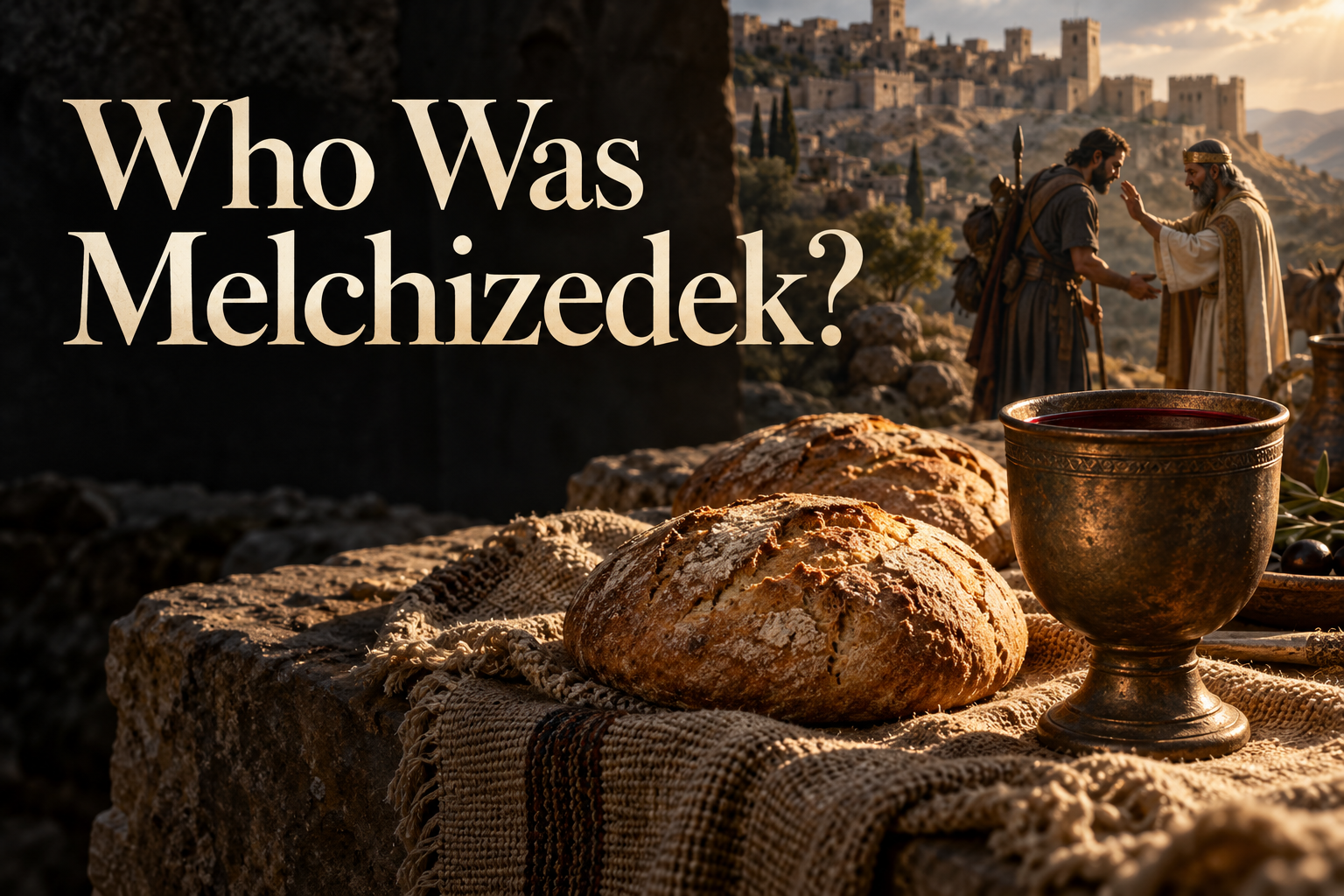
Melchizedek appears only briefly in Genesis, yet he becomes one of the most intriguing figures in the Bible because of the way Psalm 110 and the book of Hebrews interpret his significance. He was a king and priest who met Abraham long before the priesthood of Aaron existed. That combination of roles would later provide an important way of explaining why Jesus could be called a priest even though he did not belong to the tribe of Levi.
Melchizedek Meets Abraham
Genesis 14 describes Abraham’s rescue of Lot after a coalition of kings raided the region and carried away captives and possessions. Following Abraham’s victory, Melchizedek, king of Salem, brought out bread and wine and blessed him. Genesis calls Melchizedek “priest of God Most High” (Genesis 14:18). He blessed Abraham in the name of God Most High, possessor of heaven and earth, and Abraham gave him a tenth of the spoils. The encounter is remarkably short, but it establishes Melchizedek as a priest recognized by Abraham himself.
The name Melchizedek is commonly understood to mean “king of righteousness,” while Salem is associated with peace and is traditionally identified with Jerusalem. Hebrews 7 draws attention to both meanings, presenting him as king of righteousness and king of peace. Genesis doesn’t tell us how he became a priest, what his wider kingdom was like, or how his ministry was organized. It also doesn’t describe a continuing priestly order descended from him. The mystery comes partly from how little the text says, not from a secret biography hidden somewhere else in Scripture.
A Priest Before the Law of Moses
Under the law of Moses, Israel’s priests came from the descendants of Aaron within the tribe of Levi. Melchizedek lived centuries earlier, before that arrangement was established. His meeting with Abraham therefore shows that Scripture recognizes a priest of the Most High God outside the later Levitical system. Hebrews makes much of this distinction, noting that Abraham gave Melchizedek a tenth and received his blessing. The argument is that Melchizedek’s priesthood cannot simply be treated as a lesser branch of the priesthood that came through Abraham’s descendants.
Psalm 110:4 introduces a remarkable promise: the king addressed in the psalm is declared a priest forever “after the order of Melchizedek.” The psalm brings kingship and priesthood together in a way that the ordinary structure of Israel’s monarchy did not. The kings of Judah were descendants of David, while the priests came from Aaron. Psalm 110 points to a priestly role that doesn’t depend on Aaronic ancestry, and the New Testament applies that promise to Jesus.
Melchizedek and Jesus in Hebrews
Hebrews 5–7 explains that Jesus is a priest according to the order of Melchizedek rather than according to the order of Aaron. Jesus came from the tribe of Judah, not Levi, so his priesthood isn’t based on the genealogical requirements of the Mosaic law. Instead, Hebrews grounds it in God’s oath and in the power of Jesus’ indestructible life. His resurrection and enduring ministry are central to the argument: unlike mortal priests whose service ended in death, Jesus continues as priest forever.
Hebrews 7:3 describes Melchizedek as “without father, without mother, without genealogy,” and says he is made like the Son of God. Some readers have concluded that Melchizedek was an appearance of Christ before the incarnation. Others understand the language as an argument based on the way Genesis presents him, without recorded ancestry, birth, death, or priestly succession. The latter reading fits the wording that Melchizedek was made like the Son of God, but the passage has generated discussion throughout Christian history. Scripture doesn’t explicitly identify Melchizedek as Jesus.
Why Melchizedek Matters
Melchizedek’s significance isn’t that we can reconstruct his entire life. We can’t. His importance lies in the place he occupies in the biblical argument about priesthood. Genesis presents a priest-king who blesses Abraham; Psalm 110 speaks of a lasting priesthood after his order; and Hebrews explains how Jesus fulfills that promise in a way the Levitical priesthood never could.
That also explains why Christians shouldn’t become so absorbed in guessing Melchizedek’s identity that they miss the point of Hebrews. The writer’s concern is the sufficiency of Jesus as the great high priest who brings his people near to God. Melchizedek is an unusual and memorable figure, but in the New Testament his story ultimately directs attention away from himself and toward Christ.