
Who Was Philip the Evangelist?
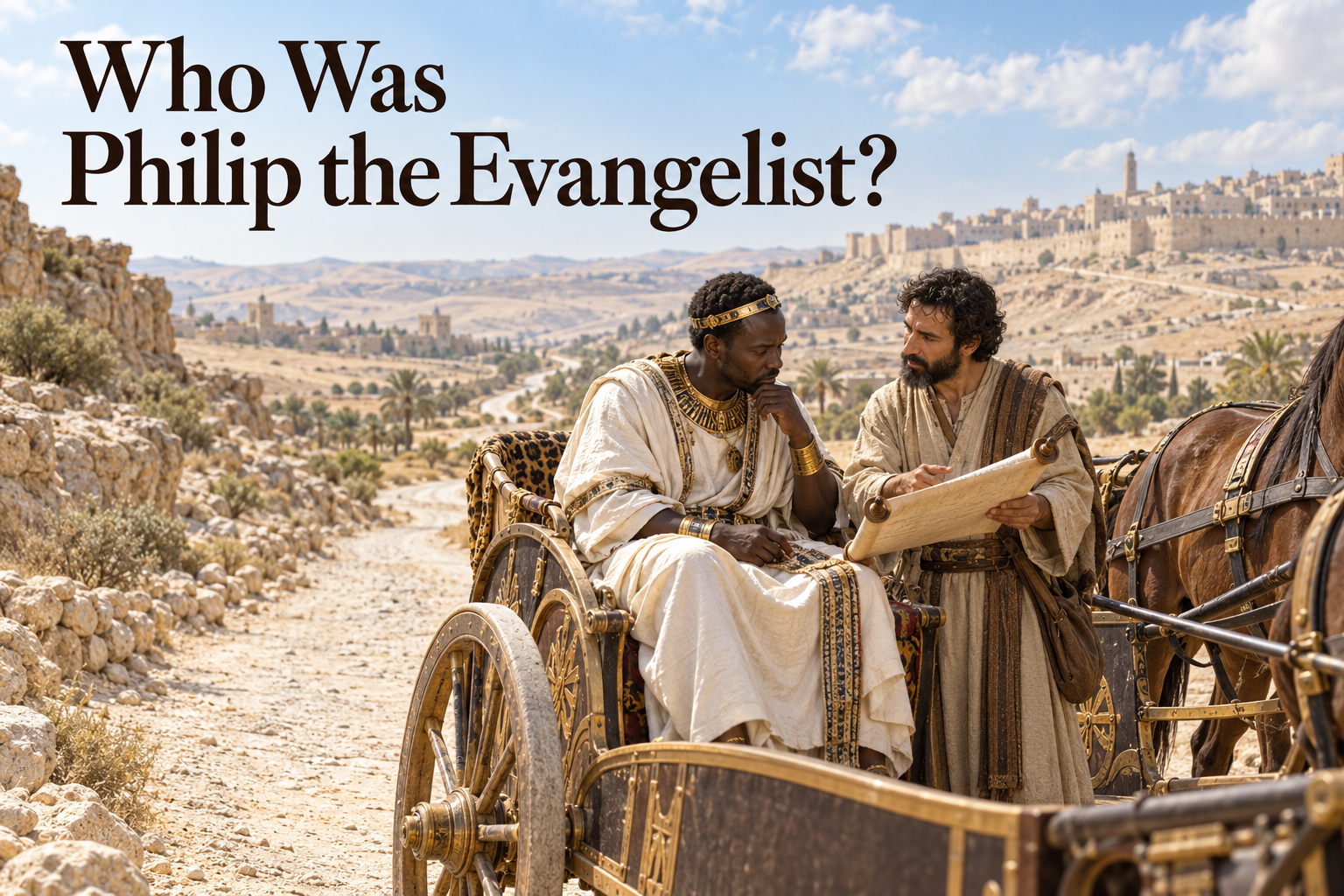
The New Testament mentions more than one man named Philip, which has caused some confusion over the centuries. Philip the Evangelist was not Philip the Apostle, one of the Twelve. He was one of the seven men appointed in Acts 6 to address a problem in the Jerusalem church, and he later became an important figure in the spread of the gospel beyond Jerusalem. His ministry connects several major developments in the early church, from service among believers to evangelism in Samaria and the conversion of an Ethiopian official.
One of the Seven
Philip first appears in Acts 6, when a dispute arose because Greek-speaking Jewish widows were being overlooked in the daily distribution of food. The apostles asked the congregation to select seven reputable men, full of the Spirit and wisdom, to oversee the matter so the apostles could concentrate on prayer and the ministry of the word. Philip was among those chosen, along with Stephen and five others (Acts 6:1–6). The passage doesn’t explicitly call these men deacons, although their service is often understood as an important precedent for the later office.
The selection tells us something about Philip before we hear him preach a sermon. He was trusted to handle a sensitive practical problem in a growing, culturally diverse congregation. In Acts, caring for neglected widows wasn’t treated as a distraction from spiritual ministry. It was a necessary responsibility, and the church chose people of spiritual maturity to carry it out. Philip’s later work as an evangelist grew out of a community in which service and proclamation belonged together.
Philip Preaches in Samaria
After Stephen was killed, persecution scattered many believers from Jerusalem. Philip went to a city in Samaria and proclaimed Christ there (Acts 8:4–8). The crowds listened to his message, and Acts reports healings and deliverance from unclean spirits. Many people believed and were baptized, including a man named Simon who had previously amazed the population with his magical practices. Philip’s ministry helped bring the gospel to Samaritans, a people whose relationship with the Jews had long been marked by religious and ethnic hostility.
When the apostles in Jerusalem heard that Samaria had received God’s word, they sent Peter and John, who prayed for the believers to receive the Holy Spirit (Acts 8:14–17). The sequence has generated considerable discussion among Christians about baptism and the reception of the Spirit. Whatever conclusions one reaches about that question, the narrative makes clear that the Samaritan believers were being welcomed into the same growing Christian community as the believers in Jerusalem. Philip had carried the message across a boundary many of his contemporaries would have found difficult to cross.
The Ethiopian Official
Philip’s next assignment was even more unexpected. An angel directed him toward the road from Jerusalem to Gaza, where he encountered an Ethiopian court official who had been worshiping in Jerusalem and was returning home in his chariot (Acts 8:26–28). The man was reading Isaiah 53 but didn’t understand whom the prophet was describing. Philip began with that passage and explained the good news about Jesus. When they came to water, the official asked to be baptized, and Philip baptized him.
The official is traditionally called the Ethiopian eunuch, though Acts emphasizes his position as a high-ranking official in charge of the treasury of Candace, the title of a queen of the Ethiopians. His precise religious status before meeting Philip isn’t stated in enough detail to resolve every question. What matters in the account is that someone from a distant land was reading Israel’s Scriptures and was helped to understand them in light of Jesus. Philip didn’t need a large audience to fulfill his calling; he was just as willing to speak to one traveler on a desert road.
Philip’s Family and Later Ministry
Acts says that after this encounter Philip was found at Azotus and continued preaching through the towns until he reached Caesarea (Acts 8:40). Years later, Paul and his companions stayed with him in Caesarea. Luke calls him “Philip the evangelist, who was one of the seven,” removing any doubt about which Philip he means (Acts 21:8). Philip had four unmarried daughters who prophesied (Acts 21:9). Scripture doesn’t record the content of their prophecies, but it does plainly acknowledge their prophetic ministry.
Philip’s life illustrates how varied early Christian ministry could be. He helped solve a problem involving food distribution, preached to crowds, explained Scripture to an individual, baptized new believers, and raised a family in which prophetic gifts were active. We don’t know the circumstances of his death, and later traditions about him should be distinguished from the information Luke actually gives us. The picture Acts leaves is of a man who followed the gospel wherever it took him, whether that meant crossing a cultural divide or stopping beside a stranger’s chariot.