
Who Was Samuel?
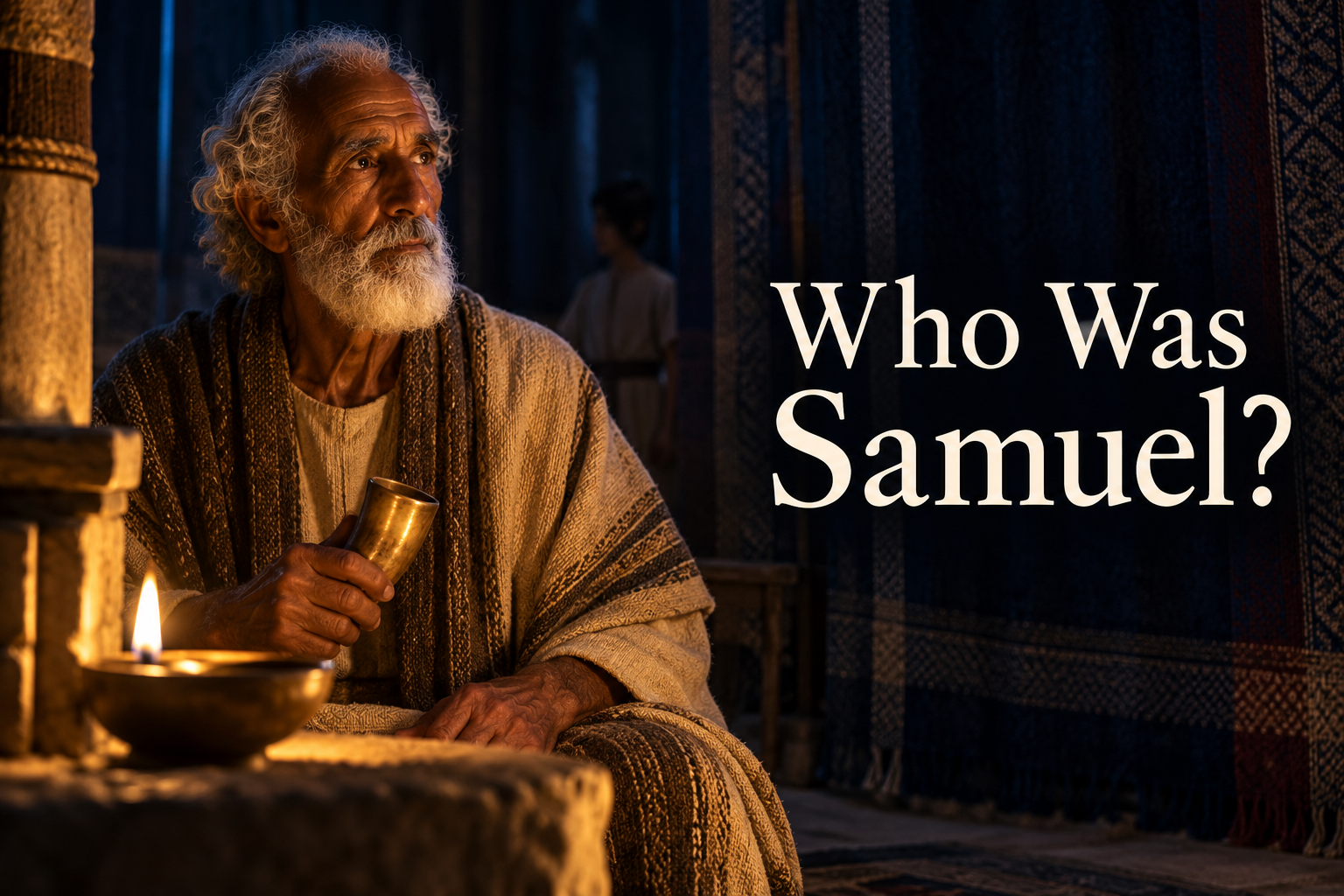
Samuel stood at the hinge between two eras. He served as prophet, judge, and priestly leader; helped Israel turn from idols; anointed its first king; announced that king’s rejection; and then anointed David while Saul still occupied the throne. Few biblical figures exercised so many kinds of authority. Yet Samuel’s story also includes sons who abused their office, a national argument over monarchy, and acts of judgment that modern readers shouldn’t pretend are easy. He is a faithful leader in a difficult transition, not a mascot for every decision made in his name.
The child Hannah gave back
Samuel was born to Hannah and Elkanah after years in which Hannah had been unable to have children and endured provocation from Elkanah’s other wife, Peninnah. At the sanctuary in Shiloh, Hannah prayed in such anguish that Eli the priest initially mistook her silent prayer for drunkenness. She promised that if God gave her a son, she would give him to the Lord all his life and no razor would touch his head. The language suggests lifelong consecration resembling a Nazirite vow, though 1 Samuel emphasizes Samuel’s service more than the later details of Nazirite practice.
After Samuel was weaned, Hannah brought him to Shiloh and entrusted him to Eli’s care. Her action wasn’t casual abandonment; she returned regularly with a new robe, and her song in 1 Samuel 2 frames the child’s story as part of God’s reversal of human pride and power. The Lord raises the poor, brings down the mighty, and guards the feet of the faithful. Those themes will govern the rise and fall of kings long after the boy outgrows the little robe.
Learning to hear God
Samuel ministered while Eli’s sons, Hophni and Phinehas, abused the priesthood. They seized sacrificial meat by force and treated the Lord’s offering with contempt. First Samuel also reports that they slept with women serving at the entrance to the tent of meeting, conduct involving gross exploitation by men holding religious power. Eli rebuked them but failed to restrain them effectively, and judgment was announced against his household.
In that setting, the word of the Lord was rare and visions were uncommon. When God called Samuel at night, the boy repeatedly assumed Eli was speaking. Eli eventually understood and instructed him to answer, “Speak, Lord, for your servant is listening.” The first message Samuel received was a judgment against the household of the man raising him, hardly an easy beginning to prophetic ministry. Samuel was afraid to report it, but Eli required the truth, and Samuel told him everything.
As Samuel grew, Israel recognized him as a prophet because the Lord was with him and let none of his words fall to the ground. The phrase means his prophetic words proved reliable, not that Samuel became incapable of every human mistake. His authority arose from hearing and delivering God’s word, especially when that word was unwelcome. That pattern would define his later confrontations with Saul.
Prophet, judge, and national leader
After the ark was captured by the Philistines and eventually returned, Samuel called Israel to put away the Baals and Ashtoreths and serve the Lord alone. At Mizpah the people gathered, fasted, and confessed their sin. When the Philistines attacked, Samuel offered sacrifice and cried to God, and a thunderstorm threw the enemy into confusion. Israel pursued them, and Samuel set up a stone called Ebenezer, saying that the Lord had helped them to that point.
Samuel then judged Israel, traveling a circuit through Bethel, Gilgal, and Mizpah before returning to Ramah. In this context, judging included resolving disputes, leading the people, and representing covenant authority; it wasn’t identical to wearing a robe in a modern courtroom. Samuel’s combination of prophetic, priestly, and judicial roles is unusual, and later biblical tradition sometimes presents him as a figure comparable to Moses. His leadership also prepared Israel for a political form that he regarded with deep suspicion.
Samuel’s sons and Israel’s demand
When Samuel grew old, he appointed his sons Joel and Abijah as judges in Beersheba. They took bribes and perverted justice. The elders cited this corruption, along with Samuel’s age, when asking for a king like the surrounding nations. Their request was not simply frivolous. Samuel’s attempt to extend authority through his own sons had failed, just as Eli’s household had failed before his.
Samuel was displeased, and God told him that the people had rejected divine kingship rather than merely Samuel’s leadership. Samuel warned that a king would take sons for war, daughters for service, fields and vineyards for officials, portions of produce, and eventually the people’s freedom. The repeated word “take” is the heart of the warning. A centralized ruler could defend the nation, but he could also convert families and land into royal resources.
First Samuel preserves more than one angle on monarchy. Chapter 8 treats the demand as rejection, while chapters 9-11 present God choosing Saul as a deliverer and the people confirming him after victory. Scholars often see different older traditions brought together, and the final form allows both to speak. Kingship can be granted and used by God while remaining dangerous, accountable, and incapable of replacing God’s rule.
Anointing Saul
Samuel privately anointed Saul, gave him confirming signs, and told him that the Spirit of the Lord would come powerfully upon him. Saul was later selected publicly by lot at Mizpah, and after rescuing Jabesh-gilead from the Ammonites, his kingship was renewed at Gilgal. Samuel’s farewell speech reviewed God’s faithfulness, defended his own public integrity, and warned both king and people to fear the Lord. A thunderstorm during wheat harvest underscored the seriousness of their demand, but Samuel also promised not to sin by ceasing to pray for them.
The relationship soon fractured. In 1 Samuel 13, Saul offered sacrifice after Samuel did not arrive within the appointed time and the army began scattering. Samuel announced that Saul’s dynasty would not endure. The chapter’s Hebrew text contains chronological difficulties, and readers debate exactly which priestly or prophetic boundary Saul violated. The narrative’s clear concern is that pressure led the king to act without obedient trust and then defend the decision as necessity.
Amalek and a final break
In 1 Samuel 15, Samuel ordered Saul to place Amalek under total destruction because of Amalek’s earlier attack on Israel. Saul defeated the Amalekites but spared King Agag and the best livestock. When confronted, he first claimed obedience, then blamed the people and said the animals were preserved for sacrifice. Samuel replied that obedience is better than sacrifice and that rebellion cannot be covered with religious performance.
The chapter is also one of Scripture’s severe warfare texts. It describes a command extending to men, women, children, and animals, and it ends with Samuel hacking Agag to pieces. The narrative understands this as delayed divine judgment and condemns Saul for selective disobedience, not for excessive violence. Modern readers should neither edit the passage nor enjoy it. Christians who confess Scripture’s authority still have to distinguish ancient judgment within Israel’s unique history from permission for nations or religious leaders to declare their enemies devoted to destruction today.
Samuel told Saul that the kingdom would be given to a neighbor better than he was. As Saul grasped Samuel’s robe, it tore, and Samuel turned the tear into a sign of the kingdom being torn away. Samuel then mourned Saul, and the Lord regretted making Saul king. Earlier in the chapter Samuel says God does not lie or change his mind like a human being; the same chapter also speaks of divine regret. The text places God’s reliable purpose beside God’s real grief over human disobedience, and neither statement should be flattened to protect a tidy system.
Anointing David
God sent Samuel to Bethlehem to anoint one of Jesse’s sons. Samuel initially assumed the impressive Eliab must be the chosen man, but God warned him not to judge by appearance or height. Seven sons passed before Samuel asked whether another remained, and David was called from tending sheep. Samuel anointed him, and the Spirit came powerfully upon David from that day.
The act was politically dangerous because Saul was still king. Samuel traveled under the stated purpose of sacrifice, and the elders of Bethlehem trembled at his arrival. The narrative presents the anointing as God’s initiative, but it doesn’t pretend transitions of power are harmless. Samuel’s role places prophetic authority above monarchy while also beginning a rivalry that will bring suffering to Saul’s household and David’s supporters.
Death and the scene at Endor
Samuel died and was buried at Ramah, and all Israel mourned him. His story nevertheless has one more unsettling scene. On the eve of battle, Saul received no answer through dreams, the Urim, or prophets, so he consulted a medium at Endor even though he had expelled such practitioners. He asked her to bring up Samuel.
The narrative calls the figure Samuel and reports a message consistent with Samuel’s earlier judgment: Saul and his sons will die and Israel will fall to the Philistines. Many interpreters therefore understand an extraordinary appearance of the actual Samuel, which shocks even the medium and occurs under God’s control rather than hers. Others have proposed deception, illusion, or a demonic impersonation because necromancy is forbidden in the law. The text doesn’t explain the mechanics, so dogmatism is unnecessary; its theological point is clear enough that forbidden consultation cannot give Saul an escape from the word he already refused.
History and legacy
No known inscription independently confirms Samuel. The books bearing his name were shaped from traditions about Israel’s transition from tribal leadership to monarchy, and scholars debate the age and historical value of individual sections. Archaeology illuminates early Iron Age settlements, Philistine power, and the gradual development of Israelite statehood, but it cannot reconstruct Samuel’s circuit or verify a private anointing. The biblical portrait remains the primary evidence for his biography.
Later Scripture remembers Samuel as a model intercessor and prophet. Psalm 99 places him among those who called on the Lord, Jeremiah 15 pairs him with Moses as a great intercessor, Acts 3 calls him the beginning of a line of prophets who announced the days of fulfillment, and Hebrews 11 names him among people of faith. Those tributes fit the man who listened when God’s word was rare and kept speaking when kings wished it were silent.
Samuel’s legacy isn’t that religious leaders always understand politics correctly or that prophetic authority excuses family failure and violence. His sons corrupted justice, his nation demanded structural change, and the king he anointed became the man he mourned. Samuel remained faithful by telling the truth across those disappointments. He learned God’s voice as a child and spent the rest of his life refusing to make that voice more convenient for people in power.