
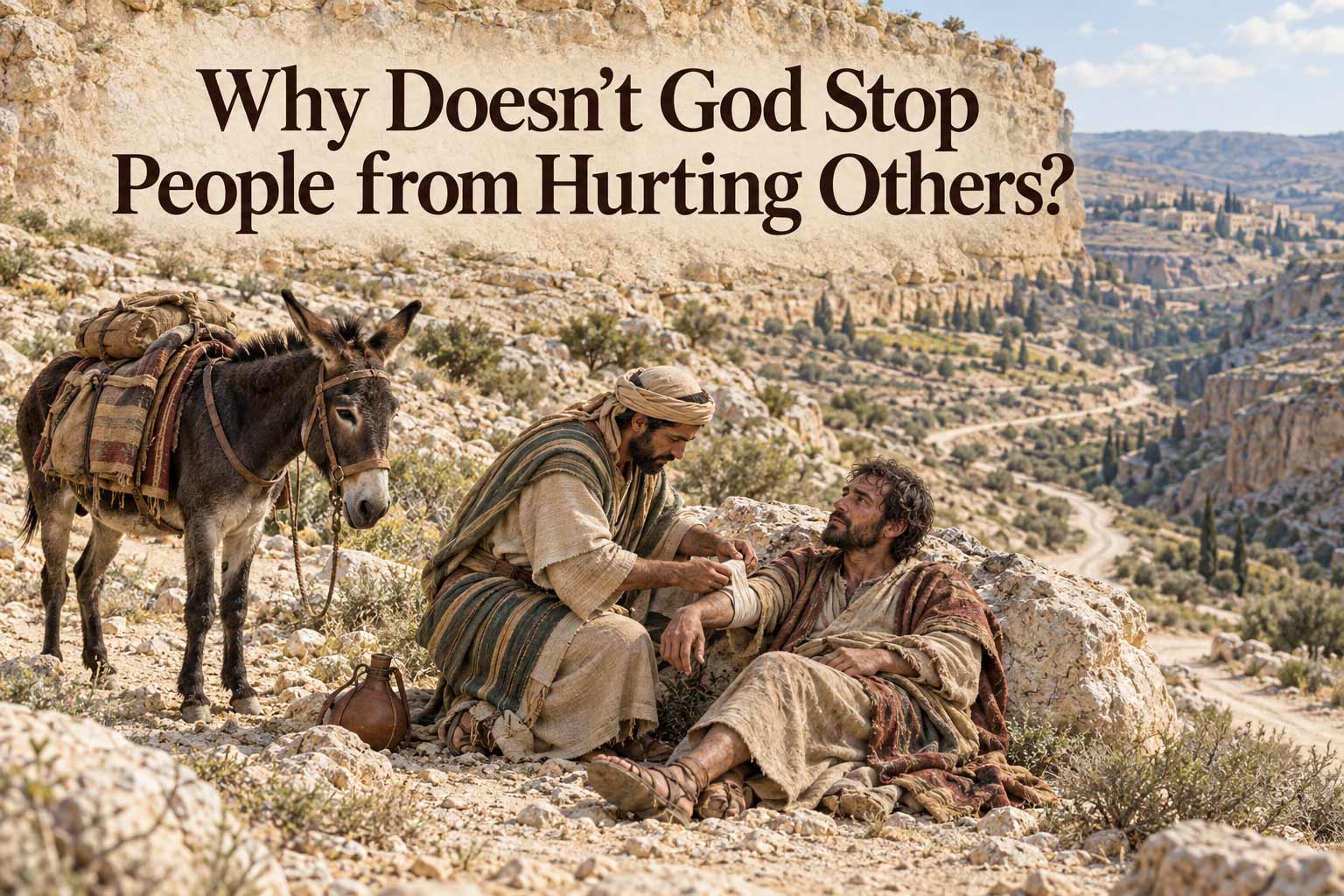
It’s one thing to say that people are responsible for their choices. It’s another to watch someone use those choices to terrorize a family, exploit a child, or destroy another person’s life. The person being harmed may be praying for help while the wrongdoing continues. At that point, the question isn’t merely why God allows freedom. It’s why He doesn’t step in and stop someone from using that freedom so destructively.
I don’t believe God approves of cruelty or assigns victims the task of being mistreated for someone else’s benefit. Scripture condemns oppression and presents Him as concerned for people who are vulnerable. Yet it also acknowledges the painful experience of crying out for deliverance while evil continues. We need to take both seriously without claiming we know why God permits every particular act of harm.
Scripture Makes Room for This Question
Habakkuk opens with the prophet asking how long he must cry for help while violence goes unchecked. He sees wrongdoing, destruction, and a justice system that isn’t functioning as it should. His question grows out of his belief that God is righteous. If God cares about justice, why does the prophet keep seeing circumstances that contradict it?
Psalm 10 expresses a similar struggle. The wicked prey on vulnerable people and behave as though God won’t call them to account. The psalmist asks why God seems distant in a time of trouble, then appeals to Him to act. Those words give us permission to bring our distress to God without disguising it as a calm theological discussion.
We shouldn’t tell someone that asking this question proves they lack faith. A person may ask precisely because they believe God can intervene and desperately want Him to do so. Scripture includes prayers from people who couldn’t reconcile His goodness with the violence around them. Their questions belong within the life of faith, even when the answers don’t come as quickly or clearly as they hoped.
Human Freedom Helps Explain Wrongdoing
God’s commands address people as responsible for their conduct. We can tell the truth or lie, protect someone or exploit them, exercise restraint or lash out in anger. I understand those choices as genuine, rather than believing God secretly requires every sinful action He publicly condemns. People who harm others are accountable for what they do.
Freedom helps explain how wrongdoing can occur in a world created by a good God. Abilities intended for good purposes can be misused, and relationships that should provide care can become settings for manipulation and abuse. A person’s capacity to act doesn’t mean God approves of the action. His permission and His moral approval aren’t interchangeable.
But that distinction doesn’t answer everything. The victim didn’t choose to be harmed, and explaining the offender’s freedom doesn’t explain why God allows the consequences to fall on someone else. We shouldn’t use free will as though it were a complete answer that ends the discussion. It identifies human responsibility while leaving a serious question about divine restraint.
Why Doesn’t God Restrain More Evil?
Preventing an action doesn’t necessarily remove someone’s ability to choose. A person can intend to hurt someone and be stopped before carrying it out. We recognize that distinction whenever we protect a child, interrupt an assault, or prevent someone from misusing their authority. The offender remains responsible for the intention even when they’re unable to complete the act.
That means we can’t simply say God must allow every harmful action in order for freedom to exist. Scripture portrays Him as able to restrain, warn, deliver, and redirect people. Christians also pray for protection because we believe intervention is possible. The difficult question is why that intervention isn’t more consistent or more visible.
I don’t have an explanation for every case. There may be aspects of God’s activity and the circumstances that we don’t understand, but acknowledging our limits shouldn’t become an excuse to invent a hidden purpose. We can trust His goodness while admitting that a particular failure of rescue remains painful and unresolved. We don’t have to call the harm necessary in order to continue believing in Him.
God’s Permission Doesn’t Make Cruelty His Instruction
One dangerous response is to tell a victim that whatever happened must have been exactly what God wanted. That can make resisting abuse sound like resisting God. It can also give the offender a religious excuse for conduct that Scripture condemns. We need to distinguish God’s ability to work after wrongdoing from the claim that He instructed someone to commit it.
God can bring healing, restoration, and new opportunities after terrible experiences. People may eventually recognize ways He helped them survive or rebuild their lives. But none of that requires them to describe the wrongdoing as good. The fact that someone grows after being harmed doesn’t establish that harming them was the right way to produce that growth.
Forgiveness doesn’t change that distinction either. It doesn’t require calling cruelty acceptable, pretending trust has been restored, or giving someone continued access to hurt others. A victim’s spiritual responsibilities shouldn’t be used to cancel the offender’s accountability. Whatever questions remain about why God permitted the harm, we already have enough reason to oppose it.
God Has Given Us Responsibilities Toward One Another
Proverbs 24:11–12 challenges people who stand aside when others are being led toward death. It also rejects the easy excuse that they didn’t know what was happening. The passage directs attention toward our responsibility to help rather than allowing concern for suffering to remain an abstract question. God’s commands require us to care about what happens to other people.
We should therefore ask not only why God didn’t intervene, but whether people who could have helped refused to act. Sometimes warning signs were ignored, wrongdoing was concealed, or an institution protected its reputation instead of protecting someone vulnerable. Those failures belong to the people who made them. Calling the outcome God’s mysterious will mustn’t become a way to avoid examining human negligence.
This is especially important in churches. A religious title doesn’t make a person trustworthy, and protecting a ministry doesn’t justify sacrificing the people it was supposed to serve. Prayer belongs alongside practical protection and honest accountability. If we ask God to stop people from hurting others, we should be willing to participate in protecting them when we have the opportunity.
Delayed Justice Isn’t Approval
Romans 12 instructs believers not to take personal revenge and affirms that judgment belongs to God. That gives us reason to believe wrongdoing won’t escape His attention forever. It doesn’t require us to become indifferent to justice or to leave vulnerable people exposed. The same passage calls us to overcome evil with good, which requires a response rather than passive acceptance.
Future judgment also doesn’t make present suffering unimportant. Someone who has been harmed needs care now, not merely an assurance that the offender will eventually answer to God. Hope in His justice should support our efforts to protect, restore, and hold people accountable. It shouldn’t become a substitute for those efforts.
We may still struggle with the delay. A victim can believe God will judge rightly and continue asking why He didn’t stop the wrongdoing sooner. Those aren’t mutually exclusive positions. Scripture’s prayers for deliverance show that trusting God includes appealing to Him to act in the present.
Keep Praying for Protection and Working for It
Jesus’ suffering shows that God’s response to human evil includes entering a world in which people betray, exploit, and kill. It doesn’t answer every question about why a particular victim wasn’t rescued, but it prevents us from picturing Him as untouched by the realities we’re discussing. Christian hope rests in His victory over evil and death, not in the claim that wrongdoing somehow becomes harmless.
Until that victory is fully expressed, we can pray for God to restrain evil, expose deception, and protect those in danger. We can also listen to people who report harm and help carry the burdens that follow it. We don’t need to explain every instance of God’s permission before doing what He has already commanded. People who are hurting deserve our protection and care while we continue bringing the unanswered questions to Him.