
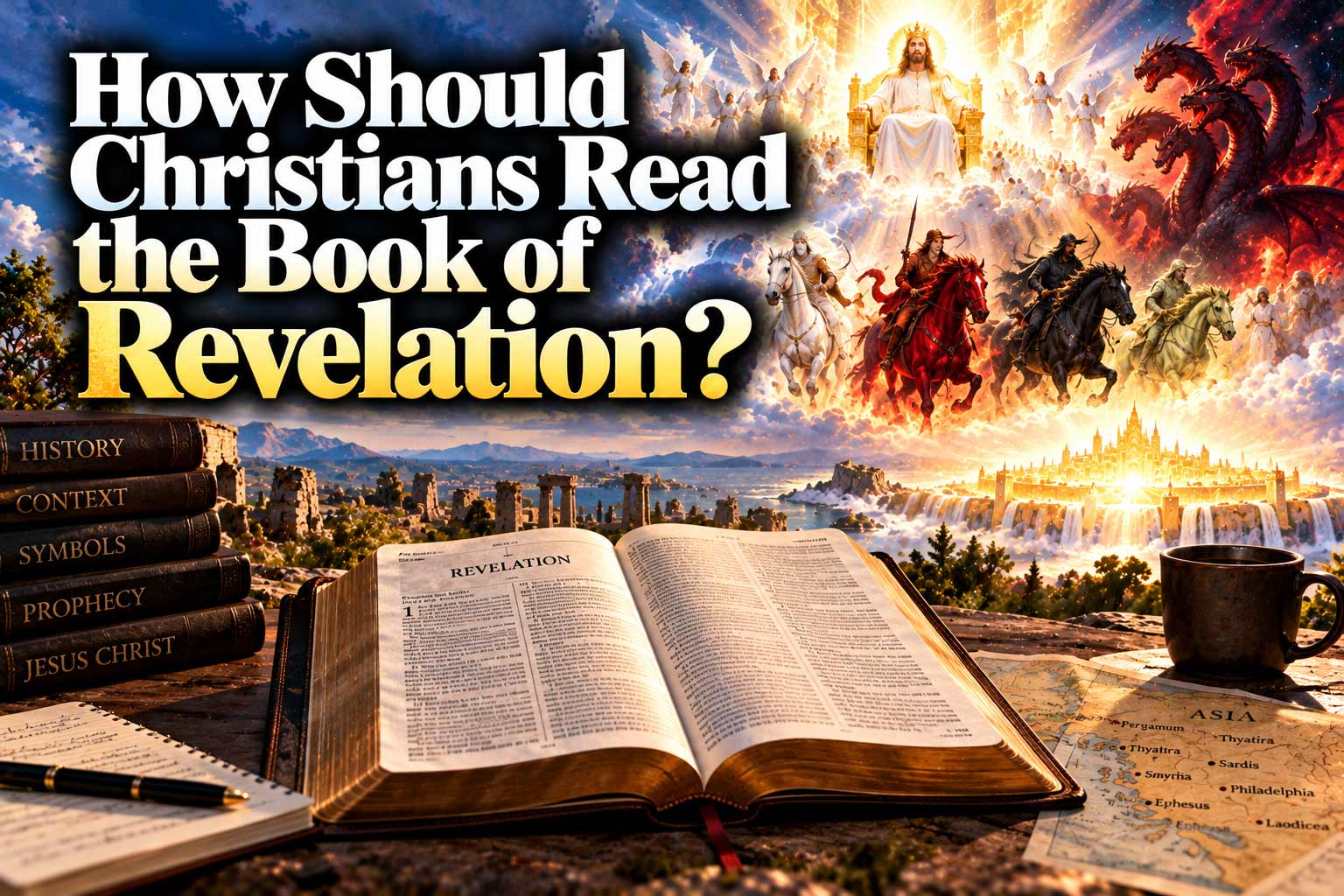
The book of Revelation has probably inspired more speculation than any other book in the Bible. For nearly two thousand years, Christians have tried to identify the Antichrist, explain the mark of the beast, calculate the meaning of 666, and determine when the world will end. Roman emperors, medieval popes, Napoleon, Hitler, and various American presidents have all been assigned roles in someone’s prophetic interpretation. Every generation seems convinced that the book was written with its particular political circumstances in mind.
But Revelation wasn’t written primarily to provide Christians with a coded description of twenty-first-century events. It was written to encourage believers who were facing opposition, persecution, and pressure to compromise their faith. Its central message is that Jesus Christ reigns, evil will be judged, and God’s kingdom will ultimately triumph. The difficulty is understanding how its extraordinary visions communicate those truths and how much of the prophecy remains to be fulfilled.
Christians have developed several approaches to interpreting Revelation, and those differences explain why sincere believers can read the same passages and reach remarkably different conclusions. Before choosing an interpretation, however, we need to understand what kind of book we’re reading, who originally received it, and how its imagery draws upon the rest of Scripture.
What Kind of Book Is Revelation?
Revelation identifies itself as both a prophecy and a revelation of Jesus Christ. The opening verse uses the Greek word apokalypsis, meaning an unveiling or disclosure. That’s where we get the English word apocalypse, although modern usage has turned it into a synonym for worldwide catastrophe.
The book belongs to a literary category known as apocalyptic literature, which uses visions, symbols, heavenly messengers, and dramatic imagery to reveal spiritual realities and God’s purposes in history. Parts of Daniel, Ezekiel, and Zechariah employ similar methods. Revelation draws heavily from these Old Testament writings, frequently using their imagery to communicate its message.
This matters because apocalyptic literature isn’t intended to be read exactly like a historical narrative or one of Paul’s letters. When John describes a dragon sweeping stars from heaven with its tail, we shouldn’t assume he’s predicting the appearance of an enormous reptile in the sky. Revelation 12 identifies the dragon as Satan, so the book itself tells us that the image is symbolic.
But recognizing symbolism doesn’t mean the events being described are imaginary. The dragon represents a real spiritual enemy, and the conflict between the dragon and God’s people represents a genuine struggle. Symbols can communicate realities just as effectively as literal descriptions, sometimes more effectively.
The challenge is determining what the symbols mean rather than assuming that everything must be either completely literal or completely symbolic.
Who Was Revelation Written For?
The author identifies himself as John, a servant of Jesus Christ who was on the island of Patmos because of the word of God and the testimony of Jesus. Early Christian tradition commonly identified him with the apostle John, although scholars continue to debate the author’s precise identity.
Revelation was addressed to seven churches in the Roman province of Asia, located in what is now western Turkey. These congregations faced different circumstances. Some were suffering persecution, others were tolerating false teaching, and some had become spiritually complacent.
The historical setting is important. Most scholars date Revelation to the reign of the emperor Domitian, near the end of the first century, although others argue for an earlier date during Nero’s reign. The dating question affects how interpreters understand certain prophecies, particularly those involving Jerusalem and Rome.
The Roman Empire exercised enormous political and economic power, and emperor worship created serious difficulties for Christians who confessed that Jesus, not Caesar, was Lord. Participation in civic and commercial life could involve religious practices that Christians regarded as idolatrous.
When Revelation portrays a beast demanding worship and exercising authority over the nations, its original readers would have recognized the dangers of political power claiming divine honors. The imagery wasn’t merely an abstract prediction about a distant future. It addressed pressures they understood.
Any interpretation that makes Revelation meaningful only to Christians living thousands of years after John overlooks the fact that the book was written to real congregations facing real problems.
Four Major Ways Christians Interpret Revelation
Christians generally approach Revelation through four broad interpretive frameworks, although many combine elements from more than one.
The preterist approach understands much of Revelation as referring to events in the first century, particularly the persecution of Christians under Rome and, in some interpretations, the destruction of Jerusalem in AD 70. Partial preterists believe many prophecies have already been fulfilled while maintaining that Christ’s bodily return, the final resurrection, and the last judgment remain future. Full preterists go further, interpreting even those events as fulfilled in the past, a position that conflicts with historic Christian teaching about the future resurrection and return of Christ.
The historicist approach interprets Revelation as a prophetic overview of Church history, extending from the apostolic period toward the end of the age. This approach was especially influential among Protestant Reformers, many of whom identified the papacy with the Antichrist. Historicists have proposed different sequences of fulfillment, but their interpretations have often depended heavily on the political and religious circumstances of their own generations.
The futurist approach understands much of Revelation, particularly chapters 4–22, as describing events associated with the final period of human history and the return of Jesus. This interpretation is common among dispensational premillennialists and many Pentecostal and evangelical Christians. Futurists generally anticipate a final Antichrist, a period of extraordinary tribulation, and the visible return of Christ, although they disagree about the timing of the rapture and other details.
The idealist approach emphasizes Revelation’s portrayal of recurring spiritual realities rather than identifying every vision with one historical event. The conflict between Christ and Satan, the persecution of believers, the temptation to worship political power, and the certainty of divine judgment are understood as themes that apply throughout the Church age.
Each approach recognizes something important. Revelation addressed first-century Christians, describes conflicts that recur throughout history, and points toward the final victory of Christ. The question is how these dimensions fit together. I don’t believe we have to choose between recognizing the book’s original historical setting and expecting future prophetic fulfillment.
Should We Interpret Revelation Literally?
People sometimes describe their approach to Revelation by saying they take the Bible literally. But that expression can create confusion because taking a text seriously isn’t the same as interpreting every word in its most literal possible sense.
Revelation describes seven golden lampstands, and John is told that they represent seven churches. It describes a Lamb with seven horns and seven eyes, identified with Jesus Christ. Nobody needs to believe that Jesus literally resembles a seven-eyed sheep in order to accept the authority of Scripture.
Numbers also carry symbolic significance. Seven frequently represents completeness, while twelve is associated with God’s people through the twelve tribes of Israel and the twelve apostles. Revelation repeatedly uses these numbers, sometimes in combinations that reinforce their theological meaning.
Consider the 144,000 described in Revelation 7 and 14. Some interpreters understand them as a literal number of Israelites who will serve God during the tribulation. Others see the number as symbolic of the complete people of God, formed by multiplying twelve by twelve and then by one thousand.
Both interpretations attempt to account for the text, but neither should be accepted simply because someone announces that the Bible must be taken literally. We need to examine how John uses numbers, symbols, and Old Testament imagery throughout the book.
A sound interpretation respects the kind of literature God inspired. We don’t interpret poetry, parables, historical narratives, and apocalyptic visions in precisely the same way, even though we regard all of them as Scripture.
Why Is the Old Testament So Important?
One of the biggest mistakes people make when reading Revelation is trying to interpret it without a working knowledge of the Old Testament. John rarely stops to explain his symbols because many of them come from earlier biblical writings.
The beasts in Revelation 13 recall the beasts of Daniel 7, where terrifying creatures represent kingdoms exercising political power. The heavenly throne room in Revelation 4 draws upon imagery found in Isaiah 6 and Ezekiel 1. The plagues and judgments echo the Exodus account, while the New Jerusalem draws from prophetic promises of restoration in Isaiah and Ezekiel.
Even the description of Jesus as the Lamb carries a long biblical history. It recalls the Passover sacrifice, the suffering servant of Isaiah 53, and John the Baptist’s identification of Jesus as the Lamb of God.
These connections provide interpretive controls. If a symbol has an established meaning in Daniel or Ezekiel, we should consider that background before deciding it represents a modern weapon, political alliance, or technological development.
This doesn’t mean every symbol has only one possible application. Biblical prophecy can draw upon earlier patterns and apply them to new circumstances. But the Old Testament should be our starting point, not the latest headlines.
Is Revelation Written in Chronological Order?
Many readers assume that Revelation describes a continuous sequence of events from chapter 1 through chapter 22. According to this approach, each vision follows the previous one chronologically, producing a prophetic timeline.
That interpretation is possible in some sections, but the book itself raises questions about whether every vision should be understood that way.
For example, the sixth seal in Revelation 6 describes cosmic disturbances and people hiding from the wrath of the Lamb. The seventh trumpet in Revelation 11 announces that the kingdom of the world has become the kingdom of Christ. Later, the seventh bowl in Revelation 16 includes the declaration that the judgment is finished.
These scenes may represent successive stages of divine judgment, but they also contain language that sounds final. Some interpreters therefore believe Revelation repeatedly describes the same general period from different perspectives, with each series of visions moving toward the final judgment.
This approach is sometimes called recapitulation. Rather than treating every vision as the next event on a timeline, it understands John as returning to familiar themes and presenting them through different symbolic scenes.
Other interpreters maintain a more chronological reading, especially concerning the seals, trumpets, bowls, and events surrounding Christ’s return.
The important point is that we shouldn’t assume a chronological arrangement without examining the literary structure. Revelation may be more like a series of visions showing different aspects of God’s purposes than a documentary recording events in the order they’ll occur.
What About the Antichrist, the Beast, and 666?
Few passages have attracted more speculation than Revelation 13, where John describes a beast exercising authority, demanding worship, and imposing a mark associated with the number 666.
Over the centuries, interpreters have identified the beast with numerous rulers, governments, religious institutions, and political systems. Modern theories have involved everything from computer technology to implanted microchips and international financial networks.
Some of these interpretations begin with legitimate questions about political control and religious allegiance. The problem arises when speculation becomes more important than the text itself.
Revelation 13 presents the beast as an expression of political and religious power that opposes God and demands the loyalty that belongs to Him. The mark is associated with allegiance to that power, while Revelation contrasts it with God’s people bearing His name.
The number 666 may involve a form of numerical wordplay known as gematria, in which letters have numerical values. One well-known interpretation connects the number with Nero Caesar when his name is written in Hebrew letters. This interpretation has historical arguments in its favor, including the existence of an ancient textual variant reading 616.
Nevertheless, Christians disagree about whether Nero represents the primary fulfillment, a historical pattern anticipating a future ruler, or only one aspect of a larger symbolic picture.
Whatever the number ultimately signifies, Revelation’s concern is more substantial than identifying a particular technological device. It’s about the pressure to compromise allegiance to Christ in exchange for political security, economic participation, or social acceptance.
How Should We Understand the Millennium and Final Judgment?
Revelation 20 describes Satan being bound for a thousand years, believers reigning with Christ, Satan’s eventual release, and the final judgment. This passage is central to the disagreement between premillennialism, amillennialism, and postmillennialism.
Premillennialists believe Christ will return before a future millennial reign. Amillennialists generally understand the thousand years as symbolic of Christ’s present reign. Postmillennialists expect an extended period of gospel triumph before His return.
These differences affect how Christians understand the relationship between Revelation 19 and 20, the first resurrection, and the final defeat of Satan. The debate is legitimate, and Revelation 20 deserves careful study alongside passages such as 1 Corinthians 15, John 5, and the Old Testament promises concerning God’s kingdom.
But the book’s conclusion is considerably clearer than its disputed timetable. Revelation 21–22 describes the defeat of death, the removal of suffering, and God’s dwelling with His people in a renewed creation.
The final hope of Christianity isn’t that believers escape the earth while everything else is abandoned. It’s that God completes His redemptive purposes, judges evil, and establishes a creation in which righteousness dwells.
What Is Revelation Supposed to Teach the Church?
Revelation was written to encourage faithfulness in a world where following Jesus could be costly. Its repeated calls for endurance, holiness, worship, and resistance to idolatry are just as important as its descriptions of future judgment.
The letters to the seven churches make this especially clear. Jesus commended believers who persevered under persecution, confronted congregations that tolerated false teaching, and warned churches that had become spiritually complacent. Those messages weren’t merely introductory material before the interesting prophecies began. They established the practical concerns that run throughout the book.
Revelation also challenges the assumption that political and economic power determine the course of history. Rome appeared invincible to many of John’s original readers, but Revelation portrays earthly empires as temporary and accountable to God. The Lamb who was slain is the One who ultimately reigns.
That message remains relevant regardless of which interpretive framework we adopt. Christians shouldn’t give their ultimate allegiance to governments, political movements, or economic systems that demand compromise with the teachings of Jesus.
The book also offers encouragement to believers who suffer. Its visions repeatedly show that persecution and apparent defeat don’t mean God has lost control. The martyrs are remembered, their suffering isn’t forgotten, and divine justice will eventually prevail.
Reading Revelation Without Losing the Point
I believe Revelation should be read as a genuine prophetic book that spoke meaningfully to its original audience and continues to point toward the future fulfillment of God’s purposes. Its visions shouldn’t be reduced entirely to first-century events, but neither should we assume that every symbol describes something that won’t exist until the final years of human history.
We need to recognize the book’s apocalyptic language, study its Old Testament background, and distinguish what the text actually says from the prophetic systems we’ve inherited. I lean toward a future fulfillment of significant portions of Revelation and a premillennial understanding of Christ’s reign, but I don’t believe every detail of the end times can be arranged into an unquestionable timetable.
Christians should be willing to reconsider interpretations when the evidence warrants it. Too often, people become more committed to defending a particular prophecy chart than to understanding the biblical text. Revelation deserves better than that.
Most importantly, we shouldn’t forget what the book is revealing. Its opening words identify it as the revelation of Jesus Christ, and its closing chapters present Him as the victorious King who brings God’s purposes to completion.
Revelation isn’t primarily a puzzle about the Antichrist, a warning about the latest technology, or a collection of clues for predicting the next international crisis. It’s a prophetic declaration that Jesus Christ reigns, His people are called to remain faithful, and evil will not have the final word.
If we finish reading Revelation knowing more about speculative end-time scenarios but no more about the glory, authority, and victory of Jesus Christ, we’ve probably missed the point.