
Reformation Writings — primary texts and historical works connected with the Protestant Reformation and its legacy.
Works of Martin Luther, Volume II
A. J. Holman English edition with introductions and notes.
Part 81
Let us, therefore, take up this matter with fear and humility, cast ourselves at one another's feet, join hands with each other, and help one another. I will do my part, which is no more than my duty, for I love you even as I love my own soul. For here we battle not against pope or bishop, but against the devil [Eph. 6:12], and do you imagine he is asleep? He sleeps not, but sees the true light rising, and to keep it from shining into his eyes he would make a flank attack--and he will succeed, if we are not on our guard. I know him well[1], and I hope, too, that with the help of God I am his master. But if we yield him but an inch, we must soon look to it how we may be rid of him. Therefore all those have erred who have consented and helped to abolish the mass--in itself a good undertaking, but not accomplished in an orderly way. You say it was right according to the Scriptures. I agree, but what becomes of order? For it was done in wantonness, with no regard to proper order and with offence to your neighbor. If, beforehand, you had called upon God in earnest prayer, and had obtained the aid of the authorities, one could be certain that it had come from God. I, too, would have taken steps toward the same end if it had been a good thing to do; and if the mass were not so evil a thing, I would introduce it again. For I cannot defend your action, as I have just said. To the papists and the blockheads I could defend it, for I could say: How do you know whether it was done with good or bad intention, since the work in itself was really a good work? But I can find nothing to reply to the devil. For if on their deathbeds the devil reminds those who began this affair of texts like these, "Every plant, which My father hath not planted, shall be rooted up," [Matt. 15:13] or "I have not sent them, yet they ran," [Jer. 23:21] how will they be able to withstand?[2] He will cast them into hell. But I have a weapon to brandish in the devil's face, so that the wide world will become too small for him: I know that in spite of my reluctance I was regularly called by the Council to preach in this place. And I would that you should have the same assurance as I. You could so easily have consulted me about the matter.
[Sidenote: "Must" and "Free"]
I was not so far away that you could not reach me with a letter, especially since I did not interfere with you in any way. Did you want to begin something, and then leave me to shoulder the responsibility? That is more than I can undertake, and I will not do it. Here one can see that you have not the Spirit, in spite of your deep knowledge of the Scriptures. Take note of these two things, "must" and "free." The "must" is that which necessity requires, and which must ever be unyielding; as, for instance, the faith, which I shall never permit any one to take away from me, but which I must always keep in my heart and freely confess before every one. But "free" is that in which I have choice, and may use or not, yet in such wise that it profit my brother and not me. Now do not make a "must" out of what is "free," as you have done, so that you may not be called to account for those who were led astray by your exercise of liberty without love. For if you entice any one to eat meat on Friday, and he is troubled about it on his deathbed, and thinks, Woe is me, for I have eaten meat and I am lost! God will call you to account for that soul. I would like to begin many things, in which but few would follow me; but what is the use? I know that those who have begun this thing, when it comes to the point, cannot maintain themselves, and will be the first to retreat. How would it be, if I brought the people to the point of attack, and though I had been the foremost to exhort others, I would then flee, and not face death with courage? How the poor people would be deceived!
Let us, therefore, feed others also with the milk which we received, until they, too, become strong in the faith. For there are many who are otherwise in accord with us and who would also gladly accept this one thing, but they do not yet fully understand it--all such we drive away. Therefore, let us show love to our neighbors, or our work will not endure. We must have patience with them for a time, and not cast out him who is weak in the faith; much more should we regulate our doing and our not doing according to the demands of love, provided no injury is done to our faith. If we do not earnestly pray to God, and act circumspectly in this matter, the thing looks to me as if all the misery which we have begun to cause the papists will all upon us. Therefore I could no longer remain away, but was compelled to come and say these things to you.
This is enough about the mass; tomorrow we shall treat of the images.
THE SECOND SERMON
MONDAY AFTER INVOCAVIT
[Sidenote: Necessity and Choice]
Dear Friends: You heard yesterday the characteristics of a Christian man, how his whole life is faith and love. Faith is directed toward God, love toward man and one's neighbor, and consists in such love and service for him as we have received from God without our work and merit. Thus there are two things: the one, which is the most needful, and which must be done in one way and no other; the other, which is a matter of choice and not of necessity, which may be kept or not, without endangering faith or incurring hell. In both, love must deal with our neighbor in the same manner as God has dealt with us; it must walk the straight road, straying neither to the let nor to the right. In the things which are "musts" and are matters of necessity, such as believing in Christ, love nevertheless never uses force or undue constraint. Thus the mass is an evil thing, and God is displeased with it, because it is performed as a sacrifice and work of merit. Therefore it must be abolished. Here there is no room for question, just as little as if you should ask whether you should pray to God. Here we are entirely agreed: the private mass must be abolished, as I have said in my writings[3]. And I heartily wish it would be abolished everywhere and only the evangelical mass for all the people be retained. Yet Christian love should not employ harshness here nor force the matter. It should be preached and taught with tongue and pen, that to hold mass in such a manner is a sin, but no one should be dragged away from it by force. The matter should be let to God; His word should do the work alone, without our work. Why? Because it is not in my power to fashion the hearts of men as the potter moulds the clay, and to do with them as I please. I can get no farther than to men's ears; their hearts I cannot reach. And since I cannot pour faith into their hearts, I cannot, nor should I, force any one to have faith. That is God's work alone, who causes faith to live in the heart. Therefore we should give free course to the Word, and not add our works to it. We have the jus verbi[4], but not the executio[5]; we should preach the Word, but the consequences must be let to God's own good pleasure.
[Sidenote: Compulsion and Persuasion]
Now if I should rush in and abolish the mass by force, there are many who would be compelled to consent to it and yet not know their own minds, but say: I do not know if it is right or wrong, I do not know where I stand, I was compelled by force to submit to the majority. And this forcing and commanding results in a mere mockery, an external show, a fool's play, man-made ordinances, sham-saints and hypocrites. For where the heart is not good, I care nothing at all for the work. We must first win the hearts of the people. And that is done when I teach only the Word of God, preach the Gospel and say: "Dear lords or pastors, desist from holding the mass, it is not right, you are sinning when you do it; I cannot refrain from telling you this." But I would not make it an ordinance for them, nor urge a general law; he who would follow me could do so, and he who refused would remain without. In the latter case the Word would sink into the heart and perform its work. Thus he would become convinced and acknowledge his error, and all away from the mass; to-morrow another would do the same, and thus God would accomplish more with His Word than if you and I would forge into one all power and authority. For if you have won the heart, you have won the whole man--and the mass must finally fall of its own weight and come to an end. And if the hearts and minds of all men are united in the purpose--abolish the mass; but if all are not heart and soul for its abolishment--leave it in God's hands, I beseech you, otherwise the result will not be good. Not, indeed, that I would again set up the mass; I let it live in God's name. Faith must not be chained and imprisoned, nor bound by an ordinance to any work. This is the principle by which you must be governed. For I am sure you will not be able to carry out your plans, and if you should carry them out with such general laws, then I will recant all the things that I have written and preached, and I will not support you, and therefore I ask you plainly: What harm can the mass do to you? You have your faith, pure and strong, toward God, and the mass cannot hurt you.
[Sidenote: Paul's Method]
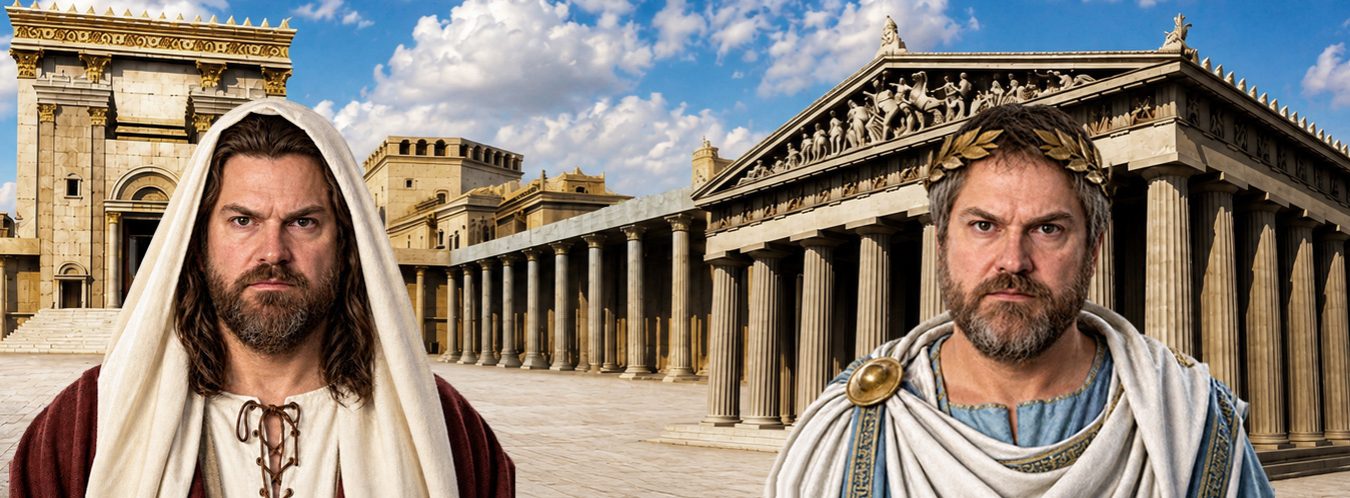
Love, therefore, demands that you have compassion on the weak, as all the apostles had. Once, when Paul came to Athens, a mighty city, he found in the temple many altars, and he went from one to the other and looked at them all [Acts 17:16 ff.], but did not touch any one of them even with his foot. But he stood in the midst of the market-place and said they were all idolatrous works, and begged the people to forsake them; yet he did not destroy one of them by force. When the word took hold of their hearts, they forsook their idols of their own accord, and in consequence idolatry fell of itself. Now, if I had seen that they held mass, I would have preached and admonished them concerning it. Had they heeded my admonition, they would have been won; if not, I would nevertheless not have torn them from it by the hair or employed any force, but simply allowed the Word to act, while I prayed for them. For the Word created heaven and earth and all things; the Word must do this thing, and not we poor sinners.
[Sidenote: Luther's Method]
[Sidenote: Jerome and Augustine]
Public-domain text from Project Gutenberg eBook No. 34904.