
For some Christians, the Holy Spirit is associated mainly with powerful worship services, spiritual gifts, or an unusual experience they once had. Others think of Him primarily as the influence that helps them understand the Bible or become better people. Those are discussions about what He does, but they don’t fully answer the more basic question of who He is.
The Holy Spirit is God, personally present and active among His people. He isn’t an impersonal force, a religious atmosphere, or another name for our emotions. In the Christian understanding of the Trinity, He is distinct from the Father and the Son while sharing the one divine nature. Knowing Him involves more than identifying a spiritual experience; it concerns our relationship with God Himself.
The Holy Spirit Is Personal
When Christians describe the Spirit as a person, we don’t mean that He has a human body or exists as a separate human being. We mean that Scripture presents Him as someone who knows, wills, speaks, and acts. He can relate to people, rather than merely producing an effect within them. That’s different from describing electricity, gravity, or another impersonal power.
In John 14, Jesus promises His disciples another Helper who will remain with them. In John 16, He describes the Spirit guiding, speaking, and glorifying Him. First Corinthians 12:11 says that the Spirit distributes gifts according to His will. These descriptions involve personal activity, not simply energy available for believers to use.
Ephesians 4:30 also warns believers not to grieve the Holy Spirit. The surrounding instructions concern conduct such as harmful speech, bitterness, and malice. Our treatment of other people matters in our relationship with Him. We shouldn’t talk about His presence in worship while ignoring the behavior Scripture says grieves Him.
The Holy Spirit Is God
Acts 5 provides an important example of how the New Testament identifies the Spirit. Peter confronts Ananias about lying to the Holy Spirit, then describes the deception as lying to God. The passage doesn’t treat the Spirit as merely a messenger carrying information to someone else. His divine identity is part of the seriousness of what happened.
The Spirit therefore isn’t a lesser being who does work God is too distant to perform. Nor is He a portion of God distributed among Christians in small amounts. He shares the divine nature with the Father and the Son. When Scripture speaks of His presence and activity, it’s speaking of God’s own involvement.
That doesn’t mean we can explain the Trinity completely. We affirm one God while recognizing the distinctions Scripture presents among Father, Son, and Spirit. Those distinctions shouldn’t be erased, and the unity shouldn’t be divided into three gods. The terminology helps us state the belief, even when the reality exceeds our ability to picture it.
He Is Distinct from the Father and the Son
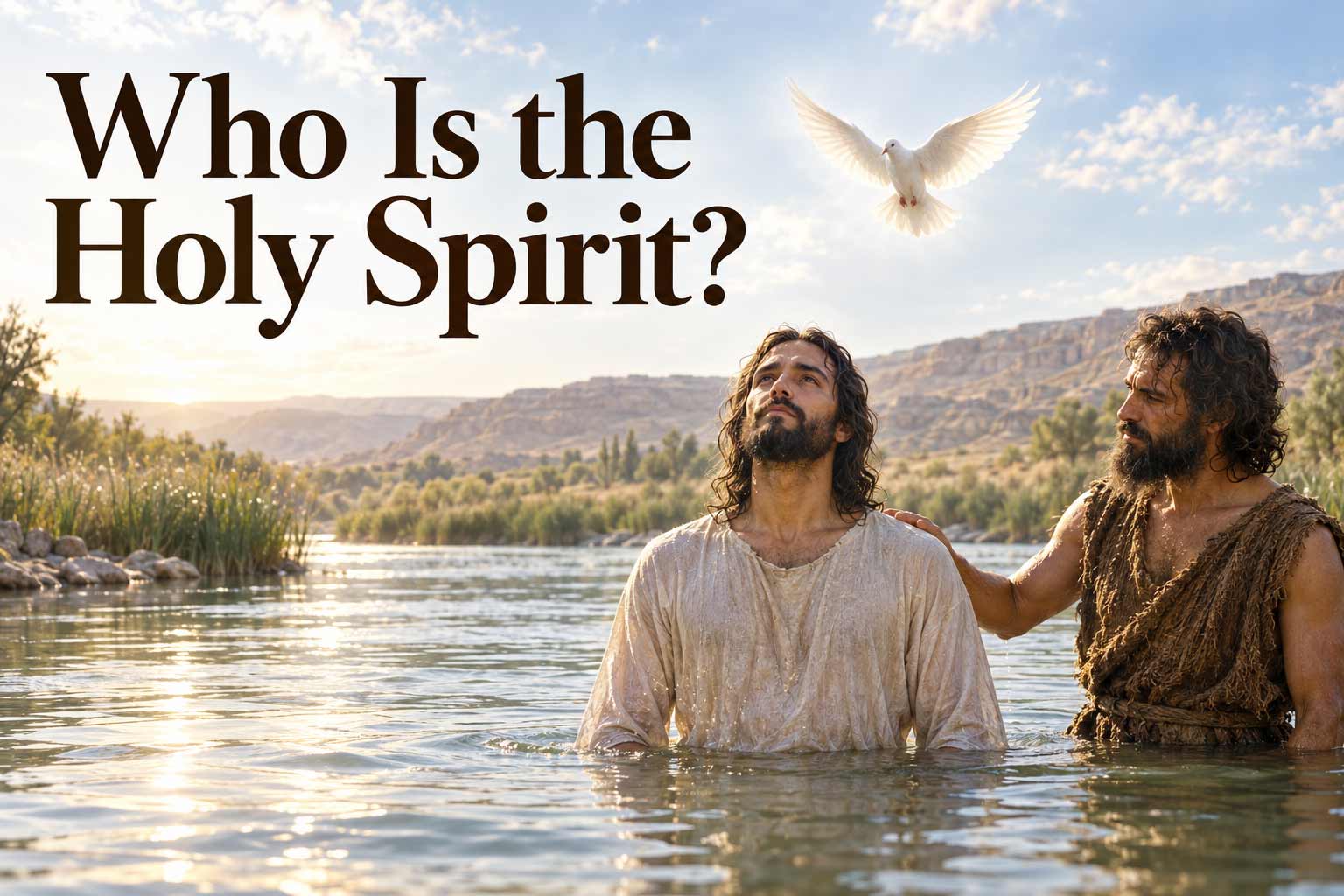
At Jesus’ baptism, the Son is baptized, the Spirit descends like a dove, and the Father’s voice identifies Jesus as His beloved Son (Matthew 3:16–17). The account presents them together in distinct relationships. It doesn’t describe one person taking turns appearing under different names. Jesus’ later teaching preserves those relationships.
In John 14:16–17, Jesus says He will ask the Father, who will give the disciples another Helper, the Spirit of truth. The Father gives, the Son asks, and the Spirit comes to remain with them. Their unity doesn’t make those distinctions meaningless. We should allow the passage to shape our understanding rather than force it into an illustration that explains too much.
That’s one reason familiar comparisons can become misleading. Describing God as one person who happens to be a father, son, and employee turns the distinctions into roles. Dividing an object into three pieces suggests that each is only part of the whole. Sometimes it’s more responsible to acknowledge the limits of an analogy than to offer a tidy explanation that changes the belief.
He Brings Us into Life with God
Romans 8 connects belonging to Christ with the presence of His Spirit. Paul doesn’t describe the Spirit as an optional addition reserved for especially advanced Christians. His presence belongs to the life we receive in Christ. We depend on Him from the beginning, rather than becoming sufficiently accomplished to deserve Him later.
The same chapter connects His work with adoption and our relationship to God as Father. He bears witness with our spirit that we are God’s children. This is more than providing religious information. It concerns belonging, dependence, and the relationship within which Christian life develops.
That doesn’t mean every believer continually feels a powerful assurance. Emotions can change, and Christians can struggle with fear or doubt. We shouldn’t measure the Spirit’s presence entirely by the intensity of a particular feeling. His work is understood within the gospel and the life of faith, rather than through emotional experience alone.
He Helps Us Become More Like Christ
Galatians 5 describes the fruit of the Spirit in qualities such as love, joy, peace, patience, kindness, faithfulness, gentleness, and self-control. These qualities affect ordinary relationships and decisions. The Spirit’s work should become evident in how we speak, handle conflict, treat vulnerable people, and respond when things don’t go our way. Spiritual life reaches beyond what happens during a service.
Growth takes participation. We can resist correction, continue harmful habits, or excuse behavior we know is wrong. The presence of the Spirit doesn’t remove the responsibility to repent and obey. Scripture calls us to walk by the Spirit, which describes an ongoing way of living.
We should therefore be cautious about equating visible excitement with maturity. Someone can participate enthusiastically in worship while remaining difficult to trust or consistently unkind. That doesn’t require us to reject emotional worship or spiritual experiences. It requires us to take the fruit of the Spirit seriously alongside them.
He Empowers Believers to Serve
In Acts 1:8, Jesus promises power when the Holy Spirit comes upon His followers, connecting that power with their witness. First Corinthians 12 describes gifts given for the benefit of the community. The purpose involves serving others, rather than establishing a spiritual ranking. A gift is a responsibility to use well, not a certificate of personal superiority.
I believe those gifts remain available today, including prophecy, healing, tongues, and interpretation. Christians disagree about their continuation, but my understanding is that the church should remain open to the Spirit’s work. That openness should include biblical order and accountability. Believing a gift is genuine doesn’t make every claimed use of it trustworthy.
I also distinguish the Spirit’s presence in a believer’s life from the further empowering experience commonly called baptism in the Holy Spirit. Christians differ over that distinction, but I understand it as an experience believers can seek subsequent to conversion. That doesn’t mean Christians who haven’t had it lack the Spirit entirely or don’t belong to Christ. Empowerment for service shouldn’t become a reason to divide believers into people God accepts and people He doesn’t.
His Work Draws Attention to Jesus
In John 16:14, Jesus says that the Spirit will glorify Him. That provides an important direction for understanding spiritual ministry. The Spirit’s activity should help people know Christ, trust Him, and follow Him. It shouldn’t make them increasingly dependent on a personality who claims exclusive access to divine guidance.
Scripture and the Spirit’s work shouldn’t be placed in competition. He can help us understand and respond to biblical teaching, while claims about His direction remain accountable to that teaching. Discernment doesn’t diminish His importance. It helps us distinguish His work from our mistakes and from conduct wrongly attributed to Him.
We can seek His help in prayer, ask for His empowering, and remain responsive to His correction without manufacturing an experience. We can also recognize His work in an apology, an act of courage, or patient care for someone who needs us. Extraordinary gifts and ordinary faithfulness both belong within the life He enables. The Holy Spirit is God with us and at work in us, helping us live as people who belong to Jesus.