
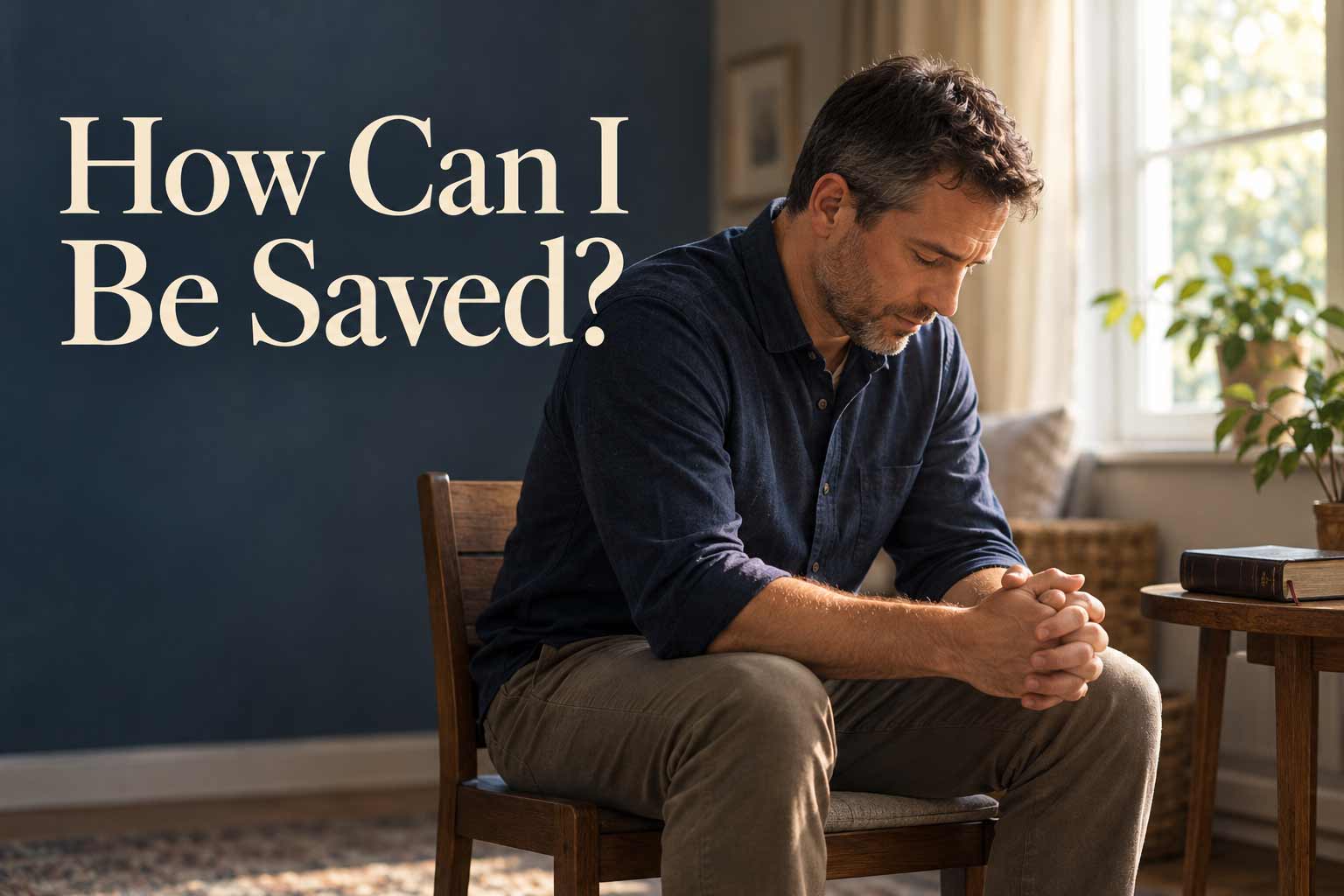
You can be saved by turning to God in repentance and placing your faith in Jesus Christ. Salvation is God’s gift, grounded in what Jesus has done through His death and resurrection. You don’t have to make yourself worthy before coming to Him. You come because you need His forgiveness and the new life He gives.
That answer is straightforward, but religious language can make it sound more complicated than it is. People hear about believing, repenting, confessing, being baptized, and being born again, then wonder whether they’ve completed everything correctly. Others remember a prayer they repeated years ago but aren’t sure what it meant. Understanding salvation begins with understanding whom we’re trusting and what we’re receiving.
What Are We Being Saved From?
The Christian message begins with our need for reconciliation with God. Sin involves our wrongdoing, our resistance to Him, and the damage we cause ourselves and others. It also brings guilt and places us under judgment. We need more than encouragement to try harder.
Jesus came to address that condition. He gave Himself for our sins and rose from the dead, opening the way to forgiveness and life with God. Salvation includes being reconciled to Him and receiving a new beginning through Christ. It also gives us hope beyond death.
This reaches further than escaping a future punishment. God calls us into a relationship that begins changing how we live now. We receive mercy, learn to follow Jesus, and depend on the Holy Spirit’s help. The life we enter has a future, but it also has responsibilities and possibilities in the present.
You Can’t Earn It
Ephesians 2:8–9 says that we’re saved by grace through faith, that salvation is God’s gift, and that it isn’t earned by works. Grace means that God extends mercy we haven’t earned. We don’t accumulate enough religious activity or good behavior to put Him in our debt. Whatever our background, we approach Him as people who need His help.
That can be difficult for someone who has spent years trying to become good enough. It can also be difficult for someone convinced that their past has made forgiveness impossible. Both assumptions place the decisive weight on our record. The gospel directs us toward what Christ has done and the mercy God offers through Him.
Good works still matter. The next verse says that we’re created in Christ Jesus for good works (Ephesians 2:10). God’s gift brings us into a life meant to produce them. We don’t use obedience to purchase salvation, but we shouldn’t treat salvation as permission to remain indifferent to obedience.
Believe in Jesus Christ
When the Philippian jailer asked Paul and Silas what he must do to be saved, they answered, “Believe on the Lord Jesus Christ, and thou shalt be saved” (Acts 16:31). They then spoke the word of the Lord to him and his household. Their answer directed him toward a person, followed by teaching that helped him understand the message.
Believing in Jesus includes accepting the truth about Him, but it involves more than acknowledging that He existed. We trust Him as the Savior who died for us and rose again. We look to Him for forgiveness and acknowledge Him as Lord. Faith entrusts us to the one we believe can reconcile us to God.
You don’t need a complete theological education before doing that. You should understand the heart of the message: you need God’s mercy, Jesus has acted to save you, and He calls you to trust Him. More learning will follow. The first disciples had plenty left to understand after they began following Him.
Faith also doesn’t require manufacturing a particular feeling. Some people respond with tears or a strong sense of relief, while others respond more quietly. Emotions can accompany faith, but they aren’t its foundation. What matters is the person you’re trusting, not how dramatic the moment appears.
Turn to God in Repentance
Repentance means turning toward God and away from sin. It includes acknowledging that we’ve been wrong and becoming willing to receive His direction. We stop defending everything we’ve done and surrender our claim to run life entirely on our own terms. That change of direction belongs with trusting Jesus.
Repentance doesn’t mean that you must first overcome every bad habit. If that were the requirement, people who most need help would have to complete their recovery before receiving it. You come honestly, including with the struggles you haven’t resolved. What changes is your willingness to let God address them.
Being sorry can be part of repentance, but sorrow alone doesn’t establish it. We can regret consequences while continuing to defend the conduct that caused them. Repentance makes room for correction, changed behavior, and repair where repair is possible. Those steps develop from turning to God rather than earning the right to approach Him.
Call on Him Honestly
Romans 10 connects salvation with believing that God raised Jesus from the dead and confessing Him as Lord. It also says that whoever calls on the Lord’s name will be saved (Romans 10:9–13). You can respond to Him in prayer. You don’t need a church service or someone standing beside you before you begin.
If you need help finding words, you could pray something like this:
“God, I need Your mercy and forgiveness. I believe Jesus died for my sins and rose from the dead. I’m turning to You and placing my trust in Him as my Savior and Lord. Help me leave sin behind, learn Your ways, and follow You.”
The wording isn’t a formula that makes salvation happen automatically. You can use different words and express the same trust and repentance. Repeating someone else’s prayer may help you articulate your response, but the response itself matters. God isn’t evaluating whether you remembered the approved phrasing.
An altar call or conversation with a pastor can also be helpful. Those settings give people an opportunity to respond and receive guidance. But walking an aisle doesn’t substitute for faith, and remaining in your seat doesn’t prevent you from turning to God. The setting serves the response; it doesn’t create it.
Be Baptized and Begin Learning
In Acts, people who received the gospel were baptized. Peter called his hearers to repent and be baptized, and the Philippian jailer and his household were baptized after hearing the message. We shouldn’t make baptism an optional decoration added to Christianity. It belongs to the response Jesus calls His followers to make.
Christians differ over precisely how baptism relates to salvation. I don’t believe the act automatically regenerates a person, but I regard it as more than a casual symbol. It is a meaningful act of obedience in which a believer identifies with Christ and enters publicly into the life of His people. If you’ve placed your faith in Jesus and haven’t been baptized, speak with a trustworthy pastor about taking that step.
You should also begin reading Scripture, praying, and participating in a healthy Christian community. Start with a Gospel so you can become familiar with Jesus’ teaching and life. Ask questions and seek people who will help you grow. A healthy church should direct you toward Christ while providing teaching, fellowship, and accountability.
You Can Trust His Mercy
Some people hesitate because they aren’t sure they feel forgiven. Others worry that unanswered questions or continuing struggles mean God hasn’t received them. We should examine our lives honestly, but we shouldn’t make emotional certainty the condition for approaching Him. His invitation gives us reason to come.
Failure after turning to Christ calls for confession and repentance, not the conclusion that every previous response was necessarily false. Growth takes time, and believers need continued mercy and help. At the same time, faith isn’t a past ceremony that makes our present relationship with Jesus irrelevant. We’re called to continue trusting and following Him.
You don’t need to wait until you can explain everything or guarantee that you’ll never struggle again. Turn to God honestly, trust the risen Jesus, and ask for His help. Then begin the life of following Him, including baptism, learning, and fellowship with other believers. Salvation begins with receiving the grace you could never provide for yourself.