
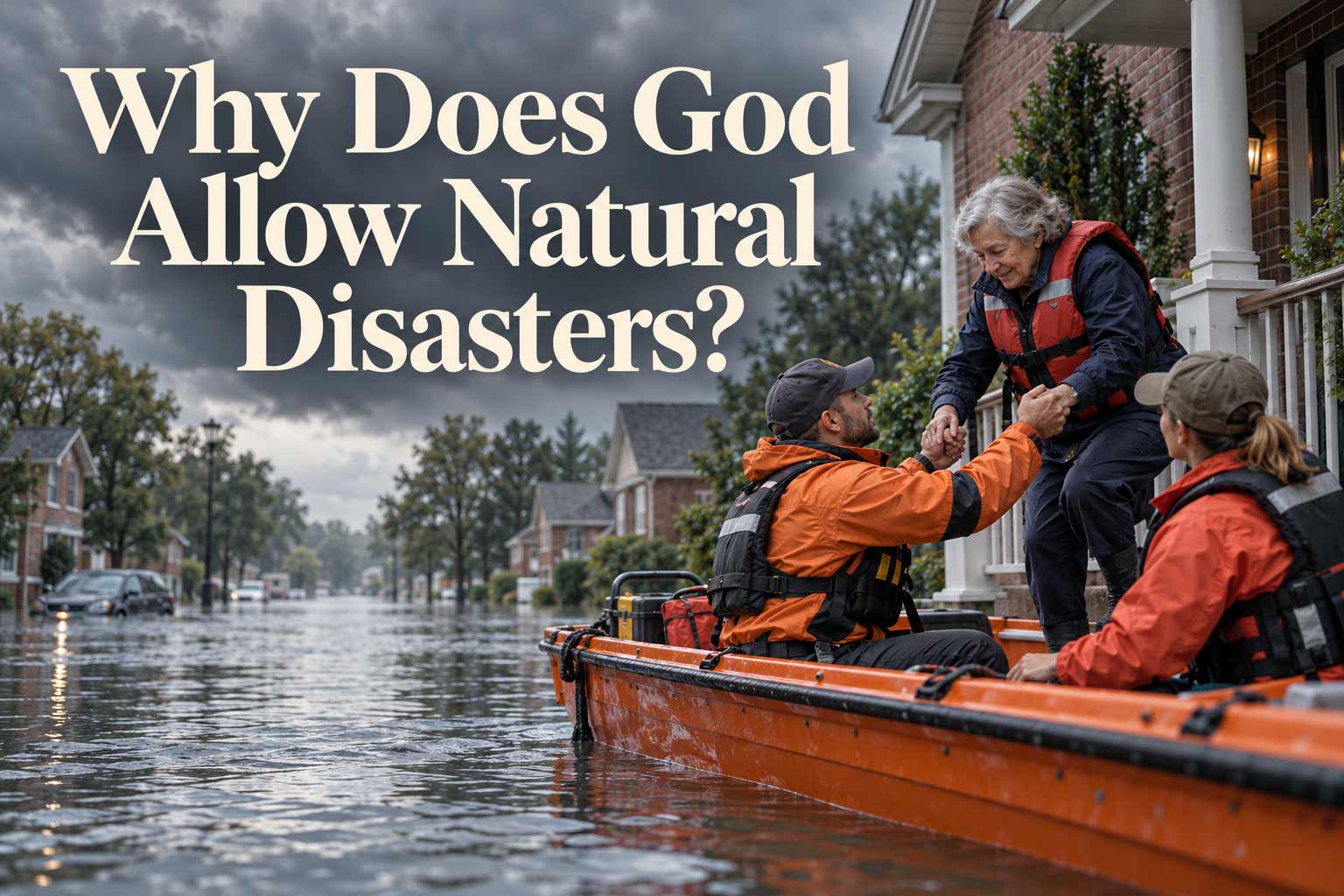
A hurricane doesn’t check whether a family attends church before it tears the roof off their house. An earthquake can destroy a hospital as easily as an empty warehouse, and a flood can sweep away people who were trying to help their neighbors. That makes natural disasters especially difficult to understand. When someone commits a violent crime, we can identify a person who made an evil choice. When the ground moves beneath an entire city, explaining the suffering becomes more complicated.
I believe God is good and that He cares about the people who suffer in these events. I also believe He can intervene, which leaves the difficult question of why He doesn’t prevent every disaster. We shouldn’t answer that question by pretending we know His reason for every storm, fire, or earthquake. Scripture gives us a way to think about a suffering world, but it doesn’t provide a divine explanation for every event on the evening news.
Natural Processes Explain How, but Not Everything About Why
Earthquakes occur when movement along faults releases energy, while hurricanes develop through atmospheric conditions involving warm ocean water. These events have physical causes that we can investigate, understand, and sometimes anticipate. Explaining those causes doesn’t require us to deny that God created the world. It means His creation has an order that can be studied rather than behaving like a collection of unrelated surprises.
Many natural processes that sustain life can also expose us to danger. Rain waters crops, but excessive rainfall can overwhelm a community. Water makes life possible, but a person can drown in it. A physical world with consistent processes allows us to plant, build, travel, and plan, while also leaving us vulnerable when those processes produce conditions we can’t safely withstand.
That helps explain something about the world we inhabit, but it doesn’t settle the theological question. God could presumably intervene without abolishing the entire natural order, and Scripture describes occasions when He did. A weather report can explain how a hurricane formed without explaining why God allowed it to strike a particular community. We need to distinguish what we understand from what remains unanswered.
Creation Is Still Waiting for Restoration
Romans 8:19–23 describes creation as subject to frustration and bondage to decay. Paul pictures it groaning while awaiting liberation, and he includes believers in that groaning as we wait for the redemption of our bodies. The world we presently inhabit isn’t presented as the finished expression of everything God intends. Its beauty and its suffering exist together.
Many Christians connect this condition with humanity’s fall into sin and the consequences described in Genesis 3. That provides a theological account of a creation that needs redemption, but it doesn’t give us a scientific history of every geological or atmospheric process. Christians differ over how those processes relate to the fall and the earth’s earlier history. We don’t need to resolve every one of those disagreements before recognizing Paul’s central point: creation needs deliverance.
This also means a disaster victim’s suffering shouldn’t be treated as evidence of personal guilt. Being part of a world affected by decay isn’t the same as being singled out for punishment. A child injured in an earthquake hasn’t thereby been identified as someone God wanted to condemn. We need to be especially careful when broad theological explanations are applied to particular people.
Is a Natural Disaster God’s Judgment?
The Bible does describe events in which God brings judgment through destructive circumstances. The flood in Genesis and the plagues in Exodus belong to that category because the biblical accounts explicitly identify them that way. We shouldn’t deny those passages simply because they’re difficult. We also shouldn’t assume they authorize us to announce God’s purpose behind every modern disaster.
In Luke 13, Jesus discussed eighteen people who died when a tower fell at Siloam. He rejected the suggestion that they were worse offenders than everyone else in Jerusalem. The tower’s collapse wasn’t identified as a natural disaster, but His response directly challenges the habit of ranking people’s guilt by the tragedies they experience. He called His listeners to repentance rather than inviting them to congratulate themselves for surviving.
We should be suspicious when someone confidently declares that a hurricane struck because of the sins they already dislike. The storm may also have destroyed churches, displaced children, and killed people serving their communities. Without a basis for claiming a particular divine revelation, assigning a specific judgment to the event goes beyond what we know. It can also burden grieving people with accusations they have no reason to accept.
Human Choices Can Make Disasters Worse
Although natural hazards aren’t moral agents, human decisions can greatly affect their consequences. Poor construction, neglected infrastructure, inadequate warnings, and barriers to evacuation can leave people more exposed to danger. A storm of similar strength can produce very different losses depending on where it strikes and how well a community is prepared. Some of what we call a natural disaster involves a natural event meeting human vulnerability.
That doesn’t mean we should blame people for living in dangerous places. Families may lack the money to move, depend on local employment, or have no practical alternative to housing that offers limited protection. Older people and people with disabilities may need help evacuating that others don’t require. A serious response considers those circumstances instead of assuming everyone had the same choices.
Questions about God’s permission shouldn’t prevent us from examining our responsibilities. We can ask why He didn’t stop a flood while also asking whether people maintained the drainage system or provided an adequate warning. Better preparation won’t eliminate every tragedy, but it can reduce suffering. Protecting our neighbors includes taking those ordinary responsibilities seriously.
Why Doesn’t God Always Intervene?
Mark 4 describes Jesus calming a storm when His disciples feared they would drown. That account gives Christians reason to believe that nature isn’t beyond His authority. It also makes the question of unanswered prayer more pressing, because we know that intervention is possible. We can’t resolve the tension simply by saying God has no power over the circumstances.
I don’t know why one community experiences an unexpected escape while another suffers devastating losses. I wouldn’t tell the second community that its people lacked faith, nor would I assume the first was more righteous. Survival can lead us to gratitude without giving us permission to explain someone else’s death. We often know much less about God’s activity in a particular event than our explanations suggest.
Recognizing that limitation doesn’t require us to stop praying. We can ask God to turn a storm, protect lives, guide rescuers, and provide for those who lose their homes. We can also follow evacuation instructions and support practical efforts to save people. Prayer and preparation belong together, and neither guarantees that we’ll understand everything that happens.
Our Response Should Reflect God’s Compassion
When a disaster strikes, Christians don’t need an explanation of its divine purpose before helping. People need shelter, clean water, food, medical care, and someone willing to listen. Some need immediate rescue, while others need assistance months later when public attention has moved elsewhere. Love of neighbor remains our responsibility throughout that process.
We should also leave room for grief instead of requiring survivors to find a lesson immediately. Good can emerge through courage, generosity, and the rebuilding of relationships, but that doesn’t prove God destroyed someone’s home to teach the rest of us compassion. A person can be thankful for help and still mourn what was lost. We can stand beside them without trying to make their suffering sound necessary.
The Christian hope is that creation’s groaning won’t continue forever. Revelation 21 points toward a future in which death, mourning, and pain are overcome, rather than accepted as permanent features of God’s world. That promise doesn’t explain every disaster now, but it gives us reason to trust that devastation won’t have the final word. While we wait, we can pray for deliverance, work to protect people, and help restore what suffering has taken from them.