
Who Was the Prophet Obadiah?
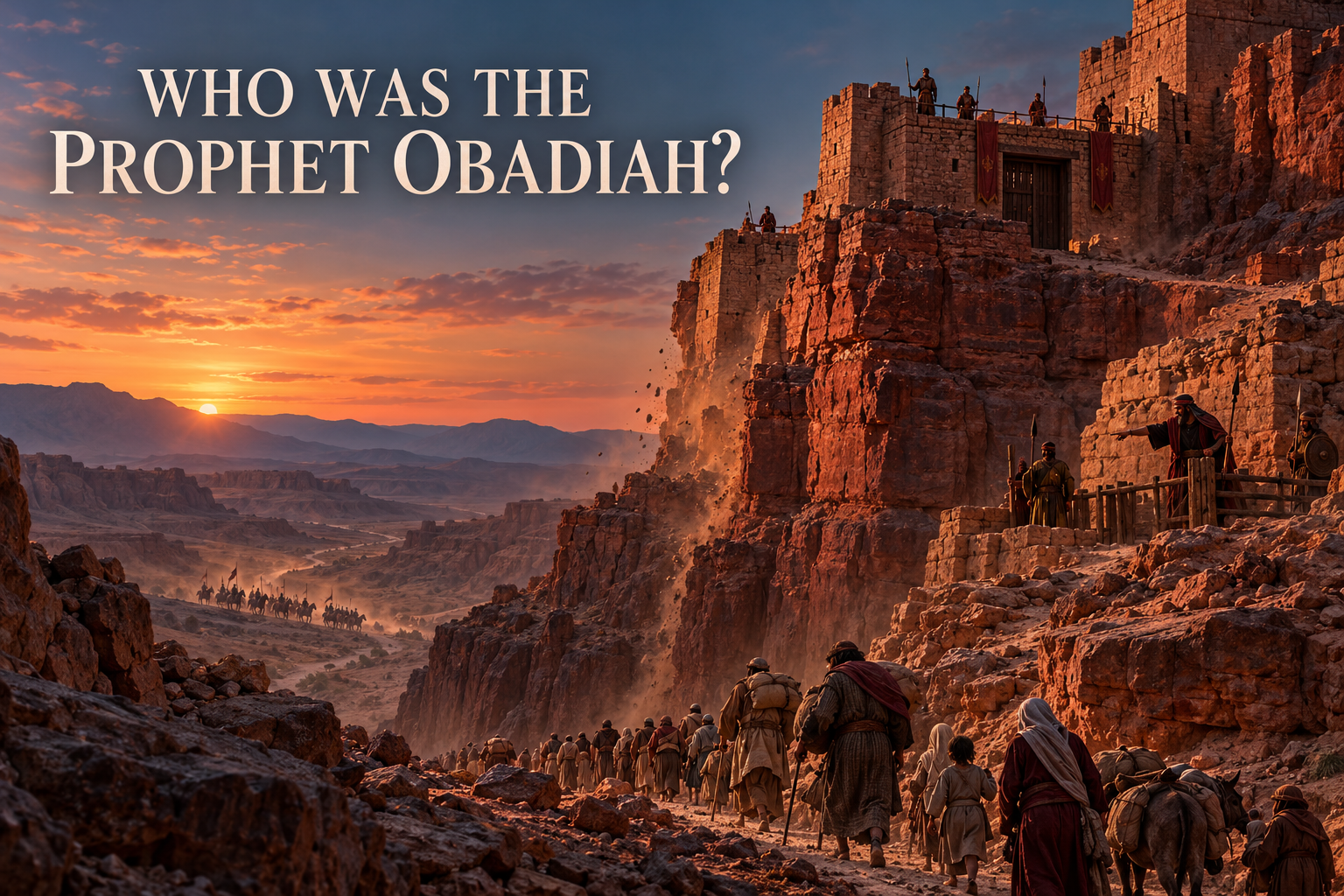
Obadiah is the shortest book in the Old Testament, but it isn’t short because its subject is unimportant. In twenty-one verses, the prophet confronts Edom for taking advantage of Judah’s catastrophe and announces that the aggressor’s apparent security will not last. The book is angry, and it doesn’t pretend otherwise. Its anger grows out of betrayal: a neighboring people with ancestral ties to Judah had watched Jerusalem fall, rejoiced over the ruin, and made the disaster worse. Obadiah speaks from the wreckage and insists that God has not confused temporary victory with justice.
What Do We Know About Obadiah?
The opening line calls the book “the vision of Obadiah,” but it tells us nothing about his hometown, family, occupation, or kings under whom he prophesied. His name means “servant of the Lord,” and several other men named Obadiah appear in the Old Testament. There is no solid reason to identify the prophet with any of them. Later traditions supplied additional details, as traditions often do when Scripture declines to satisfy our curiosity, but the biblical text leaves his biography almost entirely blank. We know Obadiah through his message rather than through a story about his life.
The book’s date is also disputed. Many scholars connect verses 11-14 with the Babylonian destruction of Jerusalem in 586 BC and place the prophecy during or after that catastrophe. The description of foreigners entering Jerusalem, casting lots for it, looting its wealth, and intercepting fugitives fits that setting well, especially when read alongside Psalm 137, Lamentations 4, and Ezekiel’s accusations against Edom. Other scholars argue for an earlier invasion of Jerusalem, while some place the book later and understand it in light of continuing conflict between Judeans and Edomites after the exile. The majority view is plausible, but the evidence doesn’t justify pretending that the date is settled.
Obadiah 1-9 also has substantial wording in common with Jeremiah 49:7-22. It is difficult to determine whether one prophet used the other or whether both drew from existing prophetic material about Edom. Either way, the similarity reminds us that biblical prophets didn’t always compose in isolation. They could receive and reshape language already circulating among God’s people, just as preachers and writers still work with inherited prayers, hymns, confessions, and ways of speaking.
Why Was Edom Judged?
Edom occupied the rugged territory south and southeast of Judah and was associated in Israel’s memory with Esau, the brother of Jacob. The nations descended from them are therefore addressed as relatives, not merely as neighboring states. Addressing Edom, Obadiah condemns its violence against “your brother Jacob,” referring to the people of Judah (verse 10). Genesis doesn’t hide the conflict between Jacob and Esau, but it also records their reconciliation. That family background makes Edom’s conduct during Jerusalem’s calamity more treacherous, not less.
Obadiah’s accusation moves from indifference to active participation. Edom first stood at a distance while strangers carried off Jerusalem’s wealth. The Edomites then gloated, rejoiced, entered the city, seized property, blocked escape routes, and handed survivors over to the enemy. The progression matters because evil doesn’t always begin with the person swinging the sword. Sometimes it begins with deciding that another person’s suffering is useful, entertaining, or none of our concern. Edom saw a wounded brother and treated the occasion as an opportunity.
The prophet also attacks Edom’s pride. Its mountain strongholds encouraged the belief that no enemy could bring it down, while its alliances and reputed wisdom seemed to offer additional security. Obadiah answers that neither geography nor diplomacy can place a nation beyond God’s judgment. Friends may become deceivers, hidden treasures may be found, and celebrated wisdom may fail when it is used to support arrogance. Edom’s mistake wasn’t simply confidence in favorable terrain. It was the deeper assumption that strength had released the nation from moral accountability.
“As You Have Done, It Shall Be Done to You”
The center of Obadiah’s message is the day of the Lord: “As you have done, it shall be done to you; your deeds shall return on your own head” (verse 15). That is more than a prediction that bad behavior tends to produce bad consequences. The prophet announces a moral reversal administered by God. Edom exploited Judah’s humiliation and would itself be brought low. The nation that helped dispossess others would lose its own possessions, and those who celebrated on God’s holy mountain would face the judgment they assumed belonged only to someone else.
Although Edom receives most of the attention, verse 15 widens the horizon to “all the nations.” The day of the Lord isn’t a private arrangement by which Judah’s enemies are punished while Judah escapes examination. Other prophets use the same theme to judge Israel and Judah as well as the surrounding peoples. God’s rule cannot be reduced to national favoritism. Edom’s treatment of Judah is the immediate case before the court, but the principle reaches every nation that builds prosperity on violence, betrayal, and the suffering of the vulnerable.
Restoration and the Kingdom of God
The final verses turn from Edom’s fall to the restoration of God’s people. Mount Zion will again be holy, displaced Israelites will possess an inheritance, and deliverers will go up to govern Mount Esau. Some of the place names and boundaries in verses 19-20 are difficult to identify with certainty, but the main movement is clear. People who had been scattered and stripped of their land would not remain homeless forever. God would reverse conquest and restore what imperial violence had taken.
Christians should be careful not to lift those ancient territorial promises out of their setting and turn them into a ready-made program for modern ethnic or political conflict. Obadiah addresses particular peoples in the world of Judah, Edom, exile, and return. Its closing line gives the larger theological destination: “the kingdom shall be the Lord’s” (verse 21). Restoration is not finally about replacing one arrogant nation with another. It is about God establishing a rule in which betrayal and predatory power do not have the last word.
How Should We Read Obadiah’s Severe Language?
Obadiah’s vision contains harsh language of destruction, and readers shouldn’t disguise it as something gentler. The prophet speaks for a devastated community, and his demand for reversal reflects the outrage of people who had seen their city plundered and their neighbors captured. That setting helps explain the force of the book without making every expression of vengeance a timeless instruction for God’s people. Obadiah entrusts judgment to the Lord; he doesn’t issue a general license for believers to pursue ethnic revenge or celebrate civilian suffering.
The book therefore requires two kinds of moral attention at once. We should hear the victims of imperial violence rather than scolding them for failing to describe justice in comfortable language. We should also read the prophet within the wider biblical witness, which forbids personal vengeance, calls God’s people to love their enemies, and places final judgment in God’s hands. Scripture can preserve the honest cry of the wounded without turning our anger into an infallible guide for action.
Why Obadiah Matters
Obadiah exposes the sin of profiting from another person’s collapse. Edom didn’t create every part of Jerusalem’s disaster, but it chose to stand with the destroyers when loyalty, mercy, or at least restraint was required. The prophet’s warning reaches beyond ancient border disputes. Individuals, churches, companies, and nations can all mistake another’s weakness for permission to take what they can.
The final word is neither Edom’s pride nor Judah’s devastation, but the Lord’s kingdom. Human power can appear secure in its mountains, alliances, wealth, or military success, yet none of those things cancels moral responsibility. Obadiah leaves many questions about the prophet unanswered. On the question that governs the book, however, he is perfectly clear: God sees what people do with their neighbor’s suffering.