
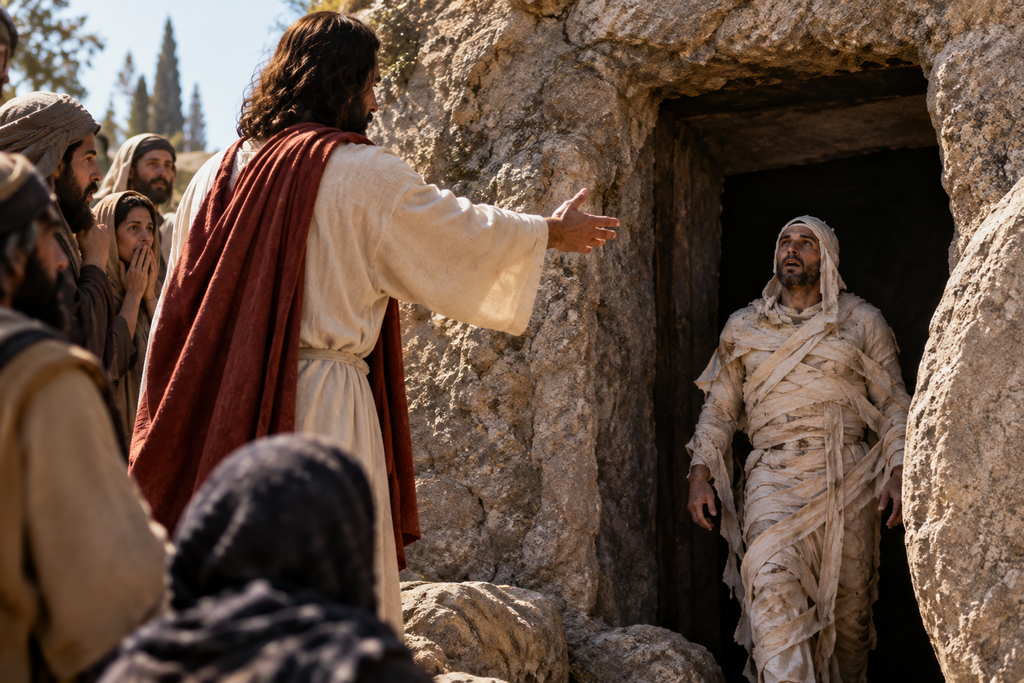
Christianity is built around claims that God has acted in history. The Bible does not merely teach that God exists somewhere beyond the universe or that religious experience can give people a sense of meaning. It claims that God created the world, spoke to human beings, delivered Israel from Egypt, healed the sick, raised the dead, became incarnate in Jesus Christ, and raised Jesus bodily from the grave. Remove the miraculous from Christianity and very little recognizable Christianity remains.
That does not mean Christians should believe every miracle story they hear. Christians can be remarkably skeptical when a miracle is reported by another religion and remarkably trusting when the same kind of story circulates in their own community. That double standard doesn’t help anyone. If Christianity is true, Christians should have nothing to fear from examining miracle claims carefully. We don’t defend truth by defending bad arguments.
What Is a Miracle?
A miracle is commonly described as a violation of the laws of nature, but that definition can be misleading. Christians do not normally understand the laws of nature as rules imposed upon God that He occasionally decides to break. They are descriptions of the regular ways the created world ordinarily behaves. If God created and sustains that world, His acting within it does not require Him to “break” anything.
Imagine an apple falling from a tree. Gravity explains why it falls toward the ground. If I reach out and catch it, however, gravity has not stopped working and no law of nature has been violated. Another cause has entered the situation. The analogy is imperfect, but it illustrates an important distinction. If God acts within creation, the presence of a supernatural cause does not necessarily mean that natural causes have ceased operating.
Biblical miracles also have purposes beyond simply being unusual events. They may deliver, judge, heal, reveal, authenticate, or demonstrate God’s kingdom. The Exodus displays God’s power over Egypt. Elijah’s confrontation with the prophets of Baal identifies the God of Israel as the true God. Jesus’ healings express compassion while also revealing something about His identity and the arrival of God’s kingdom. The Resurrection stands at the center of the Christian proclamation itself.
Are Miracles Impossible?
Much of the debate about miracles begins before any particular miracle claim is examined. If someone assumes that nature is all that exists and that supernatural causation is impossible, then miracles are impossible by definition. No amount of historical evidence could establish one because the conclusion has already been built into the starting assumptions.
But that is a philosophical position, not a scientific discovery.
Science is extraordinarily successful at investigating the regular behavior of the natural world. It can tell us what normally happens under particular conditions and formulate laws describing those regularities. That does not by itself answer the philosophical question of whether something beyond nature exists or could act within nature.
The more fundamental question, therefore, is whether God exists. If there is no God or supernatural reality, biblical miracles cannot have occurred as described. But if a God capable of creating the universe exists, then the possibility of His acting within that universe is hardly extraordinary. The existence of God does not prove that any particular miracle happened, but it changes the question from “Can miracles happen?” to “Did this miracle happen?”
Those are very different questions.
Hume and the Argument Against Miracles
The philosopher David Hume offered what remains one of the most influential criticisms of belief in miracles. In An Enquiry Concerning Human Understanding, Hume argued that our experience of the regularity of nature gives us powerful evidence against miracle claims. When someone reports a miracle, we must weigh the evidence supporting the testimony against the evidence represented by our uniform experience of how nature behaves.
There is something valuable in Hume’s challenge. Extraordinary claims should not be accepted merely because someone tells an impressive story. People misunderstand events, exaggerate, remember inaccurately, repeat rumors, and sometimes lie. Miracle claims deserve investigation.
The difficulty comes when the regularity of nature effectively becomes evidence that exceptions cannot occur. Suppose someone claims that a dead man returned to life. We know that dead people ordinarily remain dead. But that is precisely why a resurrection would be considered miraculous. Showing that resurrections do not normally happen does not establish that one has never happened.
Otherwise the reasoning risks becoming circular: miracles do not happen because experience tells us miracles do not happen, while reports that might count as evidence for miracles are rejected because miracles do not happen.
The appropriate question is not whether the reported event is normal. Obviously it isn’t. The question is whether the evidence is sufficient to conclude that something outside the normal course of nature occurred.
“Extraordinary Claims Require Extraordinary Evidence”
The phrase “extraordinary claims require extraordinary evidence,” famously associated with Carl Sagan, contains a reasonable intuition. We should demand stronger evidence for an extremely improbable claim than for an ordinary one. If someone tells me that he bought a dog yesterday, I probably don’t need photographs, veterinary records, and sworn testimony from three neighbors before believing him. If he tells me the dog died and returned to life three days later, asking a few additional questions would be appropriate.
But the slogan cannot substitute for an argument. What counts as “extraordinary evidence”? How much is enough? If the standard means that miraculous explanations can never be accepted regardless of the evidence, then the conclusion has once again been built into the rules.
Christian apologetics should avoid making the opposite mistake. We should not lower our evidentiary standards merely because a claim supports Christianity. Possible isn’t the same thing as probable. A strange recovery from illness, an unlikely coincidence, or an unexplained event is not automatically a miracle.
Sometimes “we don’t know what happened” is the most responsible answer available.
Miracles and Natural Explanations
Discovering a natural mechanism does not necessarily eliminate God’s involvement. Christians have traditionally believed that God works through ordinary providence as well as extraordinary intervention. Rain can be explained meteorologically while still being understood theologically as part of God’s provision for creation.
For that reason, Christians should be cautious about constructing arguments that depend upon science never finding an explanation for something. Today’s unexplained phenomenon may become tomorrow’s well-understood process. Christianity does not gain anything by placing God exclusively inside the gaps in our knowledge.
At the same time, insisting upon a natural explanation regardless of the evidence can become just as dogmatic. If an event genuinely has characteristics that point beyond the ordinary operation of nature, the supernatural explanation should not be excluded merely because it is supernatural.
The evidence should determine how confident we are.
Biblical Miracles and Their Context
The Bible does not portray miracles as evenly distributed throughout history. They appear with particular concentration around significant moments and individuals: Moses and the Exodus, Elijah and Elisha, Jesus and the apostles. Large portions of biblical history contain relatively few spectacular miracles.
That observation matters because the biblical worldview is not one in which inexplicable supernatural events constantly replace ordinary cause and effect. People plant crops, become sick, travel, fight wars, suffer accidents, grow old, and die. Providence ordinarily operates through the world God created.
When dramatic miracles occur, they frequently accompany significant moments in God’s redemptive activity. The signs performed by Moses accompany Israel’s deliverance. The miracles of Jesus are closely connected with His proclamation of the kingdom. The apostolic signs accompany the early proclamation of the gospel.
The miracles are therefore not simply displays of raw power. They belong to a larger theological and historical story.
The Miracles of Jesus
The ministry of Jesus presents a particularly important historical question because miracle traditions appear throughout the Gospel accounts. Jesus is portrayed as healing disease, casting out demons, exercising authority over nature, multiplying food, and raising the dead. Even when scholars disagree about how these events should be interpreted, Jesus’ reputation as a healer and exorcist is deeply embedded in the traditions surrounding His ministry.
For Christian apologetics, however, it is important not to treat every Gospel miracle as an isolated argument that must independently prove Christianity. The cumulative picture matters. Jesus’ teachings, claims, actions, crucifixion, the experiences reported by His followers, and the emergence of the early Christian movement belong to the same historical investigation.
And ultimately one miracle stands above the others.
The Resurrection Changes the Question
Christianity does not finally stand or fall on whether we can establish every healing or exorcism attributed to Jesus. Paul placed the decisive weight somewhere else: “If Christ has not been raised, your faith is futile” (1 Corinthians 15:17).
That is an unusually vulnerable claim for a religion to make.
The Resurrection is not presented merely as an inspirational metaphor for hope after disappointment. The earliest Christian proclamation claimed that Jesus had died, had been buried, had been raised, and had appeared to witnesses. Christianity emerged proclaiming that something had happened.
That claim deserves its own detailed examination, and it should not be reduced to “the Bible says it, therefore it happened.” Questions about Jesus’ death, burial, the empty tomb, reported appearances, Paul’s experience, the transformation of the disciples, and alternative explanations all deserve consideration.
But the significance for the broader miracle debate is straightforward. If Jesus actually rose from the dead, then the argument that miracles cannot occur is over. One established miracle is enough to establish that miracles are possible.
What About Miracles in Other Religions?
Christians sometimes make a poor apologetic argument when they assume that miracle reports associated with Christianity must be genuine while reports associated with other religions must automatically be fraudulent or demonic. That is not a consistent method of evaluating evidence.
Claims should be investigated individually.
A reported healing connected with a Hindu shrine, for example, does not prove Hinduism. Neither does a reported healing at a Christian prayer meeting prove Christianity. Even if an extraordinary event genuinely occurred, a second question remains: What does the event actually establish?
Biblically, supernatural power by itself is not presented as an infallible test of truth. Deuteronomy 13 warns Israel about signs associated with someone leading people away from God. Jesus warns about false prophets and deceptive signs. Paul likewise describes deceptive supernatural activity. The biblical test therefore includes the message and its relationship to revealed truth, not merely whether something remarkable happened.
“Something supernatural happened” and “therefore this entire religious system is true” are two very different conclusions.
Do Miracles Still Happen?
Christians disagree about the continuation of miraculous gifts, but belief that God can perform miracles today is considerably broader than the charismatic and Pentecostal traditions. Even many Christians who believe certain apostolic gifts have ceased still pray for divine intervention and believe that God may heal or answer prayer in extraordinary ways.
Claims of contemporary miracles should nevertheless be handled carefully. Some alleged healings have been exaggerated. Others have involved conditions that naturally fluctuate or were never adequately diagnosed. Some celebrated miracle stories collapse when investigated. Christians should acknowledge those cases rather than defending them simply because they occurred in Christian settings.
But skepticism should work in both directions. There are also reports involving medical documentation, unexpected recoveries, and circumstances that deserve serious investigation. An event does not become medically inexplicable merely because Christians call it a miracle, but neither does calling it “spontaneous remission” necessarily explain why it happened. Sometimes that phrase simply describes the fact that improvement occurred without an adequate medical explanation.
A responsible Christian position can therefore be both open and critical: pray boldly, investigate carefully, and don’t exaggerate the evidence.
Miracles Are Signs, Not Entertainment
One of the striking features of Jesus’ ministry is His refusal to perform miracles merely to satisfy curiosity or prove Himself on demand. Herod wanted to see Jesus perform a sign, but Jesus did not oblige him. The temptation narratives similarly portray Jesus refusing to turn divine power into spectacle.
That should caution Christians against treating miracles as religious entertainment. In Scripture, miracles point beyond themselves. Healing reveals compassion and anticipates restoration. Deliverance demonstrates God’s authority. Signs authenticate God’s activity. Resurrection announces victory over death.
The goal is not simply to make people say, “Something amazing happened.”
The goal is to point toward God.
Faith Does Not Require Gullibility
There is no virtue in believing every supernatural story. The New Testament itself commands Christians to test claims, discern spirits, and beware of deception. Biblical faith is not an instruction to turn off critical thinking.
Neither should skepticism become an excuse for refusing to consider evidence. A person who says, “I’ll believe in miracles if the evidence is sufficient,” has left the question open. A person who says, “No evidence could ever convince me because miracles cannot happen,” has adopted a philosophical conclusion before examining the case.
Both believers and skeptics bring assumptions to the discussion. The productive question is whether those assumptions are justified and whether we are willing to revise them when the evidence requires it.
Christianity ultimately makes a historical claim that forces that question into the open. Jesus of Nazareth was crucified. His followers subsequently proclaimed that He was alive. They did not claim merely that His teachings lived on or that His memory inspired them.
They claimed that the tomb could not hold Him.
If they were wrong, Christianity has a serious problem.
If they were right, reality is considerably larger than naturalism allows.