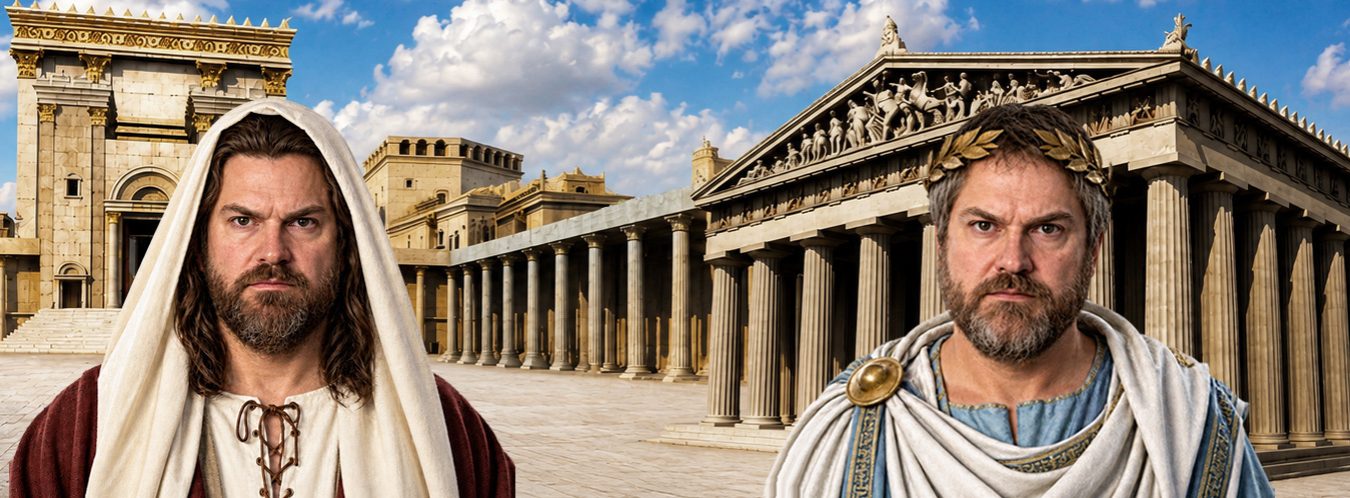

Sermon 463. Christ'S Servant–His Duty And Reward
A SERMON DELIVERED ON SUNDAY MORNING, AUGUST 3, 1862, BY REV. C. H.
SPURGEON, AT THE METROPOLITAN TABERNACLE, NEWINGTON.
"If any man serve Me, let him follow Me. And where I am, there shall
also My servant be: if any man serve Me, him will My Father honor."
John 12:26.
How many persons are of the religion of the Greeks who are mentioned in
this chapter! They would see Jesus, but they would not serve Him.
Impelled by curiosity they would know somewhat of this matter. They
would investigate the claims of Christ to the Messiahship, and they
would consider the special truths by which He professes to illuminate
the world–but beyond this they would not venture. They give their
minds to criticize. They are not indifferent to the Gospel, but they
regard it with the same interest as that with which a naturalist would
look upon a newly discovered insect, or a geologist would study a
section of the earth's crust.
But as to personally feeling the hallowed influence of the Truth of
God, they know not what it means. Many of these Greeks proceed much
further. They feel an admiration for the character and teaching of
Jesus, and they express that admiration in honest, warm praise. But see
how hollow is their appreciation–they applaud the Person whom they
scorn to obey. They admire teachings which they will not practice. They
listen to the Divine Word, but they are hearers only, and not doers of
the Truth of God.
Probably there are numbers in this assembly to whom the Christian
religion has always been a subject of respectful interest. They have
never blasphemed the name of Christ. They have not doubted the
inspiration of Scripture. No, they have studied God's Word. They have
given a degree of attention to its doctrines, and they intend yet more
fully to examine its revelations. How pleasant and hopeful are such
marks of interest–but how far are many of these enquirers from true
discipleship–for their unhumbled hearts are not obedient to the
dictates of the Gospel. The Cross is to them too heavy a load to carry.
They have not made up their minds to wear "Christ's yoke." They had
rather see His holiness, and see His disciples imitate Him than
themselves take up the cross daily and follow Him.
My Hearers, allow me to remind you very solemnly that a speculative
religion which has curiosity as its impulse, a search after knowledge
as its rule, and self-esteem as its root, can never save the soul. It
is not for you to criticize, but to repent. It is not for you to judge
but to believe. It is not for you to admire, but to obey. It is not for
you to praise and applaud, but cheerfully to bow your necks to imitate
and follow Christ. Nothing short of a religion which subjects us to
personal service of Christ, which gives us a new heart, and a right
spirit, and compels us to feel that we are not our own but bought with
a price–nothing short of this will ever give lasting peace of mind, or
bring us to the place where we shall see the face of God with delight.
Many proudly dream that to serve Christ would be dishonorable, and that
they would demean themselves by becoming humble followers of the Lamb.
Let me remind them that those whose opinions we esteem did not think
that. Even a heathen could say, "To serve God is to reign." We know
that most noble of men, Moses, before the coming of John the
Baptist–the greatest that had ever been born of woman–Moses, the king
in Jeshurun, and the leader of God's hosts, has as his highest
title–"Moses, the servant of God."
And even our Lord and Master, whose shoe latchet we are not worthy to
unloose, took upon Himself the form of a servant, and though He were a
Son, yet learned obedience by the things that He suffered. Since the
days of our Redeemer, the greatest in the Church of Christ have been
the servants of all, and those who have attained to the highest
dignities and honors which it is in the power of Christ's Church to
confer, have been those who joyfully stooped to the most menial
occupations. They were willing to be less than the least, and became
the greatest of all.
Let us imitate Him who was "King of kings," and yet a "Servant of
servants." Let us follow Him who is girt about the paps with a golden
girdle, and wraps the light about Him as a garment–and yet He unrobed
Himself–and took a towel, like a servant, that He might wash His
disciples' feet. The motto of the Prince of Wales is "Ich dieri"–"I
serve." It should be the motto of every prince of the royal blood of
Heaven. Let every Christian write this now upon his crest–"I serve,"
and, from this day forth, wherever he is, let him not seek lordship.
Let him leave that to the Gentiles, and to a carnal world, but let him
seek ministry and service, being willing to do anything or to be
anything by which he may profit the body of Christ, which is the
Church.
We will now endeavor, as the Blessed Spirit shall aid us, to expound
His three-fold teaching. You will mark, first of all, plain directions
for a very honorable office–"If any man serve Me, let him follow Me."
In the second place, most generous stipulations from a noble
Master–"Where I am, there shall also My servant be." And thirdly, most
glorious rewards for imperfect services–"If any man serve Me, him will
My Father honor."
I. We have here PLAIN DIRECTIONS FOR A VERY HONORABLE OFFICE. "If any
man serve Me, let him follow Me." A golden precept, written on a tablet
of ivory.
I speak the sentiments of the majority of those present when I say, we
would all of us like to minister to Christ. We feel that if He were
here now, there would be nothing which we would not do for Him. The
word used in our text three times might very properly be translated
thus–"If any man would act the part of a deacon towards Me, let him
follow Me. And where I am there shall also My deacon be. And he that
acts as a deacon towards Me shall be honored of My Father." The word
"deacon" in the original Greek means nothing but a servant, and every
deacon should be the cheerful, laborious and faithful servant of the
Church.
Now, what was the part of a deacon in the early Church? It was service
to the people of God of all sorts and kinds. Who among us would blush
to be the deacons of Christ, His body servants, His attendants? Would
we not wait upon Him? We would be His servants to the very fullest
extent. I think we should consider ourselves ennobled for life if we
might cast our garments in the way, that He might be saved from a muddy
place in the road. Would we not feed Him? There should be such a feast
in our house as never was before! We would submit to hunger ourselves,
if we might but supply His wants.
And I think if the twelve poor fishermen were with Him, we would not
shut one of them out, but ask them all home. We ourselves would leave
our houses and stand in the street all night to let them have rest. For
we feel that, if the Blessed One were here, it were so high an honor to
contribute in any degree to His comfort, or to show in any way our
respect for Him, that nothing would be too hard–nothing impossible for
us to perform. Permit me to say, however, that very much of this is
mere sentiment. In fact, we do not know ourselves. And, in the case of
many here present, if Christ were here in the same guise in which He
came the first time, they would not receive Him, but the reverse.
Their doors would be shut in His face and, perhaps, they might even
join in the bloodthirsty cry of, "Let Him be crucified!" All this talk
of generosity and homage to be offered to Jesus, is to a great extent,
mere sentiment–mere talk– and we would do no such thing when it came
to the practical push. For, mark me, if we really would do these
things, we can do them now. If it is true that we would minister to
Christ, and be servants and deacons towards Him, it is in our power to
do so now as much as if He were on earth. And, inasmuch as we live in
the neglect of this duty, we must not delude ourselves into the notion
that if such-and-such a thing should happen, we should act differently
from what we do now.
This sentimentalism about entertaining Christ has at the bottom of it
the idea that we should be honoring ourselves by it. Now this is not
the spirit that gives a worthy friendship towards Christ. He that loves
Christ really serves Him, not to be honored by Him, but to give Him
honor. We, indeed, would gladly receive the Lord into our guest
chamber, because men would say of us–"He entertained the Lord of
Glory! He was honored with His company!" But, oh, if, instead, men
would say–"Yonder fool disgraced himself by harboring the mendicant
impostor. He entertained the man whom we call Beelzebub," I think there
are many who now talk so well of Christ who would decline the privilege
of entertaining Jesus if all the world were against Him.
But, dear Friends, I say again, if any of you would serve Christ, it is
now in your power, for the directions given are meant for all time, and
may be carried out today. It seems from my text that to follow Christ,
or to imitate Him, is really to serve Him. I think we can plainly see
this. "Oh," says one, I should like to do something to prove that I
really would obey my Lord. I profess to be His servant and I would show
that I am not a servant in name, only, but that whatever my
Master says to me, that I will do." Well, the opportunity is before you
today–imitate Christ and then prove your obedience. This command may
be summed up in this–"Be like I am."
If you would know what He would have you do, see what He did Himself.
His own life is your Law, written in living characters. No better proof
can you give that you are not a lip server, but a real disciple than by
diligently and scrupulously copying Christ even to the least jot and
tittle. "Oh," says another, "I would joyfully assist Him in His wants.
I would supply Him with bread. I would give Him the cup of cold water
to drink. I would not let Him say again, 'The foxes have holes and the
birds of the air have nests but the Son of Man has not where to lay His
head.' I would never let Him want."
Imitate Him, then, and you can do it, for what did He do but distribute
of his substance to the poor? Did He not care for the wants of all men?
Is it not written of Him, "He went about doing good"? If you would
supply His wants, behold Him in His poor saints. If you would feed Him,
feed the mouths of His hungry children. If you would clothe Him, clothe
the backs of His naked ones. If you would succor Him, relieve the poor,
the widow, and the fatherless–and those that have no helper. Imitate
Him in the generousness of His life–care for the wants of men. Follow
Him in this, and you will have served Him in supplying His wants–
"Lord, You have Brethren here below,
Flesh of Your flesh through Grace.
Teach us to see You in your saints,
Your sorrows in their face.
In them You may be clothed and fed,
And visited and cheered–
And in their accents of distress
My Savior's voice is heard.
Your face, with reverence and with love,
We in Your poor would see!
O let us rather beg our bread
Than keep it back from You."
"But," says another, "I would do something to cheer Him. I think if He
were here I would endeavor to smooth a few of the furrows from His
marred brow. I would labor to make the heart of the Man of Sorrows
rejoice in some measure, and be glad in some degree. I would lay down
my life to give Him peace who is my soul's peace and rest." You can do
it. You can do it. If you would serve Him thus, and cheer His heart,
follow Him. This is the solace of His sorrow, the reward of His
labors–the obedience of His children to His commands. This is the
spoil which He divides with the mighty. This is the prey which He takes
from the strong–that all His saints should be like He is in all
righteousness and true holiness.
This is the travail of His soul which He sees and is satisfied–when
you are conformed to His image and show forth His character among the
sons of men. Oh, if you are Christ-like, you have done more to make
Christ happy than all the songs of the angels. If men shall say of you,
"That man has been with Jesus and has learned of Him," you have given
Jesus better music than cherubim and seraphim can yield.
"Yes," I hear another say, "but I would honor Him. If He were here I
would climb the trees and strew the branches in His way. How would I
gladly run before Him and cry, "Hosanna! Hosanna! Hosanna! Blessed is
He that comes in the name of the Lord!" Would you thus serve Him, by
honoring Him, and extolling His name? You can do it. Follow Him. Live
as He lived. Act as He acted, and you have honored Him more completely
than by strewing palm branches or throwing your clothes in the road.
For when is Christ most honored? When His saints are most sanctified.
When is His name the most esteemed? When the sons of God walk the most
carefully, the most prayerfully, and the most closely with their God.
You can today serve Christ if you will today humbly take His plain
directions, exactly imitate His Example, and closely follow in His
steps.
Beloved Friends, I think we have made it clear enough that there is a
possibility of serving Christ, of deacon zing towards Christ by the
imitation of His Character. Now I quoted the Greek word "deacon zing"
because it was the means, when I was looking into the verse, of giving
me an illustration of this subject. You remember that on the first
Sunday of last month we had in our midst, the venerable Mar Yohanan, a
presbyter of the Nestorian Church at Oroomiah. And with him was a
deacon whose name was Mar Isaak. These two men had performed an almost
incredible journey.
They had walked the entire distance from the borders of Persia–over
the mountains of Armenia and Circassia– across the steppes of Russia.
And from Russia right through Prussia, Germany and Holland, till at
last they arrived in London. Now, I could not help but notice how the
deacon, the servant, carefully attended in all things to the venerable
presbyter whom we saw among us. How he marked his every look that he
might not for a moment appear to neglect his reverend leader. Probably
on that day when Yohanan the presbyter, first thought of this journey,
he addressed Isaak thus–"Isaak, are you a true servant?" "Yes," says
he, "ever since the Church made me deacon I have loved you as my own
soul, and I would gladly do anything for your comfort."
"Then," says he, "If you would serve me, follow me." "But must I leave
my children and my household?" "Verily," says the presbyter; "it must
even be so, for I, also, shall leave behind me my wife and children,
and go forth on a long and weary journey–many a hundred miles, to
Britain, where there are many who love our Lord, and who may help the
persecuted saints in this region." Now came the pinch, and Isaak, if he
would serve the presbyter, must follow him. He does not decline the
service. When he accepted the office of the deacon, he resolved to
really be the servant of the Church and her minister. And he is now
ready to undertake the journey with his presbyter.
I think I see them sallying forth. They journey among the Kurds, a
savage people always thirsting for the Christians' blood–with more
than Mohammedan hatred of Christ. Perhaps Isaak is faint-hearted and
would like to turn back. "If any man would serve me, let him follow
me," says the hoary presbyter, as he strikes his staff upon the ground
and advances fearless of the foe. They pass one danger and encounter
another. A mountain is in their way lifting its snowy crest even to the
sky. The gray-bearded preacher goes first, and he cries, "Isaak, if you
would serve me, follow me." And on they go, climbing from crag to crag,
along the unfrequented path where scarce the wild goat has found a
footing.
Soon they travel through the valley and across the barren, snowy,
pathless wilderness, the presbyter saying continually, "Brother, if you
would deaconize towards me, follow me, for now it is that it shall be
proved to the world that you are a true servant of the Church and are
willing to follow the presbyter to the world's end." He did follow him
right faithfully, and they reached their journey's end together. Now,
this is just what Jesus Christ says to us. We are all His deacons, His
servants. We all became engaged, in the day when we gave ourselves to
Him, that we would take up our cross and follow Him. And He points
today to some high mountain, saying, "If you would serve Me, follow
Me."
He does not ask you to lead. He Himself has gone before. He calls you
to no labor which He has not Himself already accomplished. Oh, can you
say in your heart today–
"Through floods and flames if Jesus leads, I'll follow where He goes.
'Hinder me not,' shall be my cry, Though earth and Hell oppose"? This
is true service, the best that can be rendered, to follow where He
leads the way, let the way be never so rough or arduous, to persevere
to the end, even though the end be a martyr's death.
Come, Brethren, and especially those who are beginners, and have but
lately enlisted in Christ's cause–let me mark you out Christ's way,
and then–if you would serve Him, follow Him. I know the proud flesh
wants to serve Christ by striking out new paths. Proud man has a desire
to preach new doctrines, to set up a new Church–to be an original
thinker, to judge and consider–do anything but obey. This is not
service to Christ. He that would serve Christ must follow Him. He must
be content to tread only in the old footsteps and go only where Christ
has led the way. It is not for you and me to be originals. We must be
humble copies of Christ.
There must be nothing about our religion of our own inventing. It is
for us to lay thought, and judgment, and opinion at the feet of
Christ–and do what HE bids us–simply because He gives the command.
Look, then, disciples, at your Lord. I think I see the Savior–oh, that
you would follow Him today! I think I see Him coming. It is His first
public entry in the world. And where does He go? It is the beginning of
His manifest ministry among men. He is about to show you what should be
the beginning of yours.
He goes to Jordan. There stands the Baptist, and the willing crowds are
baptized with the Baptism of repentance. As John stands there, lo, the
Son of Man Himself appears. And John says, "I have need to be baptized
of You and come You to me?" But our Master, whom if we would serve, we
must follow, says, "Suffer it to be so now, for thus it becomes us to
fulfill all righteousness." He descends into the stream. He is buried
beneath the water. And as he comes up from that immersion, the Heaven
is opened and the Spirit descends upon Him like a dove.
If you would serve Him, follow Him. "But.. .but.. .but!" Alas, my
Brothers and Sisters, this is not a fitting word for a disciple–you
forget your service when you begin to question. If you would serve Him,
follow Him. Your business as a servant is not to object, but to obey.
Imagine that you ask your servant to fill a bath with water. "But." You
say, "I must have it filled." But she questions again, and again, and
again, and at last flatly refuses to do more than sprinkle it with a
few drops. Do you call her a servant any longer? Methinks no.
So there are some of you who see most clearly that your Master was
baptized at the commencement of His public life, and yet you will be
raising questions where there is no room for questions. You will
neglect a duty which is as plain in Scripture as the very Deity of
Christ. You will turn aside from a Baptism which is as plainly taught
in express words as even the doctrine of justification by faith–you do
not take up your service as you should.
"But, it is not essential," you say. Is that a servant's business? "But
what good will it do?" Is this a question for a servant? "If any man
will serve Me"–Christ does not say–"Let him question Me. Let him be
asking Me why I command him to do such a thing." No, no! He says, "Let
him follow Me." "But I dread the publicity, I fear the ordinance." It
is your proud flesh that fears it–subdue it under your feet and take
up your cross, for there are far heavier crosses than this to carry.
Thus your Master puts it–"If any man will serve Me, let him follow
Me."
He now comes from Jordan and the Spirit leads Him into the wilderness
to be tempted of the devil. You, too, must be tempted. Do not think
when you are tempted that, therefore, you are out of Christ. No–if you
would be His servant, you must follow Him, and must be tempted, too.
You must be assailed in many points. The arrows must fly from above and
from beneath. You must be tried on all hands and in all ways. Run not
from the conflict, for if any man would serve Christ, he must follow
Him through the hottest temptations as well as through the brightest
joys.
Now the Master comes forth boldly and begins to preach and teach and
labor. If you would serve Him, follow Him! Labor for Him. In some way
or other teach His Gospel. If you cannot teach it to the thousands,
teach it to the tens. It you cannot converse with multitudes, converse
with one at the well, as Christ did at Sychar. If you would be His
servant, let His life, written in large letters, be your life. And let
your life be the miniature, the condensation of the life of Christ. —
"If any man would serve Me, let him follow Me."
You see the Master bears bold witness before His adversaries. He beards
the Pharisee to His face. He upbraids the hypocrites who oppose Him.
Follow Him, if you would serve Him. Let there not be a single foe
before whose face you would fear His cause to plead. Speak up for His
name. Let no blush suffuse your cheeks. Speak His name before kings,
nor yield to sinful shame. But see, the Master comes into the black
cloud of reproach–they say He has a devil, and is mad. Follow Him
there. Now, you servants of God, now is the trying hour. Now follow
Him. Be rejected and despised, and hooted at with Him and sing as you
go through it all–
"If on my face, for Your dear name, Shame and reproach shall be, I'll
hail reproach and welcome shame, If You'll remember me."
Look, He comes to die. If you would serve Him, follow Him. Be ready to
be brought before the judgment seat for His name. Be ready to yield
your life up at His command, and if the martyr days should ever return,
give your blood as freely as you would give water from the well. Or if
they come not, spend that blood, and the life it gives them, devoting
every hour of every day, and every moment of every hour, to His cause,
whose you are, and whom you do profess to serve. No new fashions, no
new views and opinions–the imitation of Christ is the only mode of
service, and the Master lays it down before each of you. Ask your
consciences whether you have ever really served Him–"If any man would
serve Me, let him follow Me."
Walk in the way of Christ, it is the King's highway. I pass the
question round these galleries, and this vast area–Are you serving
Christ? "Well, I subscribe to a charity." Are you serving Christ? "I
intend to build a row of almshouses." My dear Brothers and Sisters, you
may do all this and yet not be serving Christ, for your Master tells
you that to serve Him is to follow Him. Have you followed Him? Have you
believed in Him? Is He All in All to you, and do you now make His life
the guiding star of your life? And do you desire to be, and are you, as
far as is possible to man–made like He in all things–that you may be
obedient unto His will? God help us that desiring to serve Immanuel, we
may do it by following Him!
II. We must come to our second point–GENEROUS STIPULATIONS FROM A
NOBLE MASTER. "Where I am, there shall also My servant be." Whoever
heard of such conditions as these from an ordinary master? The master
is in the drawing room, the servant is in the kitchen. The master is in
the parlor, the servant is in the workshop. The master sits at the
table with his friends, the servant girds himself to wait on them.
What, I say, what generous stipulations does the master make–"Where I
am, there shall also My servant be"!
Well now, to return to the illustration we used before–"Where I am,
there shall also my deacon be"–still using old Yohanan and Isaak as
your pattern, you will remember that wherever the old presbyter went,
there was Isaak at his side. I dare say many a night they slept under
the broad shadow of a tree, and where Yohanan was, there the deacon
was, too. Were they entertained by generous friends? They shared the
same couch. At times they sat around the genial fire, but they sat
together. Other times they shivered in the winter's cold–but they
shivered side by side. Their lot during the long journey was the same.
And when they arrived here they sat with us at the same table. We spoke
to them as to those who were intimate friends, and I know that
throughout the whole of their voyage, where the presbyter was, there
the deacon was, also.
Do you not see that this was the rule which Christ carried out all His
life? He went to a wedding–is it not written, the disciples of Jesus
were there? Jesus once rejoiced in spirit over the elect ones, the
babes and sucklings to whom God had revealed Himself–yes, but His
disciples shared the joy, because Satan fell like lightning from
Heaven–and even the devils were subject to them. The Master often went
to the house of Lazarus. And Martha and Mary made a great feast– but
the disciples were always there. Sometimes they went to a Pharisee's
house–a very respectable gentleman–and if Christ had been an ordinary
man he might have said, "I cannot take those poor fishermen with Me. It
will lower My character if they see what rag tags follow at My heels."
But no, where He was, there His servants were.
And you know, Beloved, one time He rode in triumph through the streets
of Jerusalem. But He did not say to His disciples, "Now you had better
keep out of the way. This is a day in which I am to be honored, and I
think you will rather spoil the pageantry if they see you in your
fishermen's dress walking with Me." No–where He was, there were His
servants, also. And when the multitudes cried, "Hosanna," and welcomed
the Master, the welcome was shared by the disciples. Then there came
His last great feast. "With desire," said He, have I desired to eat
this Passover with you"–it was "with you"–He could not enjoy that
last supper except with them. "Where I am, there shall also My servant
be." Share and share alike. Their lot, My lot. My portion, their
portion forever.
Mark, Beloved, if the Lord thus shared His comforts among His
disciples, He expected them to share His discomforts. He was in a ship
in a great storm, and the disciples must be with Him, though they are
sorely afraid. He goes to Gethsemane. He sweats, as it were, great
drops of blood. His disciples must be with Him there, even though they
cannot bear it, and are asleep. And though in His last passion they
could not be with Him, for He must tread the winepress alone, yet, mark
you, His disciples were with Him afterwards, for if He were brought
before kings, so were they. If He stood falsely accused, so, in after
years, did they. If He died upon the Cross a martyr, so did they!
And so, for three hundred years, where Christ was in death, there His
Church was, too, for the gibbet and the cross and the stake and the
block, and the bloody axe had stern work to do with Christ's Church,
that it might be fulfilled– "Where I am, there shall also My servant
be."
Beloved, this stands true to you and me this morning. Where Christ was
we must be. "The disciple is not above his Master, nor the servant
above his Lord." Blessed be His name, He is gone to Heaven, now, and
where He is, there shall His servants be, in the same Heaven in His
Father's house. Yes, He has mounted to His Throne, and where He is,
there shall His servants be. "To Him that overcomes will I give to sit
on My Throne, even as I have overcome and have sat down upon My
Father's Throne." He is in the joy of His Father. And where He is,
there must His servants be.
We also must be partakers of His joy that His joy may be full. Lo, He
comes! The trumpet sounds! Jesus comes! The second advent draws near.
But when He comes, all His saints shall come with Him. My God shall
come, and all His saints with Him. He reigns–kings and princes, your
scepters are not your own. He comes to take them from your hands and
your crowns from your heads–Jesus comes to "reign from pole to pole
with illimitable sway." And we shall reign with Him, for, "Where I am,
there also shall My servant be."
I think you understand, then, that the conditions of the service are
these–fare ill or fare well–we are to have joint stock with Christ.
We are to take Him for better or for worse, in shame and in honor, in
reproach and in esteem, in riches and in poverty, in life and in death,
in time and in eternity. "Where I am, there shall also My servant be."
I love my Master's conditions! He is a noble Master! Shall I ever blush
to go where He goes? God forbid, for if I do, I may be afraid lest at
the last He should ignore me and should not permit me to be where He
is.
I have heard an old story, somewhat amusing, which will illustrate this
point, and then I shall leave it. I have heard that a noted Methodist
preacher, who commenced his ministry very early in life, suffered not a
little at first because of his humble origin and unpromising exterior.
Being sent on the circuit to a certain house on a Saturday night, to be
in readiness for preaching on the Sunday, the good woman, who did not
like the look of him, sent him round to the kitchen. There was a
manservant who served them at odd times, and also worked in the coal
mine, or at the forge, who was surprised to see the minister in the
kitchen with him when he came from labor.
John, rough as he was, welcomed the despised preacher, and tried to
cheer his heart. The minister shared John's meal of porridge, John's
bed in the cockloft and John's humble breakfast. He walked to the House
of God with John in the morning. Now, the preacher was a notable man,
though then unknown, and he had not long opened his mouth before the
congregation perceived that there was something in him, and the good
hostess, who had so badly entertained him, began to feel a little
uneasy. When the sermon was over there were many invitations for the
minister to come visit, and the hostess, fearful of losing her now
honored guest, begged him to walk home with her.
To her surprise, he said, "I supped with John, I slept with John, I
breakfasted with John. I walked here with John, and I'll walk home with
John." So when dinner came he was, of course, entreated to come into
the chief room, for many friends wished to dine with this young
minister, who was so much admired and esteemed. But no, he would dine
in the kitchen. He had supped with John, he had breakfasted with John,
and he would dine with John. They begged him to come into the parlor
and at last he consented on the condition that John should sit at the
same table. "For," he said, very properly, "John was with me in my
humiliation, and I will not sit down to dine unless he is with me in my
exaltation."
So on he went till the Monday morning, sleeping at night with John, and
persevering in the same rule–"I supped with John, I slept with John, I
breakfasted with John, I walked with John, I'll walk home with John,
and I'll dine with John, for John was with me at the beginning and he
shall be with me to the end."
Brethren, this story may be turned to account thus: Our Master came
into this world once, and they sent Him into the servants' place. They
sent Him where the poor and despised ones were, and said, "Live with
them. The manger and the cottage are good enough for You." He lived
with poverty and supped with toil. Now the name of Christ is honored,
and kings and cardinals, popes and bishops, say, "Master, come and dine
with us." Yes, the proud emperor and philosopher would have Him sup
with them. But still He says–"No, I was with the poor and afflicted
when I was on earth, and I will be with them to the end. And when the
great feast is made in Heaven, the humble shall sit with Me and the
poor and despised who were not ashamed of Me, of them will I not be
ashamed when I come in the glory of My Father and all My holy angels
with Me."
III. We have, thirdly, A GLORIOUS REWARD FOR IMPERFECT SERVICES. "If
any man serve Me, him will My Father honor."
If any man will serve Christ in the way Christ bids him, that is, by
following Him. If any man is content not to do as father or grandmother
did, but will follow Christ and not man. If any man will break through
all customs, all regulations, all rotten proprieties, and just do as
Christ did, and imitate Him in all things–that man will have honor,
first of all, in his own soul. He shall have such blessed peace of
conscience, he shall have such sweet fellowship with Christ, he shall
have such profound peace from the Father's right hand, that it shall be
very apparent to him that the Father honors him.
Look at John Knox, who never feared the face of man. He followed Christ
as far as his light went, and how greatly the Father honored him with
unruffled serenity of heart. What calm that gigantic spirit had! When
the world was all in uproar against him, how peacefully he smiled in
the face of the roaring of the multitude, for God honored him with an
indwelling consciousness of being right before the Lord.
Then, again, I am persuaded that God will honor such a man by success,
by prospering him in his ministry and in whatever he may attempt for
Christ. Why is it that so little success rests on some who labor for
God? Because they do not serve Christ in the way He would have them
serve Him–by imitating Him. Ecclesiastical courts, rubrics, rules,
forms, liturgies, and such like, confine too many, who if they would
snap the fetter, would be honored of the Lord. If there were in
connection with this Church anything which I thought to be
unscriptural, I could not expect to have God's blessing in it.
And I think if any man here is a member of a Church of which he can
say, "Well, there are many wrong things in it, but I do not think I
ought to come out," you cannot expect God's blessing. He that would
serve Christ, must follow Christ in little things as well as in great
things. Whenever we say, "Well, there are some things wrong in my
position but I can do more good where I am," we set ourselves up as
masters instead of servants. Our business is conscientiously to follow,
as far as our light goes, the example of Christ in every respect, and
in all things. And if this should entail the giving up of our present
position and usefulness, we must not consider results, but instantly
obey imperative commands.
I claim for my Master immediate, unquestioning, unqualified obedience
to all His Words. And I demand of you, in His name, that you renounce
everything which prevents your rendering perfect, unhesitating service
to His Person and doctrine. Whether as members of a Church, or a
community, or in a trade, if you have anything that prevents your
following Christ, leave everything and come right out–for you cannot
expect great success from God till you have honored Christ by following
Him in all things. If you think you know better than Christ, why then I
have done with you. If you think that you can lead a better life, or
set a better example, you are proud, indeed! Or, if you imagine that in
your position you may tolerate yourselves in disobeying His commands,
you talk as one of the foolish women talks but not as a disciple of
Christ. I say again, if you would be honored of God, you must serve
Christ by following Him.
And lastly, such who thus serve Christ, by following Him, shall have
great honor at the last. We will suppose that the Prince of Wales is
wrecked on a certain voyage and is cast on shore with only one
companion. The prince falls into the hands of barbarians and there is
an opportunity for his companion to escape. But he says, "No, my
Prince, I will stay with you to the last, and if we die, we will die
together." The prince is thrown into a dungeon. His companion is in the
prison with him, and serves him, and waits upon him. The prince is
sick–it is a contagious fever–his companion nurses him–puts the
cooling liquid to his mouth–and waits on him with a mother's care.
He recovers a little. The fond attendant carries the young prince, as
he is getting better, into the open air, and tends him as a mother
would her child. They are subject to deep poverty–they share their
last crust together. They are hooted at as they go through the streets,
and they are hooted at together. At last, by some turn in Providence,
it is discovered where the prince is, and he is brought home. Who is
the man that the queen will delight to honor? "Make way for this man.
He was with my son in prison–he was with my son when he was near
death–he nursed him–he suffered with him–he was reproached for him."
I fancy she would look with greater affection upon the poor servant
than upon the greatest statesman. And I think that as long as she lived
she would remember him above all the rest, for she would say, "He was
with my son in all his sorrow and affliction, and I will honor him
above all the mighty ones in the land."
And now dear Brothers and Sisters, if you and I shall be with Christ,
the King's Son. If we shall suffer with Him, and be reproached with
Him. If we shall follow Him anywhere and everywhere, making no choice
about the way, whether it shall be rough or smooth, whether it shall be
green sward or miry bog–if we can go with Him to prison and to death,
if such times come–then we shall be the men whom Heaven's King
delights to honor. "Make room for him, you angels! Make room you
cherubim and seraphim! Stand back you peers of Heaven's realm! Here
comes the man. He was poor, mean and afflicted. But he was with My Son
and was like My Son. Come here, Man! Here, take your crown and sit with
My Son in His glory, for you were with My Son in His shame!" Oh that
the Holy Spirit would teach us how to follow Jesus and enable us to
tread in His steps!
I conclude by again asking this important question–Are you with Christ
today? Have you put your hand into Christ's hand to be Christ's
forever? My Hearers, the speaker wants to make this question ring in
your ears–Are you with Christ today? For he that is not with Him is
against Him. And he that follows not Christ scatters abroad. Do you
trust Christ? Oh, Sinner, if you do not, I beseech you trust Him now,
and you are saved. If you have trusted Christ, is it the true trust? If
it is, it will make you follow Him and you will be obedient to His
every wish and word. Faith, such as the Holy Spirit gives, always leads
to obedience.
Is it so? Is it so? If not, humble yourself before God. Believe in Him
who is the only foundation upon which a sinner's hope can be built.
Take up your cross daily, and through evil report and through good
report, follow the Master even to the end, and the Lord God, the God of
Heaven and earth, the fountain of honor, shall glorify you when Christ
comes in His kingdom.
Jew & Greek
Theology, Philosophy & Apologetics