
DELIVERED ON LORD'S-DAY MORNING, SEPTEMBER 21, 1879,
BY C. H. SPURGEON,
AT THE METROPOLITAN TABERNACLE, NEWINGTON.
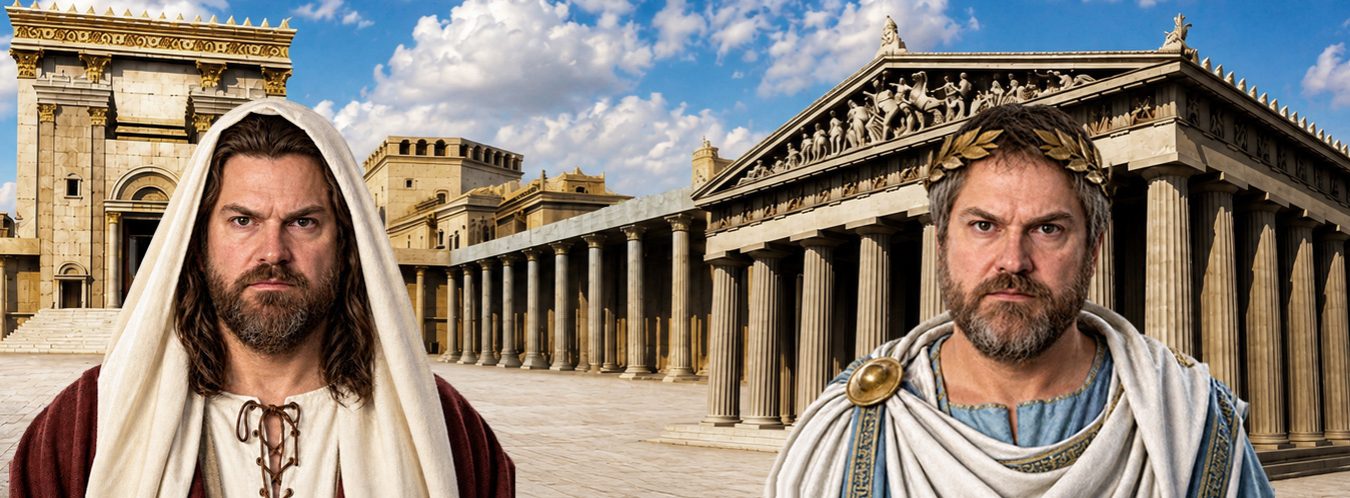
"He shall sit and rule on His throne; and He shall be a priest on His
throne: and the counsel of peace shall be between them both." Zechariah
6:13.
LET us first look at the historical setting of this passage. It would
seem that three Jews of the captivity had come from Babylon with a
contribution towards the building of the temple at Jerusalem under
Zerubbabel and Joshua. Their names are given in the 10th verse of the
chapter before us. Now, the Jews at Jerusalem had become exceedingly
exclusive and, in some measure, rightly so. They would not accept help
for the building of the Temple from Samaritans because they were a
mixed race. They had said to them, "You have nothing to do with us to
build a house unto our God, but we ourselves together will build unto
the Lord God of Israel."
Possibly they had begun to feel some coolness with reference to the
captivity at Babylon inasmuch as if any did not come back to their own
land, their descent must be proven before they would be acknowledged.
If they would not quit the ease and comfort of the towns in which they
were settled and come up to Jerusalem to work with their brethren,
could they be sure that they were really Israelites? At any rate there
would need to be some enquiry into the pedigree of anyone offering
gifts to make sure they might not be receiving help from Samaritan
pretenders.
There was, however, no difficulty about the acceptance of the offerings
in this case, for the Prophet Zechariah was bid to hasten down that
same day and meet the three worthy Jews from Babylon. He was to accept
for the Lord the tribute which they had brought and make of it crowns
of silver and gold. He was then to go with these Brothers and Josiah,
the son of Zephaniah, their host, down to the Temple, call for the High
Priest, Joshua, or Jesus, the son of Josedech, and place these coronets
of silver and gold upon his head.
This was to be done, not as an honor to the individual, but as a
prophetic token that there would, in due time, arise One who would be a
Priest crowned with many crowns. This illustrious Person, who is
called, "the Branch," was to spring out of the decayed house of David,
like a shoot from a tree which has been cut down even to the stump–
according to the prophecy of Isaiah–"and there shall come forth a rod
out of the stem of Jesse, and a Branch shall grow out of his roots"
(11:1). He was to be both a Priest and a King even as David had
prophesied in the 110th Psalm–"The Lord has sworn, and will not
repent, You are a Priest forever after the order of Melchizedek."
Now Melchizedek combined the king and the priest in one person, as also
does our Lord Jesus of whom Zechariah spoke. This royal Priest was to
build the real Temple of God, which the Temple at Jerusalem could never
be, for the Highest dwells not in temples made with hands. It was also
intimated by the Prophet that as at that particular time men had come
from afar and had brought offerings to the Temple, so in the days of
this great Priest-King many should come from the uttermost ends of the
earth and should, themselves, be built into the Temple of the Lord God.
This is the historical setting of our text. Now we have to learn its
spiritual lesson. May the Holy Spirit be our Instructor. Last Sabbath
morning we spoke of the Foundation of the Temple of God. We saw how–
"The Church's one Foundation Is Jesus Christ, our Lord."
We may not forget that He who is the Foundation is also the Builder of
the spiritual house–"He shall build the temple of the Lord; and He
shall bear the glory." There is but One who is the true Architect and
Master Builder of the Church of God, even Jesus Christ! His hands have
laid the foundation of the house, His hands shall also finish it. So
great is the fullness of our Lord Jesus that no figures can exhaust His
Character–He is not only Foundation and Builder, but He is the
"Headstone of the corner"–the Pinnacle as well as the Basement, the
Omega as well as the Alpha, the Finisher as well as the Beginner.
He begins, He carries on and He completes the Divine structure of the
Church and when all this is done, it is He that establishes the
structure, provisions and furnishes it, keeps and preserves it and,
best of all, it is He that is the Glory in the midst, dwelling in the
Church, as a monarch in His own halls and making it to be a palace as
well as a temple! It is the Lord Jesus who walks among the golden
candlesticks of the Church, who loads her table with bread and wine and
sends forth His rod of power from her midst. As a King as well as a
Priest, He dwells in His palace-temple. As the Shekinah was the Glory
of the Tabernacle of God among men in days of old, so is the Presence
of Jesus the Glory of the Church at this hour. "Lo, I am always with
you; even unto the end of the world" is our pillar of cloud and of
fire, our glory and our defense.
Our text tells us that the promised Builder of the spiritual temple
will inhabit and build it in His double Character as Priest and King.
The Church is built up by none other than by this Melchisidec and it is
built by Him in virtue of both His offices as King and Priest. As King
He puts forth power and as Priest He displays holiness. As a King He
builds up the walls and as a Priest He sanctifies them unto the Lord.
At this moment it will be well for our faith to open her eyes and look
up into Heaven, itself, and see our great exalted Priest-King sitting
at the right hand of God and yet at the same time working, by His
Spirit, among men for the perfecting of His Church below. Our Solomon
is both reigning and building! Of His Throne we may well say, "there
was not the same in any kingdom," and of His Temple we may also add
that it is "exceedingly magnificent, of fame and glory throughout all
countries."
I shall try, this morning, to set our Lord Jesus before you, as far as
I can, in that double Glory which is peculiar to Himself–in the
majesty of His royalty and the holiness of His priesthood. Such lights
meet not in any other star! To no one else belongs the royal
priesthood, save only that He reflects His own brightness upon His
brethren, whom He has made to be priests and kings! The subject will
run thus–first let us consider the glorious combination of offices in
the Person of Christ. Secondly, let us notice the happy result of
it–"the counsel of peace shall be between them both." And then,
thirdly, let us suggest the action on our part which is harmonious
thereto–make crowns and set them upon the head of Jesus.
I. First, then, I want you to consider at this time THE GLORIOUS
COMBINATION which is found in the Person of Jesus Christ our Lord.
Note, first that He is King and of Him, as King, it is written, "He
shall sit and rule upon His throne." One has the idea of ease suggested
by the expression. Few kings have been able to sit and rule. Most have
been forced to rise and rush here and there to defend their
sovereignty! No other seat in the world is so uneasy as a throne! We
have seen monarchs elevated by their soldiers, or borne aloft by the
fickle throng–bayonets or ballot boxes have been the frail supports of
their thrones.
The last few centuries have been a sorry time for kings. As once men
feared to be thought Prophets, so might men in revolutionary times have
cried out, each one, "I am not a king nor the son of a king." But our
Lord Jesus sits upon a Throne which knows no trouble–once and for all
He has bled and died and now He has gone into Glory never to be
disturbed again. The Lord who has set Him on the Throne by an
unalterable decree, has His enemies in derision and Jesus waits in
perfect rest until His foes shall be made His footstool. Publicly
recognized as King of kings by the Divine enthronement which His Father
has given Him, He is not a King warring for a disputed crown, nor
battling to drive invaders from His realm–He sits and rules upon His
Throne!
Sitting is the posture of abiding as well as resting. Jesus reigns on
and will reign on so long as the moon endures. "Your throne, O God, is
forever and ever." Even we, who are yet young, have seen dynasties come
and go and we have seen the kingdoms of the earth moved and tossed to
and fro as the waves of the sea. But the Throne of Jesus has not been
shaken, for it is written, "The Lord sits upon the flood; yes, the Lord
sits King forever." "The Lord is great in Zion, and He is high above
all the people." "The Lord shall reign forever and ever." Hallelujah!
As a King, He is described as sitting upon His own Throne. He has not
usurped the throne of another, but His right to sovereignty is
indisputable. He is well qualified to be King of men since He is their
Redeemer.
His Father has given Him a crown as the reward of the travail of His
soul, even as He promised, "Therefore will I divide Him a portion with
the great, and He shall divide the spoil with the strong, because He
poured out His soul unto death." He sits upon a Throne which He has won
by conquest, for He has vanquished the powers of darkness and led
captivity captive. His right to His Throne can never be disputed, for
it is accorded to Him by the enthusiastic approval of all His people.
Do we not sing–
"Bring forth the royal diadem, And crown Him Lord of all"?
There is no monarch so secure as He! He is really and truly King by
Divine right. He is King by descent, for He is Son and heir of the
Highest. He is King by His own intrinsic excellence, for there is none
to be compared to Him. And he is King by His own native might and
majesty, for He Himself holds His Throne against all comers and shall
hold it till all enemies shall be under His feet. Thus is He spoken of
as King.
A hint or two is given as to His position as Priest, namely, that He is
first, Priest, before He is King, for so was the type in the text.
Joshua, the son of Josedech was already High Priest and then he was
crowned with the gold and silver crowns. Now, the kingdom of which we
speak today it not that of Christ's essential royalty as by Divine
Nature and, therefore, Lord of All, but that which His Father has given
Him, because, "Being found in fashion as a Man, He humbled Himself, and
became obedient unto death, even the death of the Cross. Why God also
has highly exalted Him, and given Him a name which is above every name,
that at the name of Jesus every knee should bow, of things in Heaven,
and things in earth, and things under the earth; and that every tongue
should confess that Jesus Christ is Lord, to the glory of God the
Father."
Jesus reigns because He died. For the suffering of death He is crowned
with glory and honor. The saints in Heaven sing, "You are worthy to
take the Book and to open the seals thereof, for You were slain, and
have redeemed us to God by Your blood." We note, too, with regard to
our Lord's Priesthood, that He is said to sit, for if He sits as King,
it is implied that He sits as Priest. Indeed, it is expressly said, "He
shall be a Priest upon His throne." Now, of no other priest is it said
that he sits, for the Apostle says, "Every priest stands daily
ministering and offering oftentimes the same sacrifices, which can
never take away sins." There was no seat provided within the Holy Place
for Aaron, or for any of the priests–they were servants of God and
they stood, daily ministering.
"But this Man, after He had offered one Sacrifice for sins forever, sat
down at the right hand of God; from that time waiting till His enemies
be made His footstool. For by one offering He has perfected forever
them that are sanctified." Jesus still sits forevermore in quiet
expectancy, for all His work is done–there is no merit to be worked
out to complete His righteousness, no sufferings to be endured to
perfect His Atonement. "It is finished," He said, as He gave up the
ghost–and it is finished! And in token thereof, Jehovah says to Him,
"Sit You at My right hand until I make Your enemies Your footstool." So
far, then, we have a glimpse of the King sitting on His Throne and of
the Priest, crowned and resting from His labors–we have seen each
office.
Now we are to see the two combined in the Lord Jesus. And to make the
combination clear we shall notice, first, that as a Priest, He is
royal. And then, secondly, that as a King, He is priestly. Consider,
now, that as a Priest, our Lord is royal. He was a Priest when He
honored the Law by His death. He was a Priest when He took upon Himself
our sins and bore them, offering His own soul as the Victim upon the
Altar of His body. He was to the fullest, a Priest when He presented
His one Sacrifice for sin. But never let it be forgotten that even
then, in His Nature, He was a King! The sword of vengeance awoke
against the Man who was Jehovah's Fellow even when He bled. The Laws
which He vindicated had been ordained by Himself and it adds a special
Glory to His priestly work of Atonement that it was worked by the royal
Lawgiver Himself.
The subjects broke the Laws, but it was the King who bore the penalty!
He that is under law offends, but He that made the Law came under the
Law that He might make amends to the injured honor of His own justice!
This was a notable deed of love and of justice combined. Let us be even
more amazed at the Sacrifice of our great High Priest, because of the
dignity of His Nature and the supremacy of His rank, for He made
Himself of no reputation and took upon Himself the form of a Servant!
Our Lord stooped to the lowest service for our sakes when He was acting
a Priest among us in these lower realms.
He presented Himself as an Offering for sin and men scourged Him, spat
upon Him and hung Him up like a felon– and in all this shame and
suffering we look to Him as our Savior! Thus He made expiation for sin.
But though we are to look to Him in that capacity for the pardon of
sin, as men sought cleansing from a priest, we must never forget that
now He expects homage from us and we must come to Him for government as
men pay obedience to a king. Think of Him as the Crucified One as much
as you will, for as such He is your atoning Sacrifice, but remember
that this same Jesus which
was crucified, God has proclaimed to be both Lord and King. Trust in
the Man of the crown of thorns must foster and nourish reverence for
the Lord who wears many crowns.
We must not only trust but worship. We must never separate from that
shame and spitting the fact that the four living creatures and the
elders prostrate themselves before the Lamb and sing unto His praise,
"You are worthy to take the Book, and to open the seals thereof: for
you were slain, and have redeemed us to God by Your blood."–
"Salvation to God, who sits on the Throne, Let all cry aloud, and honor
the Son! The praises of Jesus the angels proclaim, Fall down on their
faces and worship the Lamb." O you that come to Him today laden with
guilt and full of fears to wash yourselves in the fountain which He
filled from His own veins, you must also come to obey Him and to walk
in His statutes! You may not come to Him merely that you may get your
sins forgiven–you must come to be cleansed from the power of evil–and
to yield yourselves unto God. Jesus was given that He might be Leader
and Commander to the people, as well as their Deliverer and Savior.
A true disciple looks to His Master for ruling as well as for teaching
and he expects to render obedience as well as to receive instruction.
There may be no separation between these two points–our Priest to save
must always be regarded as our King to rule. He puts away sin, but He
expects to reign over the forgiven spirit. He washes our feet, but He
looks to see that we also practice His precepts and example of love,
for He says–"You also ought to wash one another's feet." At this
moment in Heaven, if your eyes of faith can see the Lord Jesus, you
perceive that He is pleading for His people as a Priest. It is a
priest's duty to offer intercession for those over whom he is
appointed–and this Jesus does continually.
Has He not said, "For Zion's sake will I not hold My peace, and for
Jerusalem's sake I will not rest"? He always lives to make intercession
for them that come to God by Him. But do not forget that our Lord does
not make intercession otherwise than royally. There is no prostration,
now, amidst the olives of the gloomy garden; no bloody sweat; no strong
crying and tears. He says not, "Not as I will, but as You will," but He
urges His case in another fashion. The interceding Priest has laid
aside His bloodstained garments and put on His robes of holiness for
Glory and for beauty! He wears the jeweled breastplate; ephod of gold
and blue and purple and scarlet; miter and fine linen and gold; and
girdle of needlework the High Priest wore on favored days–all typical
of the Glory of the Lord Jesus now that He has gone within the veil.
With authority He pleads with God from the Throne of His power. He asks
and He has. He speaks and it is done, for the Intercessor of the saints
before the Throne of God is now the King immortal, eternal,
invisible–the only wise God, our Savior! Oh, what prevalence there is
in His plea! And when we give Him our cause to plead, how confident we
may feel that the blessing will come to us. As a Priest our Redeemer
not only pleads with God, but He blesses the people. It was the work of
the High Priest to pronounce the benediction over the house of Israel.
Jesus does that, but He does it royally! I mean He does it with the
power of a king as well as with the commission of a priest. He does not
merely wish us good, but He works us good! There is Omnipotent
Sovereignty at the back of the priestly benediction. He that speaks and
declares His people to be justified, accepted, preserved and blessed is
He who can make good His words. The benediction of Jesus, the Priest,
is the benediction of Jesus the King! Let us rejoice and be glad in
this.
And now, Beloved, it is as a Priest that Jesus sends out His Gospel to
the ends of the earth. In that Gospel He invites men to come to Him
that He may purge them from their uncleanness. Today He speaks by us,
His ministers, and bids men come to the great Priest that He may heal
them of their leprosy and deliver them from all manner of defilement.
But, mark you, it is an invitation from a King as well as from a
Priest–and he that rejects it shall be counted guilty of disloyalty
and high treason! "He that believes not shall be damned." It is not, O
sons of men, that Jesus offers you salvation and leaves it up to you
whether you will have it or not! If you reject it your rejection will
be required at your hands! Beware, you despisers, and wonder and
perish!
The invitation to the wedding of the great King is made freely, of His
voluntary bounty, but if any who are bid shall refuse to come, the King
will be angry and send forth His armies against those who thus proclaim
their enmity. Jesus is not only Priest, asking you to come to Him and
receive of His forgiving love, but He is King as well–and He will
break, with a rod of iron, all that dare to trample on His blood and
slight His priestly Grace. Thus I have put forward the combination in
one form and testified that Jesus, as a Priest, is right kingly in all
that He does.
Let us now turn the other side of the Truth towards the light and see
that as a King He always retains His priestly Character and, in the
deeds of His Sovereignty, He acts not otherwise than as the High Priest
of His people. The Lord Jesus Christ is King over all at this very
moment. He reigns over the whole world and, notwithstanding all this
hurly-burly of affairs, this perpetual clamor of wars and rumors of
wars, His kingdom rules over all! Our Lord is Master of the game and He
shall surely win at the end. "The government shall be upon His
shoulders."
But, blessed be His name, our Lord's kingly majesty is ever softened
and sweetened by His priestly tenderness, otherwise He would have
crushed this world out of existence long ago! If Rule had been all and
Mercy had not claimed her share, Justice would have swept away this
rebellious race! If Jesus were not Priest as well as King, He would say
to His angels, "Go and smite that nation which refuses My Gospel.
Destroy Antichrist that lifts his triple crown against My Sovereignty.
Go and scourge that favored nation which, having the Gospel of peace,
yet chooses war and with high looks and lofty words provokes
bloodshed."
He does not destroy because His office is to forgive and save! A priest
must show longsuffering, gentleness and compassion, for, to that end,
is he taken from among men and ordained for men in the things of God.
Such is our Lord–"He is not slack concerning His promise, but He is
longsuffering to us, not willing that any should perish, but that all
should come to repentance." This longsuffering of the King leads to
repentance–its intent is man's salvation. We, who are short of
patience, cry eagerly to Him, "Come, O King. Come, O King!" But He
answers, "I tarry yet a while in mercy that still more may be gathered
to My name and may wash themselves in My atoning blood." Think of this,
my Brothers and Sisters! Do not lower Christ's Sovereignty, but at the
same time learn to see it shining with gentler beams through the medium
of His priestly Character!
And, now, today, among His servants, Jesus alone is King and as King He
commands us. He lays certain laws upon His servants and He bids us
teach all men to observe His statutes. But, oh, it is so sweet to think
that our King in Zion is also a faithful and merciful High Priest,
touched with a feeling of our infirmities, ready to help us and prompt
to forgive us. My Brothers and Sisters, though Jesus commands you, yet
He pities your weakness and helps you to obey. He has given you a Law,
but He knows your feebleness and so He gives you Grace to keep it! Yes,
and when you do not keep it, He has pity upon the ignorant and upon
them that are out of the way–and your sins of ignorance and of
transgression He continues, still, to put away.
When His servants were about Him here on earth, He not only gave His
commands to them, but He prayed for them that they might be kept from
disobeying in the hour of trial. And He restored them when they had
fallen. He not only ruled His little band of followers, but He kept
them in the name of the Lord. He was their King and their Priest, too.
Read the commands of Jesus with becoming reverence, for He is your
king! But let them not distress you, for He knows your weakness and
will help you to do what, of yourself, you are incapable of doing! He
is King, but the priestly garment is always over the kingly
vesture–whatever the ornaments of His imperial splendor, He is still
clothed with a garment down to the feet. The priesthood covers all and
removes all cause of dread from every believing mind.
The same is true of our great King when He goes out to war. He is the
Lord mighty in battle–in righteousness He does judge and make war. The
Psalmist cries, "Gird Your sword upon Your thigh, O most mighty, with
Your glory and Your majesty. And in Your majesty ride prosperously
because of truth and meekness and righteousness; and Your right hand
shall teach You terrible things. Your arrows are sharp in the heart of
the king's enemies; whereby the people fall under You." But the wars of
Christ are not like the wars of earthly monarchs. His sword is not in
His hand, but it goes out of His mouth–and with this He smites and
rules the nations! He is clothed in a vesture dipped in blood, but it
is His own blood!
Every battle of the warrior is with confused noise and garments rolled
in blood, but this is a warfare of another fashion, for He wrestles not
with men, but with their sins! Not with princes and armies, but with
falsehood and iniquity! His victories are not those of mighty men who
return from the fray amidst the groans of widows and the cries of
orphans, but His bloodless triumphs make glad the poor and the
oppressed and only crush down principalities and powers and spiritual
wickedness in high places, bringing good to all who seek His face! He
is a King, but always the patron and true Priest of men. Among
ourselves at this day, Beloved, we who know Him delight to acknowledge
Him as our King. O Lord Jesus, You greater Joseph, the Shepherd and
Stone of Israel, all our sheaves pay obedience unto Your sheaf and all
Your father's children bow down before You!
You more glorious Judah, You are He whom Your brothers shall praise!
Unto You shall the gathering of the people be! The Chief among 10,000
and the altogether lovely are You. Yes, Beloved, this glorious One is
our Brother and delights to be regarded as a Priest taken from among
men, being one of ourselves, able to sympathize with our infirmities!
Our Lord is higher than the highest and yet He stoops as low as the
lowest. He is kingly even to Deity and yet so truly a Priest that in
all our afflictions He is afflicted! He is not ashamed to call us
brethren. Ruler of our race, He is yet partaker of our flesh and blood
and He is acquainted with all our sorrows. True King and yet true
Priest.
Thus I would have you blend the idea in both ways and see Jesus as a
royal Priest and a priestly King–
"Jesus, the King of Glory, reigns On Sion's heavenly hill. Looks like a
lamb that has been slain, And wears His priesthood still." Such is your
Lord. May your view of Him be clear; your faith in Him be firm; your
love to Him be fervent; your joy in Him be overflowing and your
obedience to Him be constant. Trust the Priest and serve the King! And
always pay your vows unto Him who is "a Priest upon His throne."
II. Secondly and very briefly, we shall now meditate upon THE HAPPY
RESULT of all this. The text says, "The counsel of peace shall be
between them both." I confess myself unable dogmatically to interpret
this passage, for there are no less than three possible meanings. I
must give them all and leave you to judge for yourselves. The most
natural reading, to my mind, is that when we shall see, in the Person
of Christ, the King and the Priest combined, the counsel of peace shall
be between them both. These offices, the King and the Priest, being
combined in one, shall make a deep and lasting peace for us–a peace
arranged by the deep thought and counsel of God–and therefore full of
wisdom, truth, and certainty. When we see the Lawgiver Himself making
Atonement for our transgressions, we have peace, indeed! When Ruler and
Savior meet in one Person, the rest is sure and profound.
Beloved, if this is not the meaning of the passage, it is at least a
precious Truth of God. If we need peace, we can only obtain it by
knowing Christ as Priest and King. The counsel of peace must lie
between these two. Oh, do you know Christ, my dear Hearers, as your
Priest? Have you seen Him offering Sacrifice for your sin? Does He
stand, instead of you, before God? Do you present your prayers and your
praises to God through Him? Well, then, you have begun to know what
peace is, for peace comes through the blood of Jesus the Priest–peace
by His righteousness, peace by His Sacrifice.
But if, knowing this, you are still in trouble of heart, remember that
you need to know Him, also, as your King. When He subdues your
iniquities; when the power of sin is taken away as well as the guilt of
it, then you shall know the perfection of peace. "Take My yoke upon
you," He says, "and learn of Me, and you shall find rest unto your
souls." It is not in a mere belief in Christ as your Savior that you
will ever get perfect peace–it is by yielding up yourself unto Him
that He may rule and reign over you completely. This Man shall be the
peace when He is Lord as well as Priest. As long as your will rebels
against your Redeemer's rule, you cannot have unbroken rest. It is idle
for you to talk about trusting in the blood of Jesus unless you submit
to His scepter!
The Cross itself cannot save you if you divorce it from the crown. Your
Savior must be a Priest upon His Throne to you. His blood must be on
your conscience and His yoke must be upon your neck. There is no
counsel of peace until it is between both these–the kingly Priest, the
priestly King, alone, can make and maintain the peace of God within
you. That is a great and deep Truth of God–may we learn it well. But
it is thought by some wise men that the text means the counsel of peace
shall be between Jehovah, the Father, and the Son. I am not sure that
such a meaning would suggest itself to every reader and as the most
obvious meaning is generally to be preferred, I will not contend for
this second meaning.
However, as an interpretation, it is certainly not too far-fetched and,
even if it cannot be sustained, it is certainly a very great Truth of
God. It is between God, the Eternal Father, and Jesus Christ, our
Melchizedek, or King-Priest, that the counsel of peace has been
established on our behalf. You never know God so as to have peace with
Him till you know God in human flesh. Only the Incarnate God can end
the trouble of your spirit. Yes, and it must be that Incarnate God
bleeding, suffering, dying, making expiation for sin and then rising to
the Throne and ruling over all that must be seen before you can
perceive how the infinitely glorious Jehovah can be at peace with you.
God in Covenant is God at peace with man.
There was a counsel between the Trinity at the making of man, "Let Us
make man" and so, also, there was a counsel between the Divine Persons
at the redemption of man–the counsel of peace is between them both. It
is a joy for us to know that between Jesus, our Priest-King, and the
Everlasting God, peace has been established for us. Peace which never
can be broken! Our first Covenant head, Adam, broke the treaty and left
us at war with God. But the second Adam has fulfilled and established
the Covenant of Grace and, believing in His name, we have peace with
God!
But there is a third meaning and although I am not sure of it as the
sense here, it is assuredly a blessed Truth and appears to me to be
congruous with the connection. Let me go back to the historical
circumstances. Here were these three men that had come from Babylon.
The Prophet is to take them to the house of a Jew in Jerusalem. There
might be some little differences between these men and the Jerusalem
Jews. These Babylonian Jews had not come up to dwell in Jerusalem, but
Josiah, the son of Zephaniah, was a resident there and he might have
demurred and have said, "We cannot take your present to the Temple
because you do not bring yourselves and come to abide with your own
people."
No, but they were to go up, together, bearing the gold and silver
crowns and put them upon the head of the priest. They were to go up in
unity and love–and they were to furnish in their own persons, types of
other far-off ones who should come to the great crowned Priest whose
coming the Prophet had foretold. Thus said the Prophet, "They that are
far off shall come and build in the temple of the Lord, and you shall
know that the Lord of Hosts has sent Me unto you." Now, certainly, it
is in Jesus Christ, the Priest and King, that the Jews who were near
and the Gentiles who were afar off are brought together and made one!
In Him the middle wall of partition is broken down and the counsel of
peace is between us both. The day shall come when our glorious Lord
shall be more clearly manifested than now, in the glory of His Second
Advent and when the Jews shall behold Him as the priestly King and bow
before Him. Then shall the fullness of the Gentiles also be gathered in
and the Lord Jesus Christ shall reign over the whole earth. May that
day speedily dawn! We have reason to expect it, therefore, let us pray
for it and strive for its coming. Jesus the Priest and King is the
uniter of the divided nations! Jew and Gentile are, after all, of one
blood and one God is the Father of all–why should they not become one?
"One touch of nature makes the whole world kin," but one touch of Jesus
Christ shall do it infinitely better–shall do it once and for
all!
III. I close with the third point, which is this–THE ACTION WHICH IS
HARMONIOUS WITH THESE
TRUTHS. The connection of our text suggests to us to do exactly what
the prophet Zechariah advised the Babylonian Jews and Josiah to do. I
will read you what he said–"Take silver and gold and make crowns and
set them upon the head of Joshua" or Jesus. This is what is to be done.
First, "take." "Take silver and gold." That is, bring the choicest
things you have. If Jesus Christ is Priest, should you not bring your
offerings to Him! If Jesus Christ is King, should you not bring tribute
to your King!
If you have gold and silver, bring them, for to Him shall be given of
the gold of Ophir. If you have talent, which is much more valuable than
gold and silver, bring ability, tact, genius–bring all the
acquisitions of learning, all the acquirements of experience–and all
your natural talents and consecrate them all to Him. Whether you have
these or not, bring your heart, which is more precious, by far! It is
the very essence of your being–make this a crown for Jesus. Come,
bring your soul, your life, your all. Has He redeemed you? Then be His
forever! Is He your King? Do not mock Him with a half-hearted
service–be loyal to such a Sovereign and serve Him with spirit, soul
and body. Take silver and gold and bring them to Him. Bring your whole
being to Him.
What next? "Take," then, "make." "Make crowns." Come, my Brothers and
Sisters, I invite you to this occupation! You say, "We are neither
goldsmiths nor silversmiths." Nevertheless, make crowns! Try your
hands, this morning, and make crowns for Jesus with such material as
you have. Fashion the crown of memory. Think of what He has done for
you from the first day until now. Interweave and intertwist the
recollections of the past–hammer out the gold of gratitude–set in it
the gems of love and make a crown for His dear head. Make crowns by
holy contemplation and thought! Think how great your Lord is and how
great He deserves to be blessed, ever-blessed!
Then make crowns of purposes of what you hope to be and do. Plot and
plan within your spirit something you have not yet done, which you are
able to do before you go home to Heaven. Look for some child you may
teach; some sinner you may woo and win; some treasure you may spend for
Jesus; some precious promise you may whisper in the ears of the
distressed; some holy enterprise you may suggest to earnest youth. Make
crowns! It seems to me so sweet that it should be
said, "Set them upon the head of Jesus." Brothers and Sisters, let us
crown Him ourselves. We hope to do so in Heaven– let us do it here.
Our love shall be the gold, our praise shall find the gems, our
thanksgivings and our humble labors shall furnish the silver and then
we will set the golden chaplets about His brow which once was torn with
thorns for us! Crowns for Jesus! Crowns for Jesus! Crowns for our
priestly King! Let us make and bring them.
I return to that blessed precept, "Set them upon the head of Jesus."
Whenever we have made a crown, let us take care to put it on His head
ourselves. Have you ever, when you have been doing something for Him,
or giving something to His cause, wished that you could present it to
Him personally? Well, you may do so in spirit and that is as much a
matter of fact as if you did it bodily. With your shoes off your feet,
let your spirit draw near to Jesus and, in thought, offer to Him the
deed which you have worked. Speak to Him and tell Him that this is done
only for Him. I do not know a greater pleasure upon earth than to think
of something you can do for Jesus–and then to do it for Him and to
tell Him so!
"Jesus, I did it all for You. I thought not of my Brothers and Sisters'
praise, nor do I think of it now, but I did this deed for You alone.
Here is the best crown I can make and by Your Grace I put it on Your
head." The love of Jesus will suggest and produce many a deed which
otherwise had never been done. If you have a beautiful alabaster box,
it is not pleasant to break it and if you have choice ointment, it is
not according to nature to pour it out upon another. No, but when you
are before His feet, the feet of Jesus, your Lord, then is it a delight
to break the alabaster box and to pour out its fragrant contents for
Him! The utmost waste is economy when it is done for Him! And to
sacrifice strength, soul, health, life is to save it all when it is
spent for Him!
Where should it go? Where should my all go? For what should my bodily
frame be consumed? For what should my soul be poured out but for His
honor? Do you not feel it so? You will, if you distinctly recognize
that He is King and Priest. You will bring crowns to put on His head if
you know who and what He is. And what is said last? It is said that
this should be a memorial to those three men and to the brother who had
entertained them. I suppose these crowns of silver and gold were hung
up in the Temple and, when anybody said, "What are those crowns,
yonder?" it would be answered, "Those are crowns which were made, by
order of the Prophet Zechariah, by Heldai and Tobijah and Jedaiah, who
came from Babylon. And they are in memory of those men and of the
hospitality of Josiah, the son of Zephaniah, who entertained them at
his house when they came. They are hung up in the Temple in honor of
the coming priestly King and in memory of those four men who presented
an offering to the Lord."
It seems very amazing that God should allow, in His house, memorials of
His servants, but He does so. And our great priestly King allows
memorials of His people in His Temple now. We shall never forget, shall
we, while the world stands, the sacrifice of Paul and how he made
crowns and set them on the head of Jesus? Never while the earth lasts
shall we forget the sacrifice of John, Peter and James. No, the Church
will not forget the sacrifices of Luther, Calvin, Zwingli, Wycliffe.
And the holy lives and ardent ministries of Whitefield and Wesley shall
not be forgotten in the Church because they made crowns and set them on
the head of Jesus!
"Oh," you say, "but we must not remember men!" "No," I say, "we may
remember men and, women, too, for our Lord has set us the example.
"Wherever this Gospel is preached there shall this which this woman has
done be mentioned for a memorial of her." My Master thinks much of His
people and in the plenitude of His great goodness the little things
which they do for Him are held in remembrance. Did he not say of
Cornelius, "Your prayers and your alms have come up as a memorial of
you"? This is sweet to think upon. While our King-Priest shall have the
crowns and wear them, yet we, if we bring love tokens and honorable
spoils to Him, shall be remembered, too, in that day when He shall
award the praise to His people, saying, "Well done, good and faithful
servants."
The Lord whom we serve will immortalize our service by uniting it with
His service! We shall rest from our labors, but our works shall follow
us. The righteous shall be had in everlasting remembrance! They shall
shine forth as the sun when their Lord's Glory shall be revealed. Their
Priest shall make them priests! Their King shall make them kings and
they shall forever be filled with the vision of the Priest upon His
Throne. So may it be with us! Amen.
__________________________________________________________________
Among Lions