
Delivered on Lord's Day Morning, February 4th, 1872, by
C. H. SPURGEON,
At the Metropolitan Tabernacle, Newington
'And every priest standeth daily ministering and offering oftentimes
the same sacrifices, which can never take away sins: But this man,
after he had offered one sacrifice for sins for ever, sat down on the
right hand of God: From henceforth expecting till his enemies be made
his footstool. For by one offering he hath perfected for ever them that
are sanctified.''Hebrews 10:11-14.
WE SHALL HAVE this morning to repeat a truth which has sounded forth
from this pulpit many hundreds of times; but we shall offer no apology
for our repetitions, seeing that the truth to be preached is one which
cannot too often be proclaimed. If you lift up your eyes at night to
the stars what a wonderful variety of celestial scenery is there! The
astronomer can turn his telescope first to one quarter of the heavens,
and then to another, and find an endless change in the sublimities
which meet his gaze. Such are the doctrines of the gospel; they are
full of variety and beauty, and glory: but yet in the heavens one or
two conspicuous constellations are more often regarded by the human eye
than all the rest put together. The mariner looks for the Great Bear,
the pointers, and the pole star; or, if he should cross the equator, he
gazes on the southern cross. Though these stars have been often looked
upon, it is never thought to be superfluous that practical men should
still observe them. Night by night they have their watchers; for by
them ten thousand sails are steered. I should suppose that in those
days, now happily past, when slavery reigned in the Southern States of
America, the Negro if he desired liberty for his boy would be sure,
whatever else of the stars he did not teach him, to point out to him
the star of liberty. 'Know well, my child, those friendly stars which
point to the lone star of liberty. Follow that light till it leads you
to a land. There fetters no longer clank on human limbs.' Even so it
seems to me that certain doctrines, and especially the doctrines of
atonement and justification by faith, are like these guiding stars; and
we ought frequently to point them out, make sure that our children know
them, and that all who listen to us, whatever else they may be mistaken
about, are clear about these, the guides of men to the haven of freedom
and eternal rest. I believe if I should preach to you the atonement of
our Lord Jesus Christ every Sabbath-day and that twice, and nothing
else, my ministry would not be unprofitable, perhaps it might be more
profitable than it is; so we are coming to the same truth which we
handled last Sabbath evening. Many dishes are put upon the table at
intervals, but bread and salt are always placed there; and so we will
have the atonement again, and again, and again; for this is the bread
and salt of the gospel feast.
I purpose, this morning, to handle the text thus. First, we will read,
mark, and learn it; and then, secondly, we will ask God's grace that we
may inwardly digest it.
I. Come, then, first of all to THE READING, MARKING, AND LEARNING OF
IT; and you will observe that in it there are three things very clearly
stated. The atoning sacrifice of Jesus, our great High Priest, is set
forth first by way of contrast; then its character is described; and,
then, thirdly, its consequences are mentioned. Briefly upon each.
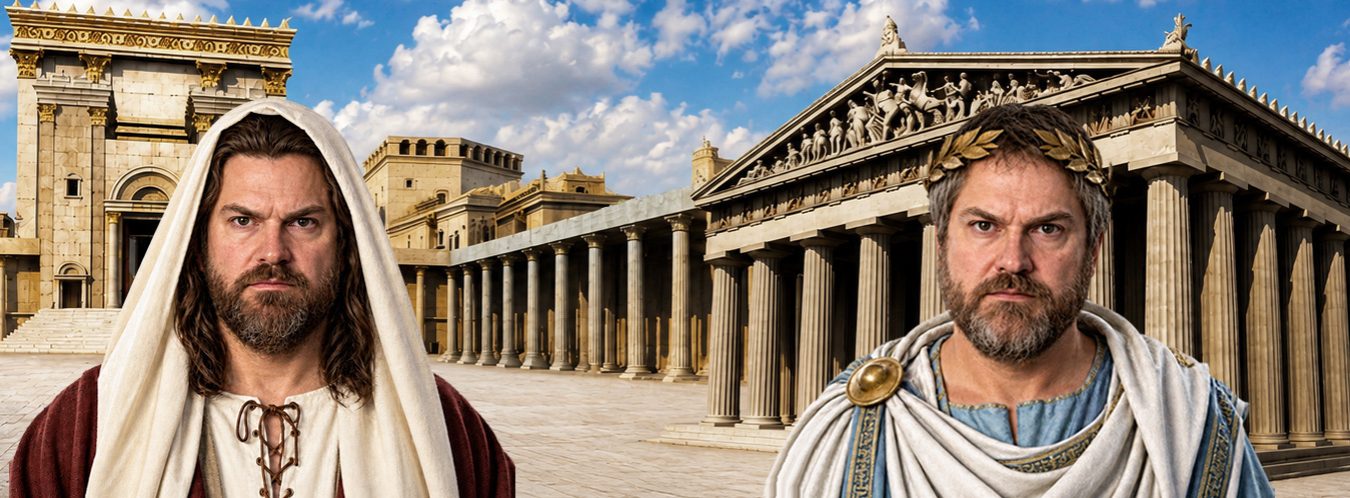
First, it is set forth by way of contrast'contrast with that ancient
dispensation which was of divine origin, which conveyed much blessing
to Israel, and which had the divine approval resting upon it. In that
old dispensation, the first point mentioned in the text is, that there
were many priests. 'For every priest standeth''implying that there were
several. There were many priests at the same time'the sacrifices of the
temple were too numerous to have been all of them performed by one man:
all the descendants of Aaron were set apart to this work, and even then
they required the aid of the Levites in certain inferior duties. And as
there were many priests at one time, so there were many in succession.
As a priest died, he was succeeded by his sons. By reason of infirmity,
they were not able to continue in their office even through the whole
of their lifetime; there was a certain period at which they were
commanded to surrender their office to younger men. By reason of
mortality the priesthood was perpetually changing; one high priest
died, and was succeeded by another. Now the reason for the existence of
many priests was this, that no one priest had accomplished the work of
expiation. The good man has gone to his fathers and offered up the last
of the morning lambs'but the morning lambs must still be offered. The
high priest is dead, and there shall be no more opportunity for him to
enter into that which is within the veil, but there must be a new high
priest appointed, for the work is not finished. There were many
priests, and as one generation passed away, another inherited the
mitre. Now, herein is the glory of Christ that he is but one, and to
this our attention is called by the apostle; that whereas there were
many priests, and the sacrifices were hereby proved to be incomplete,
since others had to take up the work; here is but one priest for ever,
and he has finished his work, and therefore sits down at the right hand
of God.
In further contrast, we observe that as there were many priests, so
there were many sacrifices for sins. The sacrifice was offered once,
but sin was not put away, and therefore had to be offered again. The
great day of atonement came every year, wherein sin was afresh brought
to remembrance. There was a day of atonement last year, but the people
are unforgiven, and there must be a day of atonement this year; and
when that day is over and the priest has come forth in his holy and
beautiful apparel, with the breastplate gleaming in the light of God,
Israel may rejoice for awhile, but there is one thought that will
sadden her; there must be an atonement day next year, for sin still
remaineth upon Israel, notwithstanding all that the house of Aaron can
do by all their sacrifices. Yea, and moreover, remembrance of sin was
of necessity made every day. There was the lamb for the morning, the
innocent victim was slaughtered and burned; but the morning sacrifice
did not put away the day's sin, for as the sun began to descend in the
west another victim must be brought, and so on each morning and each
night, victim, victim, victim, sacrifice, sacrifice, sacrifice, because
the expiation was always incomplete. But our blessed Lord, 'the Lamb of
God that taketh away the sins of the world,' was sacrificed but once,
and that one sacrifice hath completed his expiatory work. In very truth
his was a sacrifice of nobler name and richer blood than theirs.
Follow the contrast a little further, and observe the Apostle's
assertion that the repeated sacrifices of the law could never take away
sin. Those must have been strangely blind who thought they could. How
could the blood of bulls and of goats put away sin? What conceivable
connection can there be, except in symbol, between the death pangs of a
beast and the sin of a man before God? The principle of substitution
was by the legal sacrifices clearly set forth, but that was all; those
offerings did not and could not provide the actual substitute. The
principle of vicarious sacrifice they plainly unfolded, but they
provided no real sin-offering. How could they? Where but in the Christ
of God could a propitiation be found? Where else is there one who could
in our nature make recompense to the injured law of God?
You will observe, dear brethren, that the words used in the text are
these, 'Can never take away sin.' The word is, 'Can never strip off
sin.' As if our sins were like filthy garments'the vestures of our
disgrace'these could not be taken from us by the daily ministering of
priests. There was no power in their sacrifices to remove the polluted
coverings. Yet the priests were very diligent, for 'every priest
standeth' in the posture of activity, and they were persevering too,
for 'every priest standeth daily.' They were obedient too, for they did
not offer sacrifices according to their own devices, but, as the text
saith, 'the same sacrifices''that is to say, such as were ordained of
God. The priests were both diligent, constant, and obedient, and the
principle of the truth was in their offerings'viz., the doctrine of
substitution; yet sin still remained upon the consciences of the
offerers, and none of them were made perfect.
Mark well one inference from this. If the sacrifices which were
presented reverently and perpetually, according to God's own command,
and were presented by men about whose priesthood there could be no
manner of question'for they had received it indisputably of the Lord'if
these offerings were of no service to the taking away of sin, it is
clear enough that the offerings of so-called priests in these modern
times cannot have any efficacy. Here is a priesthood, certainly
appointed of God, offering victims ordained by divine order, and yet
their service does not put away sin. How much less, then, can it be
wise to trust in doubtful priests, who present sacrifices unwarranted
by the word of God. Their descent cannot be proved, their title their
pretensions of one sect are ridiculed by another, they are all alike
deceivers; have done with them and rest alone in Jesus, the apostle and
high priest of our profession.
If Jerusalem has no sacrifice in all her flocks, what use can it be to
look to Rome? If Aaron's seed cannot put away sin, to what end shall we
look to the shavelings of Antichrist?
Following the apostle's words, we come to the character of our Lord's
sacrifice, and we perceive, in reading, that his priesthood was
personal, and entirely within himself. There is but one true atoning
priest. The twelfth verse says, 'this man.' The word 'man' is not in
the original; it is 'this,' 'this priest,' if you will; 'this man,' if
you please; but its vagueness may make us think that the apostle
scarcely knew what to say. You see the stars and the moon in their
brightness, but suddenly they are all eclipsed and lost in a superior
light. What can this glory be which has paled their fires? It is the
sun rising in his strength. So, while we are beholding the priesthood
of Aaron with all its excellence, it suddenly ceases to shine, because
of the glory which excelleth, the radiant presence of one, for whom,
like heaven's manna, it is not easy to find one fully descriptive name.
Shall we call him 'man?' Blessed be his name; he is so, our near
kinsman, the 'Son of Man.' Shall we call him 'priest?' He is so.
Blessed be his name; he is the true Melchisedec. Shall we call him
'God?' Well may we do so, for he counts it not robbery to be equal with
God. But this one divinely mysterious person'this unique and solitary
high-priest, accomplishes what the many priests of Aaron's race could
not compass. They were weak, but he is allsufficient. He has wrought
out eternal redemption, and made an end of sin.
Note well, that none stand with him at the altar; none is appointed to
aid him, neither before him nor after him is there one to share his
office. He is without father, without mother, without predecessor, and
without successor. He stands alone and by himself, this glorious one
who looked and there was no man, and therefore his own arm brought
salvation; he trod the wine-press alone, and of the people there was
none with him. Jesus, the sole sacrificing priest of our profession,
has completed what the long line of the Levitical priesthood must have
left for ever incomplete.
And we are told further, by the apostle, that as there was but one
priest, so there was only one sacrifice. He 'offered one sacrifice for
sins.' He himself was the sacrifice; his body the altar, himself the
priest, himself also the victim. On Calvary's tree he presented himself
a substitute for human guilt, and there he bore the crushing weight of
Jehovah's wrath in his own body, on the behalf of all his people. On
him their sins were laid, and he was numbered with the transgressors;
and there he, in their stead, suffered what was due to the
righteousness of God, and made atonement to divine justice for the sins
of his people. This was done, not by many offerings, but by one
sacrifice, and that one alone. Jesus offered no other sacrifice: he had
never made one before, nor since, nor will he present another sacrifice
in the future. His sin offering is one.
The text adds further that, as there was but one sacrifice, so it was
but once offered for ever, or, as puts it, 'Once for all.' 'Christ was
once offered to bear the sins of many.' There is in the Scriptures no
such idea as that of Christ perpetually offering himself; it is a
childish invention of superstition. We are expressly told that he
offered himself 'once.' Under the law the lamb was offered many times,
the same sacrifices were repeated; but our Lord exclaimed, 'It is
finished,' and concluded all his sacrificing works. He 'offered one
sacrifice for sins for ever.' I do not know how your Bibles happen to
be marked as to the comma in the passage; mine, now before me, reads
thus:''After he had offered one sacrifice for sin for ever sat down;'
but that which I use at home is marked in the other way''After he had
offered one sacrifice for sins, for ever sat down.' We do not quite
know where the comma should be; some of the best scholars maintain that
it should be joined to the preceding words, others that it belongs to
the succeeding. It does not involve any point of doctrine; and it may
be read whichever way you please, without error. I think, however, the
preponderating testimony is in favor of its being read, 'he offered one
sacrifice for sins for ever;' at any rate those words express a great
and precious truth. Look back as far as you can, there was no sacrifice
for sins, except the 'lamb slain from before the foundation of the
world;' look on as far as you will, till this present dispensation
shall have completed its circle, and men shall have passed the
judgment-seat, and you shall find no atonement for sin except this
one'it stands alone, shining as a lone star, or a solitary rock in the
midst of a raging sea. The propitiation which God has set forth was and
ever must be one. The Lord Jesus offered himself once, once only, once
only for ever: there is no other atoning priest, no other sacrifice,
and there is no repetition of that one sacrifice.
Now we go on to notice the results of Christ's one offering, which are,
in the text, described as threefold'towards himself, his enemies, and
his people.
Towards himself: After he had offered one sacrifice for sins he for
ever sat down at the right hand of God. Every priest, under the old
dispensation, stood; but this man sat down, and the posture is very
instructive. The typical priests stood because there was work to do;
still must they present their sacrifices; but our Lord sits down
because there is no more sacrificial work to do; atonement is complete,
he has finished his task. There were no seats in the tabernacle.
Observe the Levitical descriptions and you will see that there were no
resting-places for the priests in the holy place. Not only were none
allowed to sit, but there was nothing whatever to sit upon. According
to the rabbis, the king might sit in the holy places, and, perhaps,
David did sit there; if so, he was a striking type of Christ sitting as
king. A priest never sat in the tabernacle, he was under a dispensation
which did not afford rest, and was not intended to give it, a covenant
of works which gives the soul no repose. Jesus sits in the holy of
holies, and herein we see that his work is finished.
There is more teaching in the passage. He 'sat down;' this shows that
he took possession of the holy place. Under the law, when the priest
had done his work, what did he do? He went home. Neither the temple nor
the tabernacle was his home. If you had asked a priest, 'Where dwellest
thou?' he would have said, 'amongst the tribe of Levi yonder I have my
abode.' But this man, when he had finished his work, sat down in the
holy place, because he was at home, not a servant only but a son, yea,
and Lord of the whole house; and, therefore, he took his own seat
therein by right. It is a joyful truth that he did this
representatively, to show us that while the law gave no permanent
possession, and could not establish the seed of Israel in possession of
sacred privileges, the gospel gives us an abiding place amongst the
children of God, who dwell in his house for ever.
The apostle tells us where this seat of Christ was. He says, he 'sat
down at the right hand of God.' This indicates the highest glory
possible; our poet calls it
'The highest place that heaven affords.'
There was no nobler position, or Jesus should have had it. Note the
remark of this same apostle in the first chapter of this epistle: 'Unto
which of the angels said he at any time, sit thou at my right hand?'
Angels do not sit at the right hand of God; they are constantly in the
place of service, and therefore they stand ready to fly on their
Master's commands; but Jesus sits in the highest seat as Lord over his
own house, clothed with honor and dignity, enthroned in the place of
favor at the right hand of God. Sitting there he is to be viewed as
clothed with everlasting power, 'able to save unto the uttermost them
that come unto God by him.' 'Exalted to be a Prince and a Savior to
give repentance unto Israel, and remission of sins;' no more the
'despised and rejected, the Man of Sorrows, and acquainted with grief,'
no more in weakness and dishonor taken out to die; he sits as a king
upon his throne, distributing royal bounties, coequal with Jehovah
himself. As King of kings, Jesus Christ is exalted at the right hand of
the Father. So much with regard to the result of the Redeemer's passion
in reference to himself.
Now, observe carefully the result of his offering with regard to his
enemies. He sits there 'expecting till they be made his footstool.'
They are crushed already; sin which is the sting of death has been
removed, and the law which was the strength of sin has been satisfied.
Sin being put away by Christ's death, he has effectually broken the
jawteeth of all his enemies. When Jesus Christ offered himself unto God
he fulfilled that ancient promise, 'The seed of the woman shall bruise
the serpent's head.' Christ has set his foot upon the old dragon's
head, and crushed out his power. Still, however, a feeble fight is kept
up; feeble, I say, for so it is to Christ, though to us it seems
vigorous. Sin and Satan within us, and all Christ's enemies without us,
including death itself, are vainly raging against the Christ of God,
for every day they are being put beneath his feet; every day as the
battle rages the victory turns unto the enthroned Christ. In us I trust
sin has been put beneath Christ's feet; in thousands of others it shall
yet be so. Jesus upon the throne expects the growth of that victory
till all his enemies shall be utterly and ignominiously beaten. 'O long
expected day, begin!' Father, fulfill thy Son's expectations, for thy
saints expect it in him. Let the time come when every enemy shall be
beneath his feet.
We will not tarry, however, on that, but close this exposition of the
words of the text by noticing the effect of Christ's death upon his own
people. We are informed that he hath 'perfected' them. What a glorious
word! Those for whom Christ has died were perfected by his death. It
does not mean that he made them perfect in characters so that they are
no longer sinners, but that he made those for whom he died perfectly
free from the guilt of sin. When Christ took their sins upon himself,
sin remained no longer upon them, for it could not be in two places at
one and the same time; if it was on Christ it was not upon them; they
were acquitted at the bar of God when Christ was, on their behalf,
'numbered with the transgressors.' When Jesus suffered the penalty due
to his people's sins to the last jot and tittle, then their sins ceased
to be, and the covenant was fulfilled: 'Their sins and iniquities will
I remember no more for ever.' There was a clean sweep made of sin: 'He
hath finished transgression, and made an end of sin;' and that for all
his people. They want no other washing, no further purging, as far as
pardon of sin and acceptance with God in the matter of justification
are concerned, for they are all perfected by his sacrifice.
His people are described in the text as 'them that are sanctified,' and
you must beware of misunderstanding that word as though it meant those
who are made perfectly holy in character. The word implies an inward
work of grace, but it means a great deal more. The passage should be
read 'He hath perfected for ever them that are being sanctified,' for
it is in the present in the Greek. The text is not to be made to say
that those who are perfectly sanctified are perfected, that would be a
common-place, self-evident truth; but the great high priest perfected
for ever those who are being sanctified. Now, sanctification means,
primarily, the setting apart of a people by God to be holy to himself.
Election is sanctification virtually; all God's people were
sanctified'set apart and made holy to the Lord'in the eternal purpose
and sovereign decree or ever the earth was. Christ has by his death
perfected all who were sanctified or set apart in election. This
purpose of sanctification is carried out further when those set apart
are called out by grace. When effectual grace separates men from the
world by conversion and regeneration, then they become, in another
sense, the sanctified; they are set apart even as Christ set apart
himself, dedicated to God's service, and separated from sinners. As the
work which began at regeneration is continued and carried on in them,
they are in another aspect sanctified; they are realising in themselves
that sanctification or dedication to God, which was theirs from before
the foundation of the world. The text relates not only to those in
heaven who are perfectly sanctified, but it relates to all who were set
apart in the purposes of grace, that as far as their pardon and
justification are concerned, Christ perfected them for ever when he
offered up himself without spot unto God.
II. We have thus studied the interpretation of the words, reading,
marking, and learning them. Now, I ask your earnest attention while we
try to DIGEST THESE TRUTHS. It is in the digestion that the real
nutriment shall come to our hearts.
All ye who desire eternal life lend me your ears, for this matter
concerns you'observe that the whole business of this passage concerns
sinners. The verse speaks about the Jewish priests who offered
sacrifices for sins, and then it further speaks concerning Christ Jesus
who has put away sin. O ye guilty, the gospel is meant for you. If
there be any of you who are innocent and pure, and without spot, for
you I have no words of consolation; but oh, ye sinners, the gospel is
for you, for you the priesthood and the substitution of Jesus, for you
his death on earth, for you his reign and power in heaven. This fact
ought to encourage every trembling conscience. Are any of you saying,
'Ah, I shall never be saved, I am so guilty?' Believe not that lie of
Satan. 'The Son of Man has come to seek and to save that which was
lost.' The gospel has for its special aim and intent the putting away
of sin, and therefore it is suitable to your case.
Hearken then further to me. See in the text the position out of which
you should labor to escape. It is the position of those who stand daily
ministering and daily offering sacrifices which can never put away sin.
You are seeking mercy and I know what you are doing; you are going
about to establish a righteousness of your own. You thought, 'I will
pray very regularly,''you have done so for months, but prayers can
never put away sin. What is there in prayer itself that can have merit
in it to make atonement for sin? You have read the Scriptures
regularly, for which I am most glad, but this you always ought to have
done, and if you now do it most commendably, in what way will that put
away sin? 'Ah, but I have been a regular attendant at a place of
worship.' It is well you should, for 'faith cometh by hearing;' but I
see no connection between the mere fact of your sitting in a place of
worship and the putting away of sin; you know it has not eased your
conscience yet, but has even increased your sense of sin. Perhaps some
of you have for years been trying to save yourselves, and you have got
no further; you feel as if you were further off than ever you were.
'Wherefore do you spend your money for that which is not bread, and
your labor for that which profiteth not?' Why stand you daily at the
altar offering that which can never put away sin? It would be
infinitely wiser to flee to the sacrifice which can atone.
Now, follow on the text, and, oh, may it come into your very soul, for
its practical teaching is that the one sole object of faith for the
pardon of sin, is the man, the priest, Christ Jesus. 'This man,' says
the Apostle, 'offered one sacrifice for sins for ever.' If thou wouldst
have peace of heart, thou must get it only from this one glorious
person, the Christ of God. I tell thee solemnly, thou wilt damn thyself
by thy prayers, and thy tears, and thy repentings, and thy church
goings, and thy chapel goings, as easily as by blasphemy and
fornication, if thou trustest in them; for if thou makest a Savior and
an idol of thy best works, they are accursed. Though thine idol be of
purest gold, it is as much an abomination unto the living God as if
thou hadst made it of filth. There must be no looking anywhere but to
Jesus, not in any measure or degree. He who looks partly to Jesus, and
partly to himself, looks not to Christ at all. If a man shall put one
foot upon the land and the other on the sea'the foot that is on the
land will not avail him, he must certainly fall, because his other
standing place is weak. If a chain be made strong enough to bear huge
weights in every portion except one link, yet as we all know its
strength is not to be measured by the stronger portions, but by the
weak link; and if you have one weak link in your hope, if you are
resting in anything you are or hope to be, or can do or feel, that one
weak link will snap and ruin you for ever.
'None but Jesus, none but Jesus,
Can do helpless sinners good.'
From top to bottom, from foundation to pinnacle, our hopes must be in
the work of Jesus, and we must trust in him alone, or else we shall
build in vain. 'Other foundation can no man lay than that which is
laid.' Other hope beneath the skies there is none. O soul, learn the
uselessness of looking to anything but Christ; but, be thou assured of
this, if thou wilt look to him, and to him alone, he will put away thy
sin, nay, he has done it by the sacrifice of himself.
Furthermore, here is another thought'I would that you would drink it in
as Gideon's fleece drank in the dew'it is this: the efficacy of the
atonement of Christ for sin is as great to-day as ever it was. He
'offered one sacrifice for sins,' for what? for a thousand years? No!
But the text says 'for ever!''for ever!
'The dying thief rejoiced to see,
That fountain in his day,
Anal there may I, though vile as he,
Wash all my sins away.
Dear dying Lamb, thy precious blood,
Shall never loose its power;
Till all the ransomed church of God,
Be saved to sin no more.'
'One sacrifice for sins for ever.' The devil tells you it is of no use
for you to believe in Christ, there is not efficacy for you, you have
sinned away your day of grace; tell him he is a liar, Christ has
offered one sacrifice for sins for ever; and while a man lives beneath
the covenant of mercy, where the gospel is sounded in his ears, there
is efficacy in the atonement for ever. The atoning sacrifice has no
limit in its merit, the salvation of some has not drained it of even
the smallest degree of its power. As the sunlight, though it be seen by
millions of eyes, is as bright as ever it was, so is it with Jesus.
Perhaps the Sun's fires may grow dull, and become dimmed in the course
of ages, but it is certain that the eternal fount of mercy, the Sun of
Righteousness, will never fail. He will continue to flood his people
with the golden sunlight of his forgiving grace. He has made one
sacrifice for sins for ever. I will come to him then. He is able to
save me'he is able to save me even though I were a sinner of seventy
years of age. I will come to him, I will rest in him'in him alone. Oh,
believe me, if you do this you have eternal life abiding in you.
A further thought. The text leads me to say to you that it is utterly
hopeless, if you desire salvation, for you to expect Jesus Christ to do
anything more than he has already done. Many are waiting for a
something, and they scarce know what. Now Jesus, when he died and went
to heaven, perfected for ever all his work; and if you do not believe
to-day in what he has done, there will be no surer grounds for belief
to-morrow. If faith be difficult to me to-day, I must not expect that I
shall have any more evidence, or that there will be any more truth for
me to rely upon, if I live another twenty years. God has set forth
Christ for you as guilty sinners to rest on; and if that is not enough
for you, what more would you have? Christ has offered himself, and died
and suffered in our stead, and gone into his glory; and, if you cannot
depend upon him, what more would you have him do? Shall he come and die
again? You have rejected him once; you would reject him though he died
twice. But that cannot be done; there is enough in his sacrifice to
answer all the purposes of mercy, and if you sin wilfully by rejecting
him, 'there remaineth no more sacrifice for sin, but a fearful looking
for of judgment and of fiery indignation.' This is the point; all the
atonement that could save me in ten years time is here now; all that I
can ever rely upon if I postpone all thoughts of faith, all is here
already. There will be no improvement in Christ. He has perfected his
work. Oh, poor troubled soul, rest thou on him now. While I put these
words, as it were, into your mouths, how I wish I could put them into
your hearts! How foolish you are who are looking for signs and wonders
or else you will not believe. May the Spirit of God show you that Jesus
is now able and willing to save you, and that all you have to do is to
take what he has done, and simply trust him, and you shall be saved
this morning, completely saved, perfected through his one sacrifice.
There remaineth no more to be done by the Redeemer. He sits down, and
he will not rise for any further sacrifice. He has finished his
atonement and perfected those he means to save; and if you believe not
in him, there remaineth no more sacrifice for sins.
Yet, again, I want you, dearly beloved brethren, to gather from the
text before us the true posture of every believer in Christ. 'This man,
after he had offered one sacrifice for sins for ever, sat down.' If I
am a believer that is my posture, if you are a believer that is
yours,'you are to sit down. Under the law there was no sitting down.
Even at the Passover the Israelites stood with their loins girt and
their staves in their hands. There was no sitting down. It is only at
the gospel supper that our proper posture is that of recumbency,
reclining, or sitting down, because our warfare is accomplished. They
that have believed have entered into rest. Jesus hath given us rest, we
are not traversing the wilderness, we are come unto mount Zion, unto
the glorious assembly of the church of the first born whose names are
written in heaven. Our justifying work is finished, finished by Christ.
Sit down Christian, sit down and rest in thy Lord. There is much to be
done as to fighting your sins, much to be done for Christ in the world,
but so far as justification and forgiveness are concerned, rest is your
proper place, peace in Christ Jesus your lawful portion.
Your position is also to be one of expectancy. Christ, when he sits
down, expects his enemies to be made his footstool. Expect, O believer,
the time when you shall be rid of all sin. Fight manfully against your
inbred corruptions, struggle against sin as you see it in the outside
world, and expect every day with holy faith that you shall get the
victory. As Christ sits there expecting, he hath raised us up together
and made us sit together in the heavenly places in himself; and we will
sit there and look down upon this erring world, and expect the time
when all evil shall be beneath our feet as it is beneath his.
Meanwhile, our posture is, once again, that of those who are perfected
in Christ Jesus. How I wish that we could all realize this, and live in
the power of it. If I am, indeed, a believer, I have nothing whatever
to do in order to put away the guilt of my sins. I have much to do by
faith to overcome the power of sin in me, and to seek after holiness;
but so far as the guilt of transgression is concerned, Jesus Christ's
one offering hath perfected all his people, there is not a sin
remaining upon them, nor a trace of sin; they are 'without spot, or
wrinkle, or any such thing;' before God's sight they are perfectly
lovely; they are not somewhat beautiful, but they are altogether lovely
in Christ; they are accepted not in part but altogether, 'accepted in
the Beloved.' When I get upon this strain, words are quite inadequate
to express the emotions of my soul. This truth might well make David
dance before the ark of the Lord'to think that though black in
ourselves, we are comely in Christ; though like the smokedried tents of
Kedar we are foul, yet clothed in our Savior's beauties we are like the
curtains of Solomon for glory. The glory of the text is that we are
perfected for ever; not for to-morrow, and then suffered to fall from
grace; not for the next twenty years, and then turned out of the
covenant; but he hath perfected 'for ever' those that are set apart. It
is a work which abides like the worker himself, and while Christ sits
on the throne his people cannot die; while his work remains for ever
perfect, they are also for ever perfect in him.
Now, brethren, another practical point is this, that it becomes us to
make the evidence of our interest in this gracious work more and more
clear to others. The text says, 'Hath perfected them that are
sanctified,' or set apart as holy unto God. We must be more and more
set apart every day, we must labor after holiness; this must be our
object, not in order that we may be saved, for we are saved already,
but in order that by others it may be clearly seen that we are saved,
and they seeing our good works may glorify our Father which is in
heaven. If I have in myself no measure of holiness, how shall I be
recognized as belonging to Christ? Is it not foolish presumption to say
'I am perfect in Christ,' if still my soul lives in sin, and loves it?
May the Lord, by his Spirit, lead us in the ways of holiness, and then,
walking in the light as he is in the light, we shall have fellowship
one with another; and the blood of Jesus Christ his Son shall cleanse
us from all sin.
Finally, brethren, it remains for us to recollect that Christ will be
one of two things to every one of us here present: either we shall see
him at the right hand of God and rejoice that he is lifted so high, or
else we shall behold him there with horror as we writhe beneath his
feet. For his people, perfected for ever, it is their heaven to think
that Christ is highly exalted. Oh, would we not exalt him if we could!
Is there anything in this world that we would keep back from him? Is
there any suffering from which we would shrink if we could lift him
high? I hope I can speak for all of God's people and say, the dearest
object of our life is to honor him. Oh for high thrones for Jesus and
bright crowns for Jesus!
'Let him be crowned with majesty
Who bowed his head to death!
And be his honors sounded high
By all things that have breath!'
Let him have the highest place that heaven can yield him.
But, if we will not believe his Godhead, if we will not trust him as
the Mediator, if we have no part in his sacrifice, if we oppose his
gospel, if we reject his claims to our obedience, there is another
position we shall have to take up, and that is, beneath his feet. Those
feet will be heavy indeed! They were pierced once; but if ever those
pierced feet come upon you, they will crush you to powder. Nothing is
so terrible as love when once it is turned to anger. Oil is soft, but
how it burns. Inflame love into jealousy and it is cruel as the grave.
Beware, ye that reject the Savior, for in the day when he cometh he
will smite you with a rod of iron, and even his face, which is full of
tenderness to-day, shall then be full of terror, and this shall be your
cry, 'Hide us ye mountains, ye rocks conceal us, from the face of him
that sitteth upon the throne, and from the wrath of the Lamb.' What a
wonderful mixture of words, 'The wrath of the Lamb.' It is one of the
most dreadful expressions in Scripture. The Lord grant we may never
feel its terrible meaning. May his blood cleanse us. Amen.
__________________________________________________________________
The Real Presence, the Great Want of the Church
A Sermon