
DELIVERED ON LORD'S-DAY EVENING, AUGUST 10, 1879,
BY C. H. SPURGEON,
AT THE METROPOLITAN TABERNACLE, NEWINGTON.
"Whatever prayer and supplication is made by anyone, or by all Your
people Israel, which shall know every man the plague of his own heart,
and spread forth his hands toward this house: then hear in Heaven, Your
dwelling place, and pardon, and do, and give to every man according to
his ways, whose heart You know; (for You, even You only, know the
hearts of all the children of men) that they may fear You all the days
that they live in the land which You gave unto our fathers." 1Kings
8:38-40.
(When the regular congregation unanimously left their seats to be
occupied by strangers, who crowded the building to its utmost
capacity).
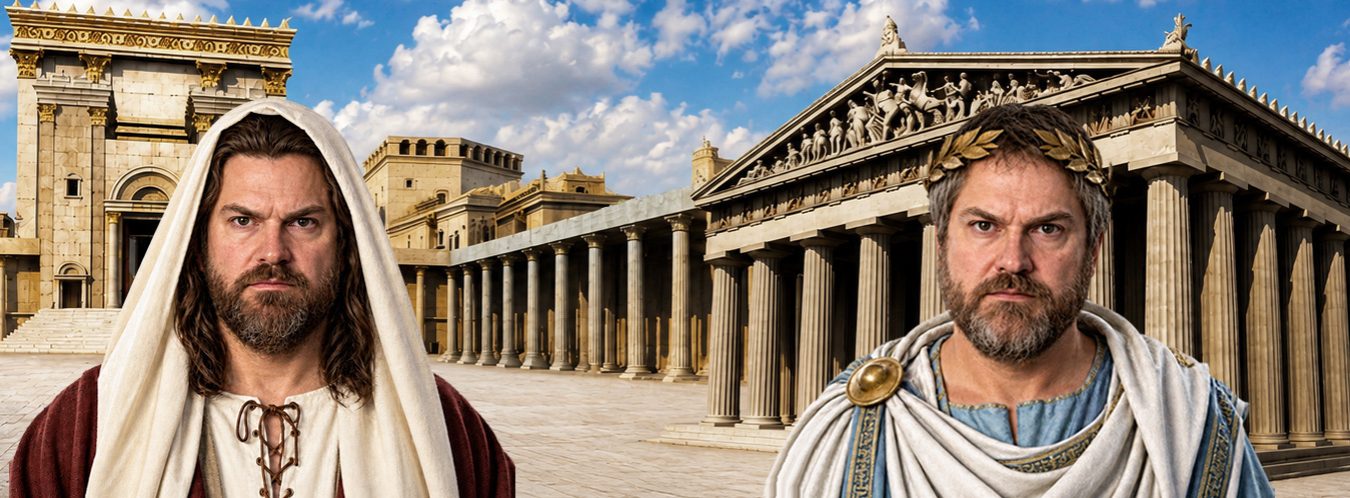
You all know that the Temple at Jerusalem was the one place of
sacrifice throughout all the holy land, for thus had the Lord spoken,
"Whatever man there be of the house of Israel, or of the strangers
which sojourn among you, that offers a burnt offering or sacrifice, and
brings it not unto the door of the tabernacle of the congregation, to
offer it unto the Lord: even that man shall be cut off from among his
people." According to God's Law there was one altar and it was counted
a high crime when the tribes which dwelt beyond Jordan built another.
And their brethren sought them, saying, "Rebel not against the Lord in
building an altar besides the altar of the Lord our God" (Josh. 22:19).
As there was only one high priest, so there was only one altar–and
sacrifice might not be offered anywhere else but on that altar at
Jerusalem.
Therefore, when a man wished to present his offerings to God, he went
up to the Temple which Solomon dedicated by the prayer in which our
text occurs. The people afterwards built altars on high hills and in
green groves, but these places and the sacrifices offered there were
contrary to the mind of God. There was but one altar and one
sacrifice–and that was at the Temple. That is why, when the godly
Israelite prayed, he looked towards the one place of sacrifice, not in
superstition, but in believing remembrance of the one sacrifice and the
one altar and the one glorious token of the Divine Presence which shone
over the Mercy Seat within the veil. He knew that God could only accept
him through the one sacrifice and, therefore, he looked that way.
The people especially looked toward the Temple in prayer in times of
national calamity. In drought, or when the crops were consumed by
locusts or by caterpillars, or when blast and mildew destroyed the hope
of harvest, or in time of war or pestilence, their supplications were
presented unto the one Jehovah–all eyes looking towards His one sacred
shrine where the one sacrifice smoked upon the altar. But although
there were those special opportunities and God heard their prayers as a
nation, it is very pleasant to observe that He regarded the griefs of
individuals. Every man, says the text, that knew the plague of his own
heart, was to spread forth his hands towards that one place of
sacrifice and pray. And God would forgive him and deliver him.
That is my subject tonight. The Lord will hear whatever prayer and
supplication is made by any man in reference to his own personal
affliction if his heart is turned towards God's own temple. But what is
that temple? And where is it? There are now no material temples beneath
the whole Heaven unless the bodies of Believers may be so called–and
no one thinks of looking to them. No, "The Most High dwells not in
temples made with hands." No one place is more sacred than another–
"Where'er we seek Him, He is found, And everyplace is hallowed ground."
There remains one Temple, however, and that is the body of the Lord
Jesus Christ. He is Temple, Altar and Sacrifice! And if you would look
the right way in prayer and if you desire your prayers to be answered,
you must look to Him by the eye of faith.
Look! There He sits at the right hand of God! Having finished the one
Sacrifice and made Atonement for sin forever, there He sits–Priest,
Altar, Offering, Temple–and every true supplicant must enter into the
holiest by His blood, "by a new and living way, which He has
consecrated for us, through the veil, that is to say, His flesh."
Whoever beneath the wide heavens is conscious of the plague of his own
heart or has anything that plagues him or anything that troubles him,
he may turn his eyes towards Christ, the true Temple, with a certainty
that God will hear his prayer and answer his request and send him
deliverance. "We have an Altar," and that Altar is our Lord's own
blessed Person! We have but one and we tremble for those who set up
another–and to that One we look with confident hope, being assured
that the Sacrifice once offered there has made our peace with God and
procured acceptance for our supplications–
"We build no altar–You have died
We deck no priestly shrine.
What need have we of creature-aid?
The power to save is Thine."
But now I must come nearer to the point in hand. The text speaks of
"every man which shall know the plague of his own heart." I am going to
talk to you about that knowledge and the plague with which it deals.
These are home affairs that we shall speak of tonight–not matters
beyond our line and unpractical–but our own personal concerns. "Every
man the plague of his own heart." A great many men think they know the
plague of other people's hearts and there is a great deal of talk in
the world about this family, that person and the other. I pray you let
the scandals of the hour alone and think of your own evils. This night
let each man consider his own home affairs and not other people's
business. He would be a bad farmer who plowed other people's lands and
left his own untilled. He would be a poor gardener who used his hoe on
other men's weeds and not on his own.
Tonight I pray you let each man think of home affairs. Yes, and let him
think of heart affairs, for whatever may be wrong about us, the worst
place to have anything wrong is the heart. Out of it are the issues of
life. We can endure the burdens of life, but "a wounded spirit, who can
bear?" A plague in the body is not half so bad as a plague in the
heart–a plague in the soul–of all plagues the plague of the heart is
the worst. It is not the plague of another man's heart which I have to
think of tonight, but the plague of my own heart, for the text speaks
of knowing, "Every man the plague of his own heart."
It is a dreadful mischief that there should be a plague in the heart,
for a plague is a dreadful thing. A plague means, first, something
which brings pain and there is many a secret heartache in this world
where we least suspect it. If you could take the roofs off the houses
of London, strange sights would be seen. But if once you could proceed
to put a window into every heart, some of those whose faces look the
happiest would appear to us to be among the most miserable of men! The
plague of the heart means pain, care, worry, grief and trouble of mind.
But it means more than that, for the plague is a disease.
Now, a diseased heart is something terrible. Often we see it reported
that a man died suddenly of disease of the heart, which, I suppose,
frequently means that the doctors do not know what he died of–but
certainly, anything that kills the heart is a disease in a most
important organ. The hand may be cured, or we may even lose it and
live–but when the heart is affected, the whole system gets out of gear
and life, itself, verges dangerously upon the edge of death. As it is
with the heart of the body, so is it with the soul's heart–its
depravity, or, in other words, its moral disease–puts all the
faculties out of order and ruins our whole nature.
Nothing can be right with the immortal nature till the heart is cured
of the plague which came upon it through the Fall. The worst point
about the plague of the heart is the fact that if it is not removed, it
will ultimately bring death upon the soul. Plague in the heart is
mortal and I would be much surprised if I have not in this great
congregation some who have a present pain, a present disease of the
heart and who will–unless God, in His Grace, leads them to adopt the
cure we shall set before them tonight–perish through this deadly
plague! O that while I am speaking to you, the Holy Spirit may lead
many a sin-sick soul to breathe out some such desire as that expressed
by John Newton when he wrote–
"Physician of my sin-sick soul, To You I bring my case.
My raging malady control, And heal me by Your Grace. Pity the anguish I
endure, See how I mourn and pine! For never can I hope a cure From any
hand but Thine. Lord, I am sick, regard my cry, And set my spirit free!
Say, can You let a sinner die, Who longs to live for Thee?"
To come to close quarters. Our first point will be forms of this
plague. The next will be mode of treatment and the third will be, help
to be expected.
I. First, let us mention various FORMS OF THIS PLAGUE OF THE HEART.
They are very many, perhaps almost as many as there are hearts,
themselves. Some have this plague of the heart in the form of a
terrible memory. With blood-red lines, remorse has scored their
memories in an ineffaceable manner. We need not go into particulars–a
secret something known scarcely to anyone but themselves hides away in
the most tender part of their nature and eats away at their vitals.
They sinned–sinned terribly–and the sin haunts them.
They could be happy if they could forget, but that one sin is always
before them as though a blood spot were painted on their very eyeballs.
They are reminded of it by the simplest events, for it seems as though
God had put an accusing tongue into the stones they tread upon and the
walls which surround them. Even their beds refuse them repose. They
wake in the darkness and sit in speechless horror. Or if they fall
asleep, the visions of the night scare them. Few know of their fault
and yet they imagine that they are universally suspected. Nobody has
cried shame upon them, but they cry shame upon themselves.
It may not be only one sin, but perhaps all their sins in one pack bark
at them and pursue them like bloodhounds eager to devour. They can hear
the voice of their sins above all notes of music or shouts of laughter.
When they would be quiet and at rest, they cannot be, for they are
tossed to and fro like an ocean in a storm. They have the plague of
remembered sin upon them and see no remedy for it. Tonight it is my
gladsome message that there is a cure for this form of heart-plague–an
effectual cure! Transgression can be blotted out! Even the greatest
trespass can be altogether forgiven! Sin can be put away so that it
shall not be mentioned against you any more nor ever! Blessed be God
for this! If this is the plague of your heart, have confidence and
embrace the cure tonight!
With others it takes another shape. Their heart-plague has assumed the
form of dissatisfaction and unrest. They cannot be quiet. They are like
the troubled sea which cannot rest. They were a little pleased at one
time when they had a new scheme on hand to divert their thoughts and
amuse their minds. The scheme has prospered, but that prosperity has
brought them no contentment–they must now be at something else–and
while the new plan is in full swing, they will, a little, forget. But
when that, also, is accomplished, they will sit down and cry, "What
next? I am sick of all things and most of all of myself! Life is worry
and disappointment. I cannot be quiet. I crave a something, I know not
what." There are hundreds and thousands of men who have all that heart
can wish and yet are miserable. On the other hand, I could point you to
many hundreds who have but little in this world and yet are almost as
happy as the angels! They are in full contentment rejoicing in their
God.
The plague in the heart rages fiercely in those who lack nothing except
the power to enjoy what they have. They have succeeded in their
learning and gained their degree, but increased learning has only
enlarged the sphere of their disquietude. They have succeeded in
business and have retired, but retirement is a weariness to them. They
have prospered in everything and this has become their adversity! Like
the man of old, they cry, "Vanity of vanities! All is vanity." They
mourn over all earthly good, saying, "There is nothing in it. It is an
empty thing. Woe is me! Where is rest for my soul?"
Again, it is my glad errand, tonight, to tell you where perfect rest
and sweet contentment can be found–where your soul shall dwell at ease
and possess the earth and inherit worlds to come–and your peace shall
be like a river and your righteousness like the waves of the sea! May
the Lord God, the Holy Spirit, help you to avail yourselves of the
blessed peace stored up in the one great Sacrifice which every
unresting heart may have if it will only come to Him!
This plague takes another shape and I mention several that I may come
home to many hearts and depict many experiences. In many it is a
wretched tendency to some one sin which, nevertheless, the man in his
better moments does not wish to commit. Some are horribly plagued by
their passions. They stand out against them, occasionally, and come to
a pause and resolve, "It shall not be. In the name of everything that
is good, it shall not be!" They hate and despise themselves for it and
yet they yield to overwhelming lust and are hurried forward by their
passions like sear leaves in the tempest, or spray dashed aloft by a
storm.
Many individuals are plagued with the temptation to strong drink. They
vow that they will abstain, but the serpent stings–they thirst for the
firewater and will have it though it degrades their manhood below the
level of the swine! With others, wantonness and chambering have gained
the mastery and the plague is foul, indeed. With another class it is
ungovernable anger, quickness of wrath, or that slow-burning,
smoldering fire called malice which is nearest akin to the fire of
Hell. Better burn with a life-long fever than be the prey of these
fierce heats. Some know the evil which wraps about them like a python.
They wish to resist it and yet they are so fascinated by the sin that
they cannot tear away the serpent folds!
Many are as though they were taken in a net, or garmented about with
lusts till they are comparable to Hercules of old when he put on the
tunic which burned into his flesh and clung to his body–and when he
labored to tear it off as best he could–he tore away his flesh with
it. Many are enshrouded in a horrible robe of habit which has become a
part of their being, the very skin of their souls. They cannot get rid
of that awful tunic of fire–a tendency to sin. To them, also, I have
the joy to proclaim, in the name of God, the All-Merciful, that from
this they can be redeemed! They can be delivered from the bondage of
corruption and brought into the glorious liberty of the children of
God!
In others, this plague of the heart is a wretched indecision–a
perpetual vacillation. They are resolved at times, but their resolve
ends in nothing. Oh, there are numbers of men who know it
themselves–that they can never succeed in life because they are
"everything by turns and nothing long." Especially in matters of
religion they wax and wane like the moon. Today they repent. Tomorrow
they return to their sin. Today they are in earnest. Tomorrow they are
careless. Today they are almost persuaded to be Christians. Tomorrow
they are quite persuaded to find pleasure in sin. False as the waves
and fickle as the winds, they are never long enough in one place to
take root anywhere. Unstable as water, they shall not excel.
Who can heal them of this moral palsy? Can nothing convince them to
choose the right direction? Yes, there is One who can convince them!
There is One who can throw the weight of His sweet love into the
quivering balance and make it turn in the right direction! O hesitating
mortal, if you have Grace to look, tonight, towards the one Sacrifice,
the Holy Spirit will root you and ground you in love–Jesus will make a
steadfast man of you and you shall yet say, "O God, my heart is fixed!
My heart is fixed! I will sing and give You praise!"
I have known this plague of the heart in some to take the form of a
mournful hardness, so that they cry, "I would, but cannot, repent! I
would feel, but I cannot feel! I seem to be given up, seared as with a
hot iron and insensible!" This is a fearful plague–perhaps worse than
all I have previously mentioned because more fatal! Is there, then, no
hope? Yes! There is One who can make the dead to live, who can take
away the heart of stone and give a heart of flesh and it is His name we
preach tonight, the name of Jesus who shall save His people from their
sins! There are others whom I meet pretty constantly who have a
faintness of heart, a despondency of spirit which is their plague. They
cannot believe that there is mercy for them.
They cannot hope that they could live a new life. At times they feel a
desire to turn unto the Lord, but they think it is impossible–and that
grim impossibility drives them back from Christ–and forward to yet
grosser sin. Many a man has said, "Because there is no hope, therefore
will I sin to the very length of my tether. I cannot be saved and so I
may as well have the pleasures of sin to the fullest." I pray, dear
Hearer, do not let despair thus saddle you and ride you, for there is
no cause for it! There is salvation where Jesus goes and He is here
tonight! No man need say he is denied a hope since Christ came into the
word to seek and to save that which is lost! Oh, my Hearer, hope as
long as you live! To the very confines of death's dominions and to the
borders of Hell-shade, let these words of mercy fly, "There is hope!
There IS hope!" For the most hopeless there is still hope. "Let the
wicked forsakes his way and the unrighteous man his thoughts: and let
him return unto the Lord, and He will have mercy upon him; and to our
God, for He will abundantly pardon."
One other form of heart-plague is a constant dread of the future.
Multitudes of persons are always under apprehension and especially
under apprehension of death. You must not mention death in some
places–the very word is horrible. Some would like, I dare say, that
the etiquette of the age should respect their coward fears and be as
daintily absurd as that of the French monarch who would not allow death
to be mentioned in his presence. When his secretary read the words,
"the death of the king of Spain," he sharply asked, "What is that? What
is that?" in anger, that such a thing should be mentioned in his sacred
presence! The secretary was obliged to say that it was a circumstance
which occasionally happened to kings in Spain.
Scores of people would like us to be just as delicate as that upon the
subject of their end. But, O Sirs, you must die! The youngest among us
who is in best health will die–may die soon–but where the snows of
winter lie upon your heads and where the tenement already begins to
crumble through old age, death must come. Are you not prepared, my
Friend? Are you not prepared? Then I do not wonder that you tremble at
the very thought of being summoned before your Maker. But be not as the
ostrich which hides its silly head from the hunter and then dreams of
being secure! Learn to look death in the face, for it will soon stare
you out of countenance.
Do you call yourself a Christian and are you afraid to die? Oh, if God
had made you such a man as you ought to be, you would not dread to die,
for death is a mere undressing to the true Believer–an undressing
which leads to his being arrayed in Glory! Death to the saint is the
gate of endless joy and shall he dread to enter there? To such as are
in Christ who have looked to the one Temple, to the one Sacrifice, to
the one Priest, to the one Altar, the fear of death is gone! Within
them God has worked such a work and for them Christ has prepared such a
Heaven that without apprehension they may look through the gates of
pearl and often clap their hands for very joy as they sing–
"See that Glory how resplendent! Brighter far than fancy paints! There
in majesty transcendent, Jesus reigns, the King of saints! Spread my
wings, my soul, and fly Straight to yonder world of joy!"
So elevated is the joyous experience of the true Believer that death to
him would be unmingled gain! He knows it to be so and, therefore, at
times he is even in haste to be gone! Have I, in any of these
descriptions, picked you out, tonight, my dear Friend? Have you a
heart-plague like any of these? Or is it some other form of the great
spiritual pestilence? I cannot tarry to describe it, for now I want to
speak upon the mode of treatment. May the Holy Spirit help you to feel
the plague and accept the remedy upon the spot!
II. You desire to get rid of this heart-plague–effectually rid of
it–let us consider, then, the MODE OF TREATMENT which will work a
cure. I hope you are not so foolish as to say, "I shall not think about
the matter, for it would only plague me more." That is a very bad habit
and only such as a frivolous or a wicked person would follow. A man is
in a trade and he says to his clerk, "Don't bring me the books. I do
not want to know anything about my accounts. Don't let me see my book
or ledger. I had rather not be troubled with them." The confidential
clerk replies, "Sir, I think you ought to see your account at the
bank." "No," answers the silly one, "I should not like to be perplexed
with figures, balances, losses and deficits. I should not enjoy my
dinner if I attended to these matters–let us drive dull care away and
enjoy life while we may. Don't worry me. Keep those wretched books
away."
I do not think it needs a prophet to foretell that this tradesman will
soon be in his creditors' hands with very small assets. By such
avoidance of knowing his position, he will be ruined as sure as
doomsday. And whenever a man dares not look into the state of his soul
and dreads a half-an-hour alone, he may conclude that there is
something rotten in the state of Denmark–something far, far gone with
regard to his soul's estate. He need not question that, I think. But
let us not be so unwise, for the first mode of treatment we prescribe
tonight, in order to the remedy, is that every man should know the
plague of his own heart, that is to say, he should endeavor to get a
true and accurate knowledge of his spiritual condition as in the sight
of God.
What is this sin that troubles you? Honestly look at it. What is this
fear that haunts you? Do you know what it is? I would advise you to
write it down and see it in black and white. What is this tendency to
sin that enslaves you? What is this wretched indecision? Get a
diagnosis of the disease and be sure it is a correct one. Look your own
case through and through. It very much helps towards salvation when a
man knows something of his need of it–and he will be very much
helped to a sense of his need if he will impartially examine his own
state. If I might ask such a thing–I fear it would not be granted, but
I am sure good would come of it if I could get it–I ask that every
person, tonight, on his going home, would sit down in his chamber, look
into the state of his heart before God and then write on a piece of
paper one of two words–"saved," or, "lost."
My Friend, do not write that word, "saved," unless you can honestly and
sincerely say, "I have looked to the Savior and He has saved me." But
suppose you are forced, in honesty to your conscience, to write down
the word, "lost," as your true description? It will be both wise and
useful to do so. I have known this to be done in cases in which, before
the morning light, that piece of paper has been burned and another word
has been written in its place–even the bright consoling word, "SAVED!"
Only foolish people object to enquiry as to their state–do not be one
of them. Write down the condition of your soul! Take stock and make
sure. Write down, "impenitent," if you are so! Put it before you in
black and white. Write, "unbelieving," if you are so. It cannot hurt
you to know the truth–and it may be of lasting benefit to you. We
prescribe that to begin with.
Then, next, as Solomon bade those who knew the plague of their own
heart turn their eyes to the great sacrifice at the Temple, the next
thing to do is to turn your eyes to God. You cannot help yourself and
nobody on earth can help you. Your case, apart from Divine Grace, is
desperate! This heart-plague will not die out of its own accord, nor
will any change of your outward condition eradicate it. Turn, then, to
the great Physician and cry to Him thus, "Lord God, You did make me!
You can mend me! You did make me! You can make me over again! I am
lost! Creator, Redeemer, Sanctifier, You can save me!" Look heavenward
and Christward. Look to the bleeding Lamb, to the risen Redeemer!
To look within will breed despair, but to look to Christ on the Cross,
no, to Christ now at the right hand of God, will beget lively hope!
Jesus is "able to save to the uttermost them that come unto God by Him,
seeing He ever lives to make intercession for them"–to look to Him is
the main part of the cure! Bring God into the business! Bring Christ
into your trouble for here lies your cure! Look that way, I pray you.
Look and live!
And when you have looked that way, the next thing to do is to spread
the trouble before God. Some do not know how to pray. When you cannot
pray, say, "O Lord, teach me to pray." But you say you do not
feel–then I would urge you to confess, "Lord, I do not feel. My heart
is hard. Lord, cause me to feel." Oh, but you say you are so disquieted
and so restless. Go and tell Him, "Lord, I am so disquieted. I cannot
rest. Help me. Help me!" Tell it all to Jesus without reserve. I am
persuaded that if you will confess the plague to God, you will soon
find help from that act of confession. The Lord Jesus will speedily
relieve your conscience in a very special and effectual manner. Tell it
to no man–tell it to God alone. Judas confessed to the priests and you
know what he did next. Confess to God and you shall not go forth to
hang yourself, but you will go forth to find that He is able to help
you, for, "if we confess our sins, He is faithful and just to forgive
us our sins, and to save us from all unrighteousness."
Pour out your heart before Him and it will ease you mightily. After
confession is made, with your eyes to the Sacrifice, pray with your
eyes still upon the Lord Jesus. Pleading the blood of Jesus, be
importunate for pardon. No man has truly sought God in prayer, looking
to Jesus Christ, and been refused–and there never shall be such a man!
I remember how I was struck with what my mother said to me when she was
pleading with me to lay hold on Christ and I was despairing. She said,
"There was never yet a man so wicked as to say that he had sincerely
sought the Lord and asked mercy at His hands through Christ and yet had
been denied."
I thought that I had done so and I felt sure that the Lord had refused
me–and I half resolved in my mind that I would say as much! But I have
never said it–I sought Him again and found Him, to the joy of my
spirit! So shall it be with you, poor, weary Seeker. You shall find Him
soon if you seek Him with your whole heart! Eternity shall not reveal a
single instance in which Christ Jesus cast away a sinner that came to
Him! All Hell shall be searched through and they shall ask them, "Is
there one here that can say that Christ rejected him when he came to
Him?" And, though glad enough to blaspheme, there shall not be found
among the damned a single tongue that shall dare to utter such a
baseless slander against the Friend of sinners!
My Hearers, if you repentantly believe and yet are rejected, you will
be the first! Come, then! Yes, come tonight and confess the plague of
your heart, with your eyes to Christ, and then plead with God, "Lord,
save me!" I would put words into your mouth if I could, to say, "Lord,
save me! I am lost! Save me! There is a disease in my heart, heal it! I
confess my great sin, Lord, blot it out! I acknowledge my present
depravity and tendency to sin, Lord, tear up my sin by the roots!
You know my disquietude and my hardness of heart, Lord, give me peace!
There is something in me, I scarcely know what it is, that I must get
rid of–Lord, rid me of it, for Jesus' sake! Oh, for Your Son's sake!
For His blood's sake! For His death's sake! For His Resurrection's
sake, I beseech You, hear me!"
Earnest, childlike pleading shall certainly have its answer. Only
believe that the Lord can do this and He will do it. Faith is the
starting point of salvation–yes, it brings you to salvation, itself.
Jesus Christ said, "Believe you that I am able to do this?" And the
poor man answered, "Lord, I believe." Follow his example! My Lord Jesus
Christ is God as well as Man. He is the Son of the Highest and He came
into this world and took the form of man. And in that form He suffered,
the Just for the unjust, to bring us to God! Why, then, should we doubt
Him? The merit of His precious blood is exceedingly great beyond
compare and He would have us believe in its eternal efficacy–why
shouldn't we?
Do you say you cannot believe? Read over the story of the four
Evangelists and then sit still, awhile, and think it all over. He who
suffered so is God! The Incarnate God died this shameful death to save
the guilty! Surely as you look, you will believe! The Holy Spirit will
create faith in you by His own Inspired Testimony. You will say, "I
know not how it is, but faith comes stealing over me. I believe the
dying Savior's love and I cast my soul upon Him." That is the way of
salvation–just to rest in Christ! As the pitcher hangs on the nail, so
must we hang on Christ. As the baby lies in its mother's arms without
fear, so must we lie in the arms of Jesus. We must be nothing and
Christ everything! When we do this, by God's Grace, we shall get
rest–rest from all the plague of the heart.
III. I close, lest I weary you, by mentioning, in the third place,
HELPS WHICH WE MAY EXPECT TO RECEIVE if we follow the treatment which I
have tried to describe. The first help we shall get according to our
text is, "Then hear in Heaven, Your dwelling place, and forgive." In
answer to your confession and your prayer and your looking to the great
Altar and Sacrifice, there shall come a free pardon from the court of
Heaven! What a splendid word that is, "forgive," when you know God's
sense of it. It is to cast into the depths of the sea all memory of
sin! It is to blot it out as a paid debt; to drive it away as a cloud;
to cover it so that it is out of sight forever; to cast it behind His
back, yes, even to cause it to cease to be as though it had never been!
I know one who differed from his friend and spoke, under a
misunderstanding, more sharply than the case required. His friend was
quite able to fight his own battles and say sharp things, too. The case
was cleared up and misapprehension removed–and he who had been first
offended said in all heartiness, "Let us take the sponge and clean the
slate and begin anew, as if the past had never been." The other was a
good man and true, but he paused so much in his reply that the first
Brother does not feel that he had healed the wound and felt tempted to
say, "Say straight out that you do not mean to forgive and then I shall
know where you are."
A limping reconciliation is half a feud. But when God forgives, He
means it, and the offense is gone forever! He cleans off the record. It
is all gone, every trace of it. I think I see that slate with your sins
written on it, tonight–a long and heavy score–but if you go to the
Lord as I have described, He will wipe it all off. As far as the east
is from the west He will remove your transgressions from you! Do you
remember the story of Martin Luther when Satan came to him, as he
thought, with a long black roll of his sins which truly might make a
swaddling-band for the round world? To the archenemy Luther said, "Yes,
I must admit to them all. Have you any more?" So the foul fiend went
his way and brought another longer roll, and Martin Luther said "Yes,
yes, I must admit to them all. Have you any more?"
The accuser of the Brethren, being expert at the business, soon
supplied him with a further length of charges till there seemed to be
no end to it. Martin waited till no more were forthcoming and then he
cried, "Have you any more?" "Were not these enough?" "Yes, that they
are. But," said Martin Luther, "write at the bottom of the whole
account, 'The blood of Jesus Christ cleanses us from all sin!'"
Brothers and Sisters, this was a receipt in full, stamped in such a
manner that even Satan could not question the correctness of it!
However many or however few–all our sins are gone when the atoning
blood comes in!
I have an ugly thing in my study. It is a piece of iron with a sharp
point to it at the top and the bottom is formed of a rounded piece of
wood. It is not an ornamental object, especially as it holds impaled
upon it a fine selection of bills which are inclined to go yellow and
dusty. Bills are horrible things, but though I have a lot of them, they
never horrify me in the least, for though they are very many and some
of them are for large amounts, yet there is not one of them but what
has Her Majesty's head in the corner with the name of the creditor to
whom I have paid it. I have no fear of these records either day or
night! In fact, it is a comfort to keep them, now that they are
discharged! When I look at the old bills, I
think of my old sins, pierced through by my Lord and kept in my
penitent memory as a witness to the value of His blood which has set me
free from sin's tremendous debt!
Here is the receipt for them all–"The blood of Jesus Christ His Son
cleanses us from all sin." Some of you, I dare say, can look, tonight,
at many of your transgressions. Are the bills all receipted? Are your
sins all blotted out? Then you can bless the name of the Lord that the
plague of your heart is gone! You are not afraid to live or afraid to
die, for perfect pardon, irreversible pardon–pardon which makes a
sweep of all transgression and sinks it as in a bottomless sea, from
which it never can be washed up forever–pardon, perfect pardon is
yours in Christ Jesus! How sweetly this now rings out! Is there any
music of silver bell that can equal it? Pardon! Pardon!–
"Earth has a joy unknown in Heaven! The new-born peace of sins
forgiven! Tears of such pure and deep delight, You angels! Never dimmed
your sight."
The freeness, fullness, perpetuity and completeness of pardon is its
greatest joy! Our Lord does nothing by halves, but plunges the whole of
our guilt into the sea of His own blood where it is drowned forever
and, being justified by faith, from now on we have peace with God
through Jesus Christ our Lord. That is the first help we will mention
and who shall say that it is not a grand one?
Did you notice in my text two little words, which follows pardon–"and
do"? Now, when the Lord forgives a man's sins, He then begins to do for
him many wonderful things. For instance, that hardness of the heart He
melts down; that uneasiness He quiets; that tendency to sin He destroys
by imparting a new tendency–a tendency to holiness. The Lord can make
the old sinner to become a baby in Grace so that he shall be just as if
he were born again–no, he shall be born again! An old man who had
lived a vicious life, sat down in his cottage a sad remnant of
humanity, a worn-out waster of life–and when his little grandchild
came with curly locks and clambered up his knee, he patted his cheeks,
and murmured to himself, "O God, if I could be a little child again and
begin anew!"
That wish of many shall be fulfilled to all who look to Jesus! "Except
you be converted and become as little children, you shall in no wise
enter into the kingdom of Heaven." "You must be born again." The mercy
is that you may be born again! New life shall enter old hearts, or old
hearts shall be made new and filled with eternal life which forever has
the dew of its youth! Turning your eyes to the great Sacrifice, Altar,
Temple, Priest, even Jesus Christ, and crying to Him the prayer of
faith, His Spirit will come upon you and, working miracles upon you,
will make you a new creature in Christ Jesus! Old things shall pass
away and all things shall become new.
After that the Lord will continue to do great things for you. He will
keep you to the end–He will lead you from strength to strength and
from joy to joy! He will make you useful and that is what you never
dreamed you could be! The thorny waste shall bear fruit a hundred-fold!
He will take you from among sinners and put you among saints. And
putting you among the saints, He will make your very experience of sin
to be instrumental for good. As none make better gamekeepers than old
poachers when they are reclaimed, so none seem better able to bring
others to Christ than those who know what sin and salvation mean by
actual experience! Such persons talk of what they have felt in their
own case and, when they are saved, they speak of a salvation which is
manifest to everybody–for they are such changed men and changed women
that no one can deny the power of Grace upon them!
How eagerly do I hope that my Lord Jesus will quarter on the enemy
tonight! O Lord, come in and capture some out of this crowd! Say to
many who throng this building, "Tonight I must abide in your house." O
my Brothers and Sisters, lives no longer an indifferent life! Begin to
care for your soul's eternal interests! No longer oppose your Savior!
Become one of His disciples! He has many such as you are and He does
not despise them because they once rioted in sin! On the contrary, He
binds them to Himself by the greatness of their former guilt! They love
Him much because they have had much forgiven and they serve Him all the
more earnestly because of what He has done for them. The Lord grant
that the same may happen in your case, for Jesus Christ's sake–and He
shall have all the glory. Amen and Amen!
__________________________________________________________________
Contention Ended and Grace Reigning